
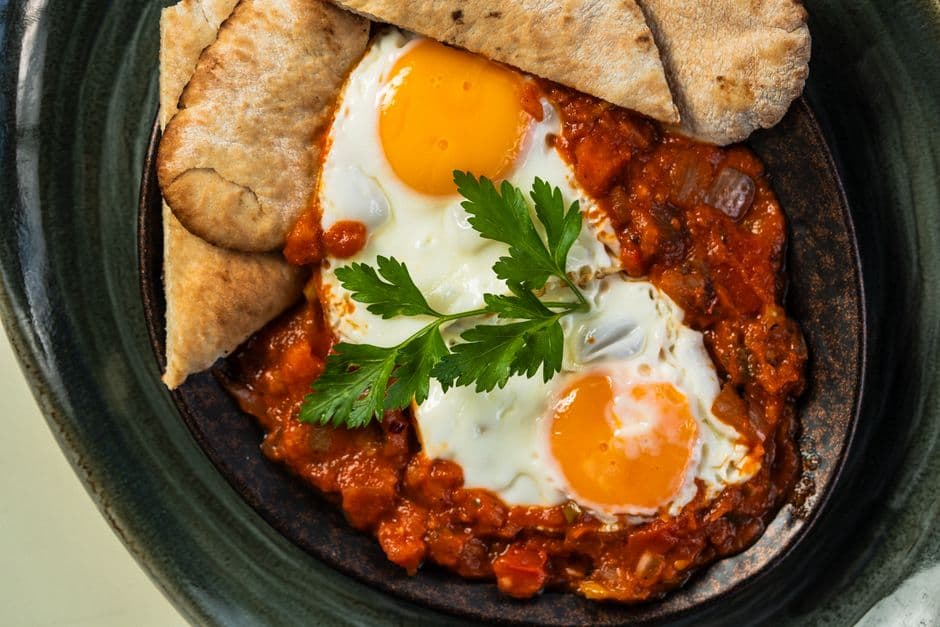
Shakshuka
Eggs poached in a richly spiced tomato and pepper sauce — a simple, satisfying dish from North Africa and the Middle East.
About This Recipe
Shakshuka is a beloved dish across North Africa, the Levant and the broader Middle East, prepared in a single skillet and served straight from the pan. The name derives from the Arabic and Tunisian dialect meaning 'a mixture' or 'all shaken up'. While Tunisia is often cited as the origin, the dish is claimed equally passionately by Israelis, Libyans, Algerians and Yemenis — each culture adding its own spice signature. It gained enormous international popularity through Israeli chef Yotam Ottolenghi's cookbooks and is now a staple of brunch menus worldwide. Comforting, quick, and naturally gluten-free. Rooted in the everyday cooking of Lebanese kitchens, Shakshuka balances technique and tradition: the large onion is treated with care, drawing on time-honoured ratios that locals have refined across generations. The dish carries an unmistakable sensory signature — aromas that fill the kitchen as it cooks, layered textures that reveal themselves bite by bite, and a depth of flavour that comes from patient seasoning rather than shortcuts. Whether served as a weeknight breakfast or as the centrepiece of a celebratory table, it reflects a regional pantry where local produce, seasoning habits and cooking vessels shape the final result. Home cooks who make this dish often note how forgiving it is once the core method is understood, and how a few small choices — the freshness of the large onion, the order of additions, the resting time at the end — separate a good version from a memorable one. This recipe walks through those choices so the dish arrives with the character it has on its home turf.
Ingredients
Serves 2
- 2 tbspolive oil
- 1large onion(finely diced)
- 1red bell pepper(diced)
- 4 clovesgarlic(sliced)
- 1 tspcumin
- 1 tspsmoked paprika
- 0.5 tspchilli flakes(adjust to taste)
- 0.5 tspground coriander
- 400 gcanned chopped tomatoes
- 1 tbsptomato paste
- 1 tspsugar
- 4large eggs
- 60 gfeta cheese(crumbled, optional)
- 1 handfulfresh parsley or coriander(roughly chopped)
- to tastesalt and black pepper
Instructions
- 1
Build the base
Heat olive oil in a wide, lidded frying pan or skillet over medium heat. Add onion and pepper with a pinch of salt. Cook, stirring occasionally, for 8–10 minutes until softened and lightly golden.
A wide pan is important — you need enough surface area to nestle all the eggs without them touching each other.
- 2
Add aromatics and spices
Add sliced garlic, cumin, paprika, chilli flakes and coriander. Stir for 1–2 minutes until fragrant and the spices darken slightly.
- 3
Build the sauce
Add tomato paste and cook for 1 minute, then pour in the canned tomatoes. Add sugar, season generously with salt and pepper, and stir to combine. Simmer over medium-low heat for 10–12 minutes, stirring occasionally, until the sauce thickens to a rich, jammy consistency.
Taste and adjust the seasoning at this stage — the base should be boldly flavoured as it will mellow once the eggs are added.
- 4
Add the eggs
Using a spoon, create four shallow wells in the sauce. Crack one egg into each well. Season the eggs with a pinch of salt and pepper. Cover the pan with a lid.
- 5
Poach to your preference
Cook over medium-low heat for 6–8 minutes for runny yolks, or 10–12 minutes for fully set yolks. Check by gently nudging the egg white — it should be opaque and set with no translucent areas.
- 6
Finish and serve
Scatter crumbled feta and fresh herbs over the top. Serve directly from the pan with warm flatbread, crusty sourdough or pita for scooping.
Did you make this?
Rate it and help other cooks find the recipes that actually work.
One tap to sign in, and we'll save the rating you just picked.
Everything you need to plan your week — free
- Meal calendar
- Grocery list
- AI recipe ideas
Track what you eat
Snap your meal to log calories and macros, run fasting timers and track water in the free SnapCal app.
Pro Tips
- →
The sauce can be made up to two days ahead and refrigerated — simply reheat it, add the eggs and finish just before serving.
- →
For a more luxurious version, stir in a tablespoon of harissa paste with the spices.
- →
If your pan does not have a lid, cover tightly with foil — steam is essential for cooking the top of the egg whites.
- →
Room-temperature eggs poach more evenly than cold ones straight from the fridge.
- →
Source the freshest large onion you can find — it is the flavour anchor of the dish.
Variations
- •
Green shakshuka: Replace tomatoes with wilted spinach, courgette and leek in a cream-based sauce with green herbs — popular in Israel as a spring variation.
- •
Shakshuka with merguez: Brown sliced North African merguez sausage in the pan before adding the vegetables for a meaty, spicier version.
- •
Mushroom shakshuka: Add 200 g sliced mushrooms to the onions and peppers, cooking until golden before adding spices and tomatoes.
- •
Vegetarian: replace the main protein with mushrooms, paneer, tofu or hearty beans for a meat-free version.
- •
Spicier: add fresh chilli, a chilli paste or a pinch of cayenne with the aromatics for a warmer profile.
Storage
The tomato sauce keeps refrigerated for up to 3 days. Do not store with eggs already poached — reheat sauce and add fresh eggs each time. The sauce also freezes well for up to 2 months.
History & Origin
Shakshuka's exact origins are contested across North African and Middle Eastern cultures. Most food historians trace it to Tunisia, where it has been a staple for centuries, likely incorporating tomatoes after they arrived from the Americas in the 16th century. It spread widely through the Sephardic Jewish diaspora, becoming a defining dish in Israeli cuisine by the 20th century. Tel Aviv café Dr Shakshuka, opened in 1991 by Libyan-born Bino Gabso, played an outsized role in popularising the dish internationally.
Frequently Asked Questions
Can I make Shakshuka ahead of time?
Yes — most components hold well in the fridge for a day or two. Reheat gently with a splash of liquid to bring it back to life.
What can I substitute for large onion?
If large onion is hard to find, the closest substitutes share its texture and water content. Adjust seasoning slightly since substitutes often carry less character of their own.
Is this recipe authentic to Lebanese cooking?
It follows the most widely accepted home-cook template. Regional variants exist and we note the main ones in the variations section.
Why did my version turn out bland?
Usually under-seasoning or rushing the aromatic stage. Build flavour in layers, taste as you go, and finish with a touch of acid or salt to brighten the dish.
Nutrition Facts
Per serving (380g / 13.4 oz) · 2 servings total
Time Summary
Have Questions?
Ask our AI cooking assistant anything about this recipe — substitutions, techniques, scaling.
Chat with AI Chef →Featured in Guides
This recipe is featured in the following curated guides:
More Lebanese Recipes
You Might Also Like
Similar dishes from other cuisines around the world.
Browse by Ingredient
More recipes built around the same core ingredients.
Free Kitchen Tools
Calculators and converters that pair with this page — no signup needed.
Put This Into a Plan
Schedule it, shop for it, and track what you already have.
Read Next
Longer reads that go deeper on the ideas behind this dish.
Community
Join the conversation
Sign in to leave a comment and save your favourite recipes