
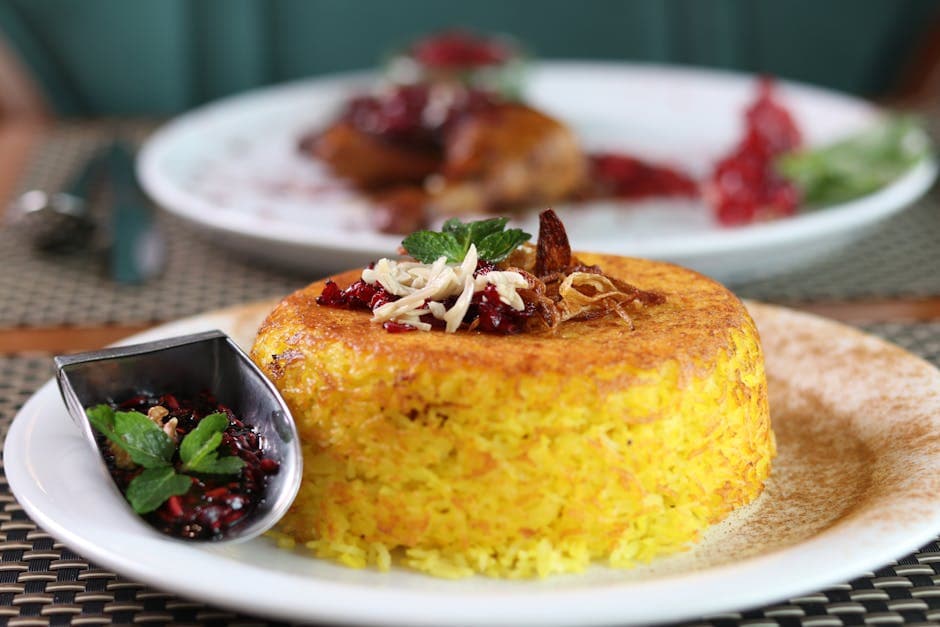
Shirin Polo
Persian jeweled sweet rice with orange peel, carrots, and nuts — the wedding rice.
About This Recipe
Shirin Polo — 'sweet rice', also called morassa polo, 'jeweled rice' — is the most opulent dish in the Persian repertoire, reserved for weddings and the grandest celebrations. Saffron basmati is layered and steamed with candied orange peel, sugar-glazed carrot ribbons, slivered pistachios and almonds, and scarlet barberries, so the finished platter glitters like a tray of gems. Every element carries meaning at a wedding table: sweetness for a sweet life, jewels for prosperity, saffron for joy. The dish demands real labor — blanching, candying, toasting, layering — which is exactly the point: serving shirin polo tells guests they are worth the effort.
Ingredients
Serves 8
- 4 cupsbasmati rice
- 2 largeorange peels, julienned
- 2 mediumcarrots, julienned
- 1 cupsugar
- 1/2 cuppistachios, slivered
- 1/2 cupalmonds, slivered
- 1/4 cupbarberries or cranberries
- 1 pinchsaffron, bloomed in hot water
- 1 tspcardamom
- 4 tbspbutter
- 2 tspsalt
Instructions
- 1
Candy orange peel and carrots
Julienne the orange peel without the white pith and blanch it twice in fresh boiling water to strip the bitterness. Simmer the peel and carrot julienne with the sugar and a splash of water for 10–15 minutes until translucent, glossy, and lightly candied, then stir in the cardamom and drain, reserving the syrup.
Don't skip the double blanch — bitter peel ruins the dish, and the step takes only minutes.
- 2
Parboil rice
Rinse the basmati until clear, soak for an hour, then boil in generously salted water about 6 minutes until tender outside with a firm core. Drain promptly. Properly underdone rice is critical here, because the candied elements add moisture during the steam.
- 3
Toast nuts
Toast the slivered pistachios and almonds in a dry pan over medium heat for 2–3 minutes until fragrant, watching closely as slivers burn fast. Briefly sauté the rinsed barberries in a little butter with a teaspoon of the reserved syrup — just 30 seconds, until they swell and glisten.
Barberries scorch almost instantly; pull them off the heat the moment they puff.
- 4
Layer and steam
Melt the butter in a heavy pot, lay down a thin rice layer for tahdig, then alternate rice with spoonfuls of the candied orange-carrot mixture and most of the nuts, mounding into a pyramid. Poke steam holes, drizzle with saffron water, cover with a towel-wrapped lid, and steam 5 minutes on medium-high, then 45–50 minutes on lowest heat.
- 5
Assemble
Rest 5 minutes, then heap the rice onto a large platter, reserving the saffron-stained top layers for the crown. Arrange the remaining candied peel, carrots, toasted nuts, and glistening barberries in generous bands over the summit so the platter sparkles, and tuck shards of tahdig around the edge.
Did you make this?
Rate it and help other cooks find the recipes that actually work.
One tap to sign in, and we'll save the rating you just picked.
Everything you need to plan your week — free
- Meal calendar
- Grocery list
- AI recipe ideas
Track what you eat
Snap your meal to log calories and macros, run fasting timers and track water in the free SnapCal app.
Pro Tips
- →
This dish rewards mise en place — candy, toast, and bloom everything before the rice goes in.
- →
Blanch the orange peel twice to remove bitterness; it is the step that separates good from great shirin polo.
- →
Sauté the barberries for only seconds — they burn and turn bitter almost instantly.
- →
Keep some of each garnish back for the final decoration; the jeweled top is the dish's whole identity.
- →
A spoonful of the reserved candying syrup drizzled over the finished platter adds sheen and perfume.
Variations
- •
Add golden raisins and chopped dates between the layers for a sweeter, darker-jeweled version.
- •
Serve with saffron-braised chicken layered inside the rice for shirin polo ba morgh, the classic wedding pairing.
- •
Use dried sour cherries in place of barberries for a take that nods to albaloo polo.
- •
Scatter candied rose petals and extra cardamom over the top for an ultra-festive presentation.
Storage
Refrigerate up to 3 days, storing extra garnish separately so the nuts stay crisp. Reheat covered over low heat with a splash of water; refresh the platter with reserved garnish before serving again.
History & Origin
Jeweled rice descends directly from the banquet tables of the Safavid court, where elaborate polos studded with fruit, nuts, and gold-hued saffron displayed royal wealth, and the style traveled with Persian cooks to influence Mughal pilafs in India. Shirin polo became the canonical Persian wedding dish, its sweetness a blessing on the marriage and its jewels a wish for prosperity. It still anchors wedding sofrehs and Nowruz tables across Iran and the diaspora today.
Frequently Asked Questions
Can I simplify this dish?
Yes — use store-bought candied orange peel, skip the carrot-candying in favor of a quick sauté with a spoonful of sugar, and reduce the nut variety to just pistachios. You keep perhaps eighty percent of the effect for half the work. The saffron and barberries are the two elements not worth cutting.
Is shirin polo a main course or a side?
Traditionally it is served with saffron chicken — either layered inside or arranged alongside — making it a complete celebratory main. The sweet rice balances the savory poultry. It can also stand as a centerpiece vegetarian dish at festive spreads, since the nuts and fruit give it substance.
What are barberries and where do I get them?
Barberries (zereshk) are tiny dried red berries with sharp, citrusy tartness, grown principally around Birjand in eastern Iran. Persian and Middle Eastern grocers stock them inexpensively. Rinse before use and sauté for mere seconds. Dried unsweetened cranberries, chopped small, are the workable substitute, though sweeter and less vivid.
Why did my rice turn sweet and sticky?
Too much candying syrup made it into the pot. Drain the candied peel and carrots well before layering, and let the rice itself stay purely salted — the sweetness should arrive in jeweled pockets, not saturate every grain. Over-parboiled rice compounds the problem, so keep the grains firm-cored going in.
Nutrition Facts
Per serving (400g / 14.1 oz) · 8 servings total
Time Summary
Have Questions?
Ask our AI cooking assistant anything about this recipe — substitutions, techniques, scaling.
Chat with AI Chef →Featured in Guides
This recipe is featured in the following curated guides:
More Persian Recipes
You Might Also Like
Similar dishes from other cuisines around the world.
Browse by Ingredient
More recipes built around the same core ingredients.
Free Kitchen Tools
Calculators and converters that pair with this page — no signup needed.
Put This Into a Plan
Schedule it, shop for it, and track what you already have.
Read Next
Longer reads that go deeper on the ideas behind this dish.
Community
Join the conversation
Sign in to leave a comment and save your favourite recipes