
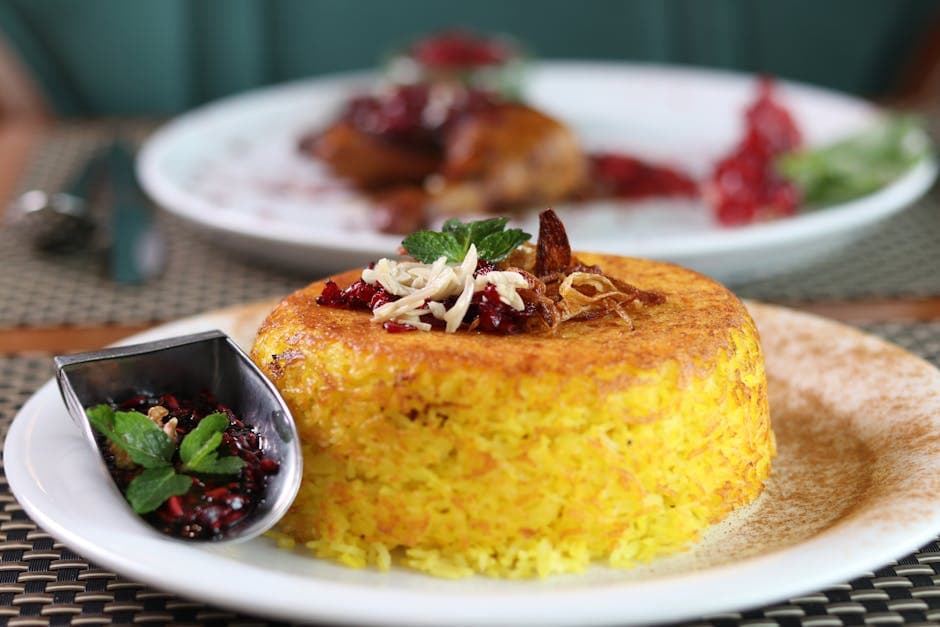
Sohan
Persian saffron brittle candy with pistachios from Qom — Iran's most famous confection.
About This Recipe
Sohan is the confection that perfumes the holy city of Qom — a saffron-amber brittle of butter, sugar, and honey cooked to hard crack, scattered with slivered pistachios, and snapped into shards that shatter and then melt on the tongue. Wheat sprout flour gives traditional sohan its faintly malty depth, while cardamom, rose water, and saffron supply the unmistakable Persian perfume. Pilgrims returning from Qom's shrine have carried round tins of sohan home as souvenirs for generations, making it both candy and currency of hospitality: arriving with sohan says you traveled, you remembered, and you brought back the city's best. Confectioners' recipes remain closely guarded family secrets.
Ingredients
Serves 20
- 2 cupssugar
- 1/2 cupbutter
- 1/2 cuphoney
- 1/2 tspsaffron, bloomed in 1 tbsp hot water
- 1 tspcardamom
- 1/2 cuppistachios, slivered
- 1/2 cupalmonds, slivered
- 1/4 cuprose water
Instructions
- 1
Cook sugar
Melt the butter with the honey and sugar in a heavy-bottomed pot over medium heat, stirring until dissolved, then cook with occasional stirring as the mixture bubbles and deepens from pale gold to rich amber. Clip on a candy thermometer and take it to exactly 150°C — hard crack stage.
Watch closely after 140°C; the last ten degrees come fast and the line between amber and burnt is seconds wide.
- 2
Add flavor
Pull the pot off the heat and immediately stir in the saffron water, cardamom, rose water, and half the nuts — the liquid will hiss and steam violently, so stand back. Work quickly and decisively; the caramel begins setting the moment it leaves the heat.
Have every addition measured and within arm's reach before the sugar reaches temperature — caramel does not wait.
- 3
Pour
Pour the molten sohan immediately onto a greased baking sheet or parchment, tilting the pan to spread it into a thin, even layer about 5mm thick. Scatter the remaining pistachios and almonds over the surface and press them in lightly with the back of a greased spoon before the surface skins over.
- 4
Cool and break
Let the sohan cool and harden completely at room temperature, about 30 minutes — resist refrigerating, which can dull the gloss and invite stickiness. Snap the sheet into irregular shards with your hands or the handle of a knife, and watch the saffron glow through each translucent piece.
Did you make this?
Rate it and help other cooks find the recipes that actually work.
One tap to sign in, and we'll save the rating you just picked.
Everything you need to plan your week — free
- Meal calendar
- Grocery list
- AI recipe ideas
Track what you eat
Snap your meal to log calories and macros, run fasting timers and track water in the free SnapCal app.
Pro Tips
- →
A candy thermometer is essential — hard crack at 150°C is a target, not a guess.
- →
Pre-measure every ingredient before turning on the heat; caramel gives you no time to fumble.
- →
Use a heavy-bottomed pot to prevent scorching hot spots that taste bitter.
- →
Stand back when adding the rose water and saffron — the hot caramel spits and steams.
- →
Work on a dry day if possible; humidity makes brittle sticky as it cools.
Variations
- •
Sprinkle flaky sea salt over the surface before it sets for a modern salted-caramel edge.
- •
Use only pistachios for the classic emerald-on-amber Qom presentation.
- •
Make sohan asali, the simpler honey-almond version, by using all almonds and extra honey.
- •
Pour into small greased molds for individual coin-shaped pieces, the way Qom confectioners box them.
Storage
Store in an airtight container at room temperature, layers separated by parchment, for up to 2 weeks. Avoid the refrigerator — condensation makes the brittle sticky and clouds its glassy sheen.
History & Origin
Sohan has been crafted in Qom since at least the Qajar era, growing alongside the city's role as Iran's great pilgrimage destination — travelers to the shrine of Fatima Masumeh carried tins of it home, spreading its fame across the country. Traditional Qom sohan includes wheat sprout flour (sohan-e ghom's secret depth), and competing confectionery houses, some over a century old, still guard their formulas jealously. It remains the definitive Iranian souvenir sweet, given at Nowruz and on every homecoming.
Frequently Asked Questions
What is the hard crack stage?
At 150°C, sugar syrup has so little water left that it sets glassy and brittle. To test without a thermometer, drip a little caramel into ice water: it should form rigid threads that snap cleanly. If the threads bend, keep cooking; if the caramel smells acrid, it has gone past.
Why did my sohan turn out chewy instead of brittle?
It didn't reach full hard crack — even 5°C short leaves enough moisture for chew. Humidity is the other culprit: brittle absorbs moisture from damp air as it cools and softens. Cook to a verified 150°C, cool in a dry room, and seal in an airtight tin promptly.
Is homemade sohan the same as Qom sohan?
Close, but traditional Qom sohan also includes flour made from sprouted wheat (germinated wheat malt), which adds a subtle malty flavor and a slightly more tender, fudge-edged snap. Commercial houses guard exact ratios. This home version captures the saffron-cardamom-pistachio character with ingredients available outside Iran.
How do Iranians serve sohan?
In shards alongside black tea — its sweetness is calibrated against unsweetened chai — and on Nowruz sweet trays with gaz, baklava, and dried fruit. Round tins of sohan are the classic travel gift from Qom, opened ceremonially for guests. A small piece per cup is plenty; it is intensely rich.
Nutrition Facts
Per serving (40g / 1.4 oz) · 20 servings total
Time Summary
Have Questions?
Ask our AI cooking assistant anything about this recipe — substitutions, techniques, scaling.
Chat with AI Chef →Featured in Guides
This recipe is featured in the following curated guides:
More Persian Recipes
You Might Also Like
Similar dishes from other cuisines around the world.
Free Kitchen Tools
Calculators and converters that pair with this page — no signup needed.
Put This Into a Plan
Schedule it, shop for it, and track what you already have.
Read Next
Longer reads that go deeper on the ideas behind this dish.
Community
Join the conversation
Sign in to leave a comment and save your favourite recipes