
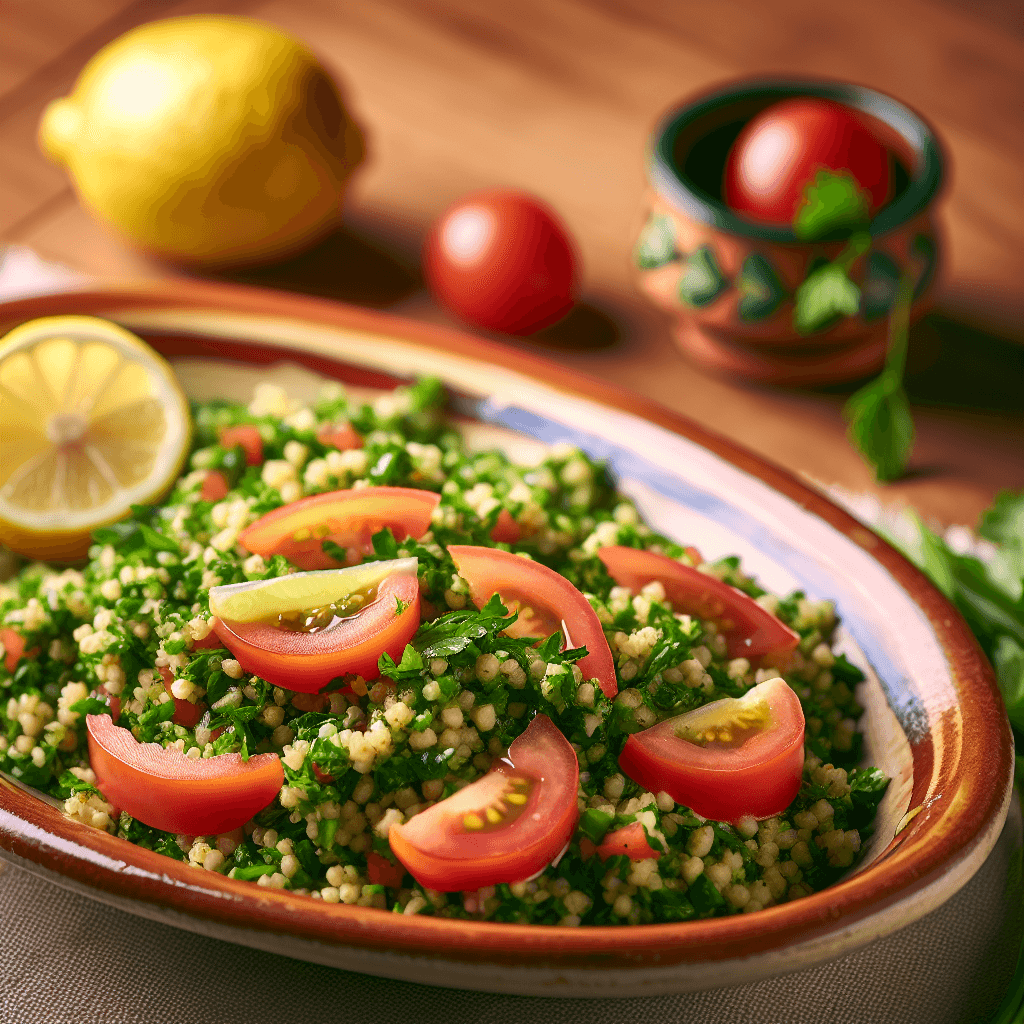
Tabbouleh
Lebanese herb salad with bulgur and lemon — green, fresh, vibrant.
About This Recipe
Tabbouleh is Lebanon's most famous salad and arguably its most misunderstood export. Authentic Lebanese tabbouleh is a parsley salad with a little bulgur, not a bulgur salad with a little parsley — the version found in Western supermarkets inverts the ratio entirely. Mountains of finely hand-chopped flat-leaf parsley are tossed with fresh mint, ripe diced tomatoes, green onions, and just enough fine bulgur to soak up the tomato juices, then dressed sharply with lemon juice and good olive oil. The result is light, tart, and intensely green, traditionally scooped up with crisp romaine or tender cabbage leaves rather than a fork. It appears on virtually every Lebanese mezze table and is a point of genuine national pride.
Ingredients
Serves 4
- 2 cupsfresh parsley, finely chopped
- 1 cupfresh mint, finely chopped
- 1/2 cupfine bulgur wheat
- 3 mediumtomatoes, finely diced
- 4 stalksgreen onion, chopped
- 1/4 cuplemon juice
- 1/4 cupolive oil
- 1 tspsalt
- 1/2 tspblack pepper
Instructions
- 1
Soak bulgur
Rinse the fine bulgur, then pour just enough boiling water over it to cover, lid the bowl, and let it sit 10 minutes. Drain any excess and squeeze handfuls firmly dry — wet bulgur makes soggy tabbouleh. Fine (#1) bulgur needs no actual cooking.
Many Lebanese cooks skip the soak entirely and let the raw fine bulgur soften in the tomato juices and lemon instead.
- 2
Chop the herbs
Wash and thoroughly dry the parsley and mint, then chop them finely with a sharp knife using a gentle rocking motion. Avoid the food processor — it bruises the leaves and turns them watery and dark. Dice tomatoes small and slice green onions thinly.
Dry herbs are everything: spin or towel-dry them completely, or the salad will weep within minutes.
- 3
Combine and dress
Toss parsley, mint, tomatoes, green onion, and bulgur loosely in a wide bowl. Pour over the lemon juice first, then the olive oil, season with salt and pepper, and fold gently with your hands or two spoons until every shred of herb glistens.
- 4
Serve
Taste — tabbouleh should lead with lemon, so adjust acidity boldly. Serve at room temperature mounded on a platter, surrounded by small romaine or white cabbage leaves that guests use as edible scoops in the traditional Lebanese style.
Did you make this?
Rate it and help other cooks find the recipes that actually work.
One tap to sign in, and we'll save the rating you just picked.
Everything you need to plan your week — free
- Meal calendar
- Grocery list
- AI recipe ideas
Cook this hands-free
Get AI meal plans, step-by-step cooking mode, and your saved recipes in the free Bento app.
Pro Tips
- →
Herbs must dominate: the classic Lebanese ratio is roughly four parts parsley to one part bulgur, not the reverse.
- →
Chop parsley by hand with a very sharp knife — a food processor bruises it and releases bitter, watery juices.
- →
Use fine (#1) bulgur; coarse bulgur stays chewy and throws off the delicate texture.
- →
Seed very juicy tomatoes or drain the dice briefly so the salad doesn't pool liquid at the bottom.
- →
Dress just before serving — lemon wilts the herbs quickly, and tabbouleh is at its peak in the first hour.
Variations
- •
Quinoa tabbouleh: swap cooked, cooled quinoa for the bulgur to make it gluten-free without losing the texture.
- •
Winter tabbouleh: add seeded, finely diced cucumber and a handful of pomegranate seeds for crunch and tartness.
- •
Spicy Aleppo version: fold in a pinch of Aleppo pepper and a little pomegranate molasses, Syrian style.
- •
Cauliflower tabbouleh: use raw riced cauliflower instead of bulgur for a low-carb take.
Storage
Tabbouleh is best eaten within a few hours of dressing; refrigerated leftovers keep up to 2 days but the herbs soften and release liquid. To prep ahead, chop and store the components separately and combine with the dressing just before serving.
History & Origin
Tabbouleh originated in the mountains of Lebanon and Syria, where edible herbs have been central to the rural diet since at least the Middle Ages. The name comes from the Arabic 'tabil,' meaning seasoning. It is a dish of deep national pride in Lebanon, which even holds an annual National Tabbouleh Day and once entered the Guinness Book of Records for the world's largest bowl.
Frequently Asked Questions
Can I make tabbouleh ahead of time?
Partially. Chop the parsley, mint, onions, and tomatoes up to a day ahead and refrigerate them in separate containers, with the bulgur soaked and squeezed dry. Combine everything with the lemon and oil no more than an hour before serving — once dressed, the acid begins wilting the herbs and the salad loses its signature freshness.
Why is my tabbouleh watery?
Three common causes: herbs that weren't fully dried after washing, very juicy tomatoes left undrained, and bulgur that wasn't squeezed after soaking. Dry the parsley and mint completely, dice tomatoes and let them drain in a sieve for a few minutes, and wring excess water from the bulgur with your hands before mixing.
Is Western-style tabbouleh wrong?
Not wrong, just different. The grain-heavy versions sold in Western delis are closer to a bulgur pilaf salad, while authentic Lebanese tabbouleh is overwhelmingly green — parsley is the main ingredient, and bulgur is a minor binder. If you have only tried the supermarket kind, the real thing tastes dramatically brighter and lighter.
Curly or flat-leaf parsley?
Flat-leaf (Italian) parsley is traditional and preferred: it has more flavor, a tender texture, and chops cleanly without the spiky mouthfeel of curly parsley. If curly parsley is all you can find, chop it extra fine and use slightly more lemon and oil to soften its texture.
Nutrition Facts
Per serving (300g / 10.6 oz) · 4 servings total
Time Summary
Have Questions?
Ask our AI cooking assistant anything about this recipe — substitutions, techniques, scaling.
Chat with AI Chef →Featured in Guides
This recipe is featured in the following curated guides:
More Lebanese Recipes
You Might Also Like
Similar dishes from other cuisines around the world.
Browse by Ingredient
More recipes built around the same core ingredients.
Free Kitchen Tools
Calculators and converters that pair with this page — no signup needed.
Put This Into a Plan
Schedule it, shop for it, and track what you already have.
Read Next
Longer reads that go deeper on the ideas behind this dish.
Community
Join the conversation
Sign in to leave a comment and save your favourite recipes