
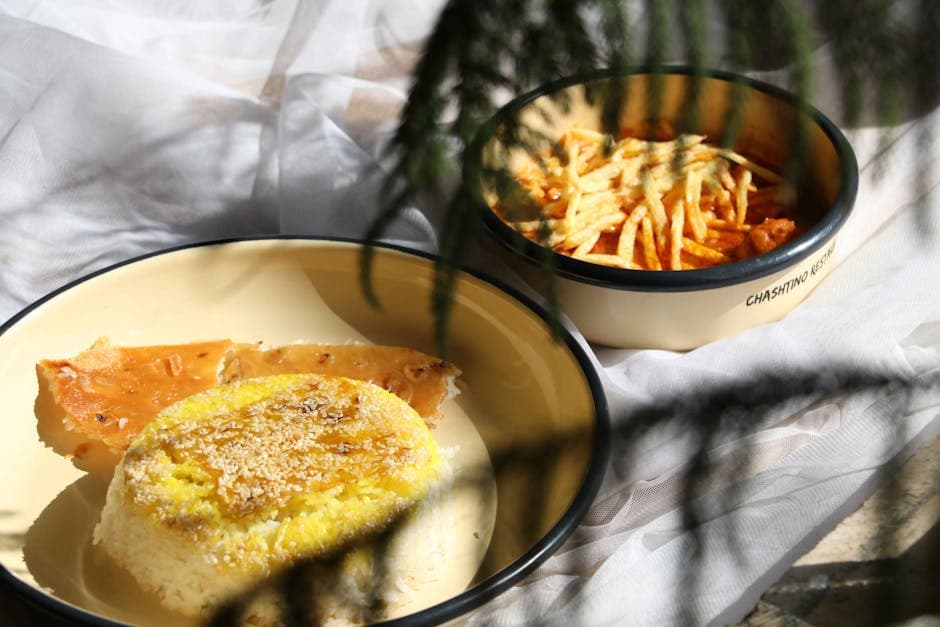
Tahdig with Potato
Persian crispy rice with golden potato crust — the most coveted piece at any Persian table.
About This Recipe
Tahdig — 'bottom of the pot' — is the prestige dish of Persian cooking, the crackling golden crust that forms beneath steamed basmati and is fought over at every table. A perfect tahdig signals a serious cook: in Iran, reputations are made and measured by it, and the guest of honor always receives the first shard. The potato version is perhaps the most beloved, with thin slices fried in saffron-stained oil under the rice until they fuse into a burnished disk that releases in one dramatic flip. Mastering it means learning the chelow method — soaking, parboiling, and steaming polo-style under a towel-wrapped lid — the foundation of all Persian rice cookery.
Ingredients
Serves 6
- 3 cupsbasmati rice
- 2 largepotatoes, peeled and sliced 3mm thin
- 4 tbspneutral oil or ghee
- 1 pinchsaffron, bloomed in 2 tbsp hot water
- 2 tspsalt
Instructions
- 1
Parboil rice
Rinse the rice until the water runs clear, then soak it in salted water for 1 hour — this lengthens the grains and prevents breakage. Boil in generously salted water for 6–7 minutes until the outside is tender but the center still has a firm white core. Drain immediately and rinse briefly with lukewarm water to stop the cooking.
Bite a grain to test: it should bend without snapping but still resist at the center.
- 2
Layer potato tahdig
Heat the oil in a heavy-bottomed, preferably non-stick pot over medium heat until shimmering. Swirl in half the saffron water, then arrange the potato slices in a single, slightly overlapping layer covering the bottom completely. Let them sizzle 2–3 minutes and season with salt.
Slice the potatoes evenly at 3mm — thinner slices burn, thicker ones stay pale and soft.
- 3
Mound rice
Gently spoon the parboiled rice over the potatoes, mounding it into a loose pyramid rather than pressing it flat — the dome lets steam circulate. Poke 5–6 deep holes to the bottom with a spoon handle, drizzle the remaining saffron water over the peak, and wrap the lid in a clean kitchen towel before covering.
- 4
Steam
Cook on medium-high heat for about 5 minutes until you see steam escaping and hear the potatoes sizzling, then drop to the lowest possible heat. Steam undisturbed for 45–50 minutes; the towel absorbs condensation so the rice stays fluffy while the crust crisps below.
- 5
Flip
Remove from heat and let rest 5 minutes. Run a thin spatula around the edge, place a large serving platter over the pot, grip both firmly, and flip in one confident motion. The potato tahdig should release as a single glorious golden disk crowning the saffron rice.
If it resists, set the hot pot base in a sink of cold water for 30 seconds — the thermal shock releases the crust.
Did you make this?
Rate it and help other cooks find the recipes that actually work.
One tap to sign in, and we'll save the rating you just picked.
Everything you need to plan your week — free
- Meal calendar
- Grocery list
- AI recipe ideas
Track what you eat
Snap your meal to log calories and macros, run fasting timers and track water in the free SnapCal app.
Pro Tips
- →
The kitchen towel on the lid is essential — it absorbs steam so the rice stays fluffy and the crust crisps properly.
- →
Use a heavy-bottomed non-stick pot; even heat distribution is the difference between golden and burnt.
- →
Listen rather than peek: a gentle, steady sizzle means the tahdig is browning; a sharp crackle means the heat is too high.
- →
Soak the rice for the full hour — long, separate grains are the hallmark of proper Persian chelow.
- →
Salt the boiling water aggressively, like pasta water; this is your only chance to season the rice itself.
Variations
- •
Use lavash flatbread instead of potato for the classic nan tahdig — equally traditional and faster.
- •
Make yogurt-saffron tahdig by mixing a cup of parboiled rice with yogurt, egg yolk, and saffron for the base.
- •
Layer thin tomato slices for a tangy summer tahdig.
- •
Mix thin lettuce or chard leaves into the base for a green-edged crust popular in home kitchens.
Storage
Best eaten immediately — tahdig loses its signature crunch within an hour. Leftover rice keeps refrigerated for 2 days; re-crisp tahdig pieces in a dry skillet over medium heat rather than the microwave.
History & Origin
Tahdig sits at the heart of Persian rice culture, which elevated rice cookery to an art form during the Safavid era, when royal kitchens codified the soak-parboil-steam chelow method. The crust began as thrift — making the scorched bottom layer delicious rather than wasted — and became the meal's greatest prize. Serving the first piece to the guest of honor remains an unbreakable rule of Persian hospitality, and squabbling over the last shard is a cherished family tradition.
Frequently Asked Questions
What if my tahdig sticks?
Run the bottom of the hot pot under cold water or set it in a sink of cold water for 30 seconds — the sudden temperature change creates steam that releases the crust. A well-heated pot with enough oil at the start, plus a 5-minute rest off the heat before flipping, prevents sticking in the first place.
Why is my tahdig pale instead of golden?
Either the initial heat was too low or the steaming time too short. Make sure the oil is shimmering before the potatoes go in, keep the heat at medium-high for the first 5 minutes, and don't cut the low steam short of 45 minutes. A thin or non-conductive pot also browns unevenly.
Do I need a Persian rice cooker?
No — a heavy non-stick pot works beautifully and is how this recipe is written. That said, Persian-style rice cookers (polopaz) automate the timing and produce a reliably even crust, which is why they are standard in Iranian households. Start with the pot method to learn the technique.
Can I use other rice varieties?
Aged basmati is the best widely available choice; its long grains stay separate through parboiling and steaming. Iranian varieties like domsiah are ideal if you can find them. Avoid short-grain or parboiled (converted) rice — they turn sticky or rubbery and won't produce proper fluffy chelow above the crust.
Nutrition Facts
Per serving (350g / 12.3 oz) · 6 servings total
Time Summary
Have Questions?
Ask our AI cooking assistant anything about this recipe — substitutions, techniques, scaling.
Chat with AI Chef →Featured in Guides
This recipe is featured in the following curated guides:
More Persian Recipes
You Might Also Like
Similar dishes from other cuisines around the world.
Browse by Ingredient
More recipes built around the same core ingredients.
Free Kitchen Tools
Calculators and converters that pair with this page — no signup needed.
Put This Into a Plan
Schedule it, shop for it, and track what you already have.
Read Next
Longer reads that go deeper on the ideas behind this dish.
Community
Join the conversation
Sign in to leave a comment and save your favourite recipes