
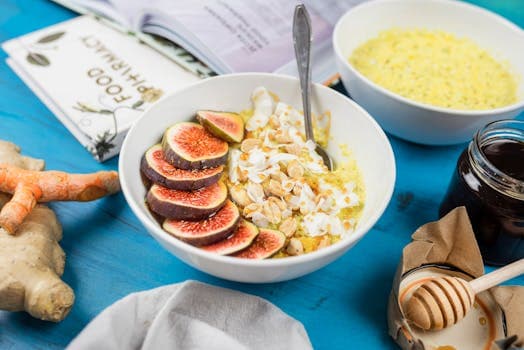
Turmeric Golden Milk Oatmeal
Warming oatmeal infused with turmeric, cinnamon, and ginger.
About This Recipe
Golden milk — haldi doodh in Hindi — is one of Ayurveda's most celebrated preparations, a warm beverage of turmeric-spiced milk consumed in India for millennia to support immunity, digestion, and joint health. This recipe bridges that ancient tradition with the Western breakfast habit of porridge, simmering rolled oats directly in golden milk so every spoonful carries the earthy warmth of turmeric, the gentle heat of ginger, the sweet spice of cinnamon, and the essential pinch of black pepper that makes curcumin — turmeric's primary bioactive compound — up to 2,000 % more bioavailable to the body. The science behind the pepper pairing is well established: curcumin is poorly absorbed on its own, but piperine in black pepper dramatically enhances its uptake through the intestinal wall. Fat also plays a role — curcumin is fat-soluble, so cooking the oats in whole milk or a fat-containing plant milk (oat milk, coconut milk, cashew milk) further improves absorption compared to water. The result is a bowl that is as functional as it is flavourful: the oats provide slow-release complex carbohydrates, the walnuts contribute alpha-linolenic acid (a plant-based omega-3), and the berries add polyphenol antioxidants. Together they form a genuinely anti-inflammatory breakfast that is warming, gently sweet, and deeply satisfying on cold mornings.
Ingredients
Serves 1
- 50 grolled oats
- 200 mlmilk of choice
- 0.5 tspground turmeric
- 0.25 tspground cinnamon
- 0.25 tspground ginger
- 1 pinchblack pepper (to activate turmeric)
- 1 tbsphoney or maple syrup
- 2 tbspwalnuts, roughly chopped
- 50 gmixed berries
Instructions
- 1
Measure and combine
Pour the milk into a small saucepan and add the rolled oats, ground turmeric, cinnamon, ground ginger, and the pinch of black pepper. Stir immediately to distribute the spices evenly — turmeric settles quickly.
If you enjoy a stronger ginger flavour, grate 1/4 tsp of fresh ginger instead of ground — it has a brighter, more pungent heat.
- 2
Simmer gently
Set the pan over medium heat and bring to a gentle simmer, stirring regularly with a wooden spoon or heatproof spatula. As the milk heats, the oats absorb it and the mixture thickens — this takes about 5–6 minutes. Lower the heat if it threatens to boil, as boiling milk causes a skin to form and can scorch the bottom.
Stir more frequently in the last 2 minutes as the mixture thickens; at this stage it can catch quickly on the base of the pan.
- 3
Check consistency
When the oatmeal is thick, creamy, and pulling away from the sides of the pan — around the 5–6 minute mark — remove it from the heat. The porridge will continue to thicken as it sits, so pull it off about 30 seconds before it reaches your ideal consistency.
If the oatmeal is too thick, add a splash of warm milk and stir; if too loose, return briefly to low heat for another minute.
- 4
Sweeten
Stir in the honey or maple syrup while the oatmeal is still hot so it dissolves evenly. Taste and adjust the sweetener — some milks (oat milk especially) are already quite sweet and may need less.
- 5
Bowl, top, and serve
Spoon into a warm bowl and top with the chopped walnuts and mixed berries, arranging them in sections for visual appeal. The cold berries against the warm oatmeal creates a pleasant contrast of temperature and texture. Eat immediately.
Did you make this?
Rate it and help other cooks find the recipes that actually work.
One tap to sign in, and we'll save the rating you just picked.
Everything you need to plan your week — free
- Meal calendar
- Grocery list
- AI recipe ideas
Cook this hands-free
Get AI meal plans, step-by-step cooking mode, and your saved recipes in the free Bento app.
Pro Tips
- →
Always include the black pepper — without it, most of the curcumin in turmeric passes through the gut unabsorbed. Just a small pinch is enough; you will not taste it noticeably.
- →
Use rolled oats (old-fashioned oats), not instant oats or quick oats. Rolled oats cook in 5–6 minutes and produce a creamier, chewier texture; instant oats turn gluey and lose their structure quickly.
- →
Whole milk or a fat-rich plant milk like oat milk, coconut milk, or cashew milk enhances curcumin absorption significantly compared to water. Choose whichever you prefer — all work well flavour-wise too.
- →
Toast the walnuts briefly in a dry pan for 2–3 minutes before using — toasting deepens their flavour and crunch and makes them taste far more interesting than raw walnuts.
- →
For an overnight version, combine all the simmered base ingredients in a jar while still warm, seal, and refrigerate. In the morning the oats will have absorbed the golden milk fully — thin with a little cold milk and eat cold or warm briefly in the microwave.
Variations
- •
Golden milk overnight oats: combine raw oats with the golden milk spices and your choice of milk, seal in a jar, and refrigerate overnight. Serve cold with fresh mango and coconut flakes — no cooking required.
- •
Protein golden oatmeal: stir in a scoop of vanilla protein powder (whey or plant-based) at step 4 alongside the sweetener — adds 20–25 g of protein and makes it a true post-workout breakfast.
- •
Coconut turmeric oatmeal: replace the milk with full-fat coconut milk for a richer, tropical version — top with toasted coconut flakes, sliced mango, and a drizzle of lime juice.
- •
Savoury golden porridge: omit the sweetener and berries; stir in a soft-boiled egg, a drizzle of chili oil, and sliced spring onions for a savoury, congee-inspired bowl that highlights turmeric's depth.
Storage
Golden milk oatmeal keeps well refrigerated for up to 2 days in a sealed container. The oats absorb remaining liquid as they sit, so add a splash of milk when reheating and stir over low heat on the stove or in the microwave at 60-second intervals, stirring between each, until hot throughout. Do not freeze — the texture becomes irreversibly grainy.
History & Origin
Haldi doodh (turmeric milk) has been used in Ayurvedic medicine for at least 3,000 years, with references in ancient Sanskrit texts recommending it for respiratory conditions, inflammation, and wound healing. In Indian households it remains a first-line home remedy given to children with colds and injuries. The global 'golden latte' trend that popularised turmeric drinks in Western cafes began around 2015–2016, driven by wellness blogs and peer-reviewed studies on curcumin's anti-inflammatory properties. This oatmeal adaptation merges that Ayurvedic wisdom with the oat porridge tradition that has been the staple breakfast of Scotland and Northern England since at least the 17th century.
Frequently Asked Questions
Does the black pepper really make a difference to turmeric absorption?
Yes, significantly. Piperine — the compound that gives black pepper its heat — inhibits the intestinal enzymes that break down curcumin before it can be absorbed. Research published in the journal Planta Medica found that 20 mg of piperine alongside 2 g of curcumin increased curcumin bioavailability by 2,000 %. A small pinch of black pepper (around 1/8 tsp) in one bowl of oatmeal delivers far more than 20 mg of piperine — so the effect is very real.
Can I make turmeric golden milk oatmeal the night before?
Absolutely — this is one of the best breakfasts to prepare ahead. Stir the cooked golden oatmeal (or even a raw overnight-oat version) into a jar while warm, seal, and refrigerate. In the morning it will be thick and cold; thin it with 2–3 tbsp of milk and eat cold or microwave on medium power for 90 seconds, stirring halfway.
What type of milk works best?
Any milk works, but the flavour and texture vary. Whole cow's milk gives the creamiest, richest result. Oat milk produces a naturally sweet, silky porridge that pairs well with turmeric's earthiness. Coconut milk makes a richer, tropical-tasting bowl. Almond milk is lighter and slightly nutty. Avoid very thin milks like rice milk — the oatmeal becomes watery and thin.
Why is my oatmeal lumpy instead of smooth?
Lumps form when oats are added to milk that is already boiling rather than cold or gently warming. Always start with everything in a cold pan and heat together — the oats hydrate evenly as the liquid warms. If lumps form, stir vigorously or whisk briefly; the heat will help them smooth out. Using instant oats instead of rolled oats also increases lump risk.
How much turmeric should I use and is more better?
0.5 teaspoon per serving is the practical ceiling for everyday breakfast use — beyond that, turmeric's bitterness becomes too prominent and the colour turns an unappetising deep orange-brown. For meaningful health benefits you would need to consume turmeric consistently over weeks or months, not just one large dose in a single meal. Stick to 0.5 tsp for flavour balance and repeat the recipe regularly for cumulative benefit.
Nutrition Facts
Per serving (300g / 10.6 oz) · 1 servings total
Time Summary
Have Questions?
Ask our AI cooking assistant anything about this recipe — substitutions, techniques, scaling.
Chat with AI Chef →Featured in Guides
This recipe is featured in the following curated guides:
More Indian Recipes
You Might Also Like
Similar dishes from other cuisines around the world.
Free Kitchen Tools
Calculators and converters that pair with this page — no signup needed.
Put This Into a Plan
Schedule it, shop for it, and track what you already have.
Read Next
Longer reads that go deeper on the ideas behind this dish.
Community
Join the conversation
Sign in to leave a comment and save your favourite recipes