
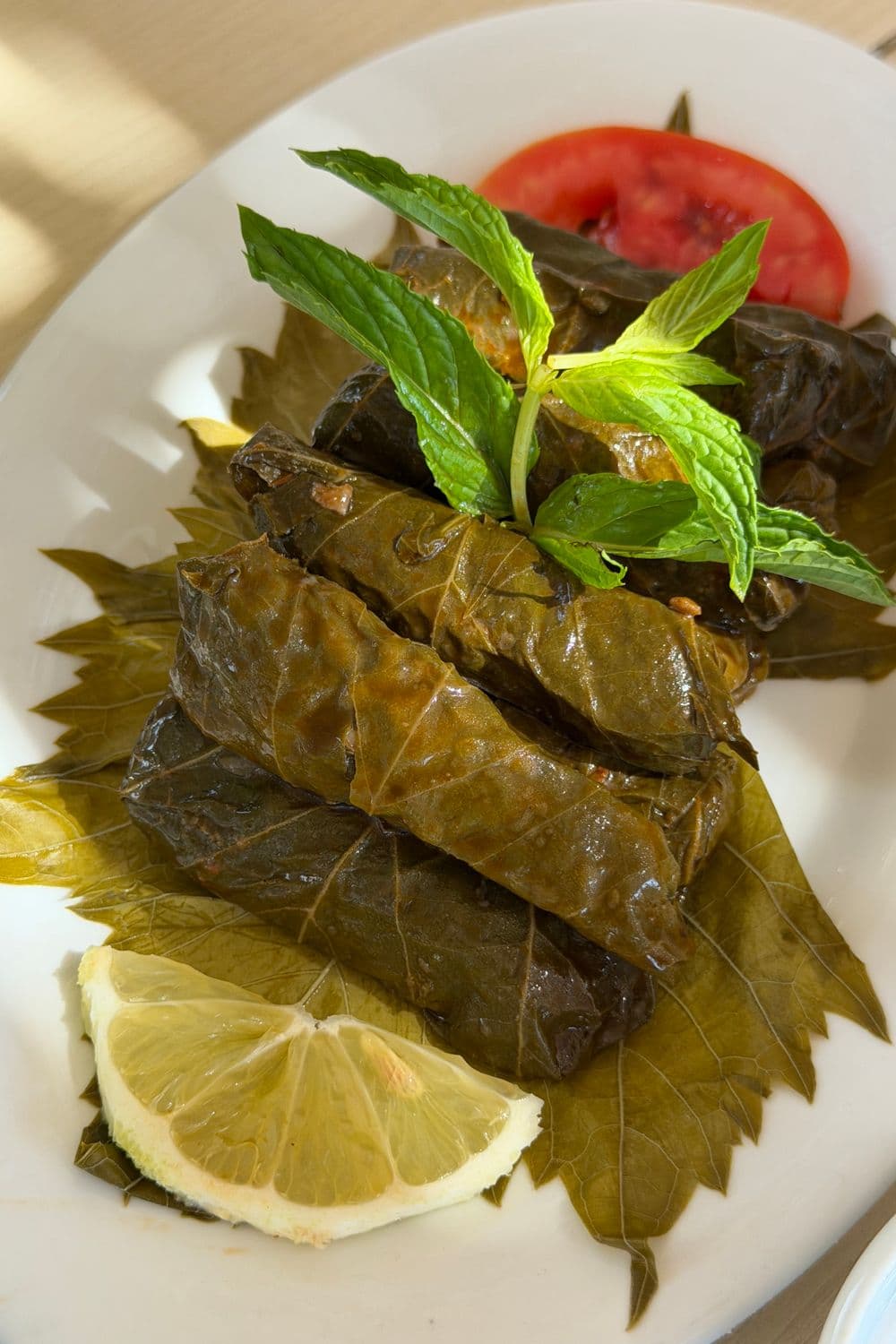
Warak Enab
Lebanese stuffed grape leaves with lemony rice and herb filling — a labor of love.
About This Recipe
Warak Enab — vine leaves wrapped around a lemony rice, tomato, and herb filling — is the dish Lebanese families make together, hands moving in practiced rhythm around a tray of leaves while conversation does the real work. The vegetarian, olive-oil version here belongs to the bi-zeit tradition: rolled slim as a finger, packed in tight concentric circles, weighted with a plate, and simmered low until the rice swells and the leaves turn silky and tart. Success lives in the details — filling spooned sparingly so the rice has room to expand, rolls snug but not strangled, and a patient simmer rather than a boil so nothing bursts. Served at room temperature with lemon and yogurt, they vanish faster than they were rolled.
Ingredients
Serves 8
- 50grape leaves, jarred or fresh
- 2 cupsshort-grain rice, rinsed
- 2 mediumtomatoes, finely diced
- 1 largeonion, finely diced
- 1/2 cupfresh parsley, chopped
- 1/4 cupfresh mint, chopped
- 1/4 cupolive oil
- 3 tbsplemon juice
- 1 tspallspice
- 1/2 tspcinnamon
- 1 tspsalt
- 2 cupswater or broth
Instructions
- 1
Prepare filling
Combine the rinsed, drained rice with the tomatoes, onion, parsley, mint, olive oil, lemon juice, allspice, cinnamon, and salt, and mix thoroughly. The raw rice will cook entirely inside the leaves, absorbing the tomato juices and seasonings, so make sure everything is evenly distributed before you start rolling.
- 2
Blanch leaves
For fresh leaves, blanch in boiling water for about 2 minutes until they darken and turn pliable, then drain. For jarred leaves, rinse well in several changes of water to remove the salty brine, and soak 10 minutes if they still taste sharp. Snip off any tough stems with scissors.
Sort the leaves as you go — perfect medium leaves for rolling, torn or tough ones for lining the pot.
- 3
Roll
Lay a leaf vein-side up with the stem end toward you. Place a scant teaspoon of filling in a short line near the stem, fold the bottom over it, fold in both sides, and roll away from you into a snug cigar about finger-thickness. Firm enough to hold, loose enough that the rice can swell — squeeze gently; it should give slightly.
Under-fill rather than over-fill; rice roughly doubles as it cooks and overstuffed rolls split.
- 4
Cook
Line a heavy pot with tomato or potato slices and torn leaves, then pack the rolls seam-side down in tight concentric circles, layering as needed. Add water or broth to just barely cover, set an inverted heatproof plate on top to keep the rolls submerged and still, bring to a boil, then reduce to the lowest simmer, cover, and cook 45–60 minutes until the rice is fully tender.
- 5
Serve
Let the pot rest off the heat for 20–30 minutes — the rolls firm up and are far easier to remove intact. Lift them out carefully, arrange on a platter, and serve warm or at room temperature with lemon wedges and a bowl of cold yogurt.
Did you make this?
Rate it and help other cooks find the recipes that actually work.
One tap to sign in, and we'll save the rating you just picked.
Everything you need to plan your week — free
- Meal calendar
- Grocery list
- AI recipe ideas
Track what you eat
Snap your meal to log calories and macros, run fasting timers and track water in the free SnapCal app.
Pro Tips
- →
Roll them snug but never tight — the rice needs room to expand or the leaves will split during cooking.
- →
Lining the pot with potato or tomato slices prevents scorching and gives you a delicious cook's bonus at the bottom.
- →
The inverted plate on top is essential; it keeps the rolls submerged and stops them unraveling as the liquid bubbles.
- →
Test one roll from the top layer before draining — the rice should be completely tender with no chalky center.
- →
Like most olive-oil dishes, warak enab taste even better the next day at room temperature.
Variations
- •
Warak enab bi lahme: add ground lamb to the filling and cook with lamb chops lining the pot for the hot meat version.
- •
Extra-tart style: add more lemon and a spoon of pomegranate molasses to the cooking liquid for the sour profile some regions favor.
- •
Swiss chard rolls: use blanched chard leaves instead of vine leaves — the same technique, milder flavor.
- •
Add chickpeas and extra tomato to the filling for a heartier vegan main course.
Storage
Refrigerate cooked rolls in a covered container, ideally with a little of their lemony cooking liquid, for up to 4 days — they are excellent cold or at room temperature. Uncooked rolled leaves freeze well for up to 3 months; cook from frozen, adding about 20 minutes.
History & Origin
Stuffed vine leaves are shared heritage across the former Ottoman world — Lebanon, Syria, Palestine, Turkey, Greece, and beyond each claim beloved versions, and the dish's deeper origins are genuinely ancient and impossible to assign to one nation. The Lebanese style is distinguished by its slim, finger-width rolls and emphatic lemon. In Lebanon, rolling warak enab remains a communal ritual, with trays passed between generations and skill measured in the slimness of the roll.
Frequently Asked Questions
Can I freeze them?
Yes — freezing works best with uncooked rolls. Arrange them in a single layer on a tray until solid, then bag them for up to 3 months. Cook straight from frozen, packed in the pot as usual, adding roughly 20 minutes to the simmer. Cooked rolls can also be frozen, though the leaf texture softens slightly on thawing.
Fresh or jarred grape leaves — which is better?
Fresh, tender leaves picked in late spring are the gold standard — thinner, more fragrant, and less salty. But good jarred leaves, rinsed thoroughly and soaked if needed, make excellent warak enab year-round and are what most diaspora kitchens use. Look for jars with medium-sized, intact leaves rather than huge tough ones.
Why did my rolls unravel or burst?
Unraveling means they were rolled too loosely, packed with gaps in the pot, or cooked at a rolling boil — the plate weight and a bare simmer fix the latter two. Bursting is the opposite problem: overfilled or over-tight rolls leave the swelling rice nowhere to go. A scant teaspoon of filling and a gentle, snug roll is the sweet spot.
Are they eaten hot or cold?
The vegetarian olive-oil version is traditionally served at room temperature or lightly chilled, as part of mezze with lemon wedges and yogurt — the flavors are brighter that way. The meat-filled version is served hot as a main course. Both are arguably at their best the day after cooking, once the lemon has fully settled in.
Nutrition Facts
Per serving (150g / 5.3 oz) · 8 servings total
Time Summary
Have Questions?
Ask our AI cooking assistant anything about this recipe — substitutions, techniques, scaling.
Chat with AI Chef →Featured in Guides
This recipe is featured in the following curated guides:
More Lebanese Recipes
You Might Also Like
Similar dishes from other cuisines around the world.
Browse by Ingredient
More recipes built around the same core ingredients.
Free Kitchen Tools
Calculators and converters that pair with this page — no signup needed.
Put This Into a Plan
Schedule it, shop for it, and track what you already have.
Read Next
Longer reads that go deeper on the ideas behind this dish.
Community
Join the conversation
Sign in to leave a comment and save your favourite recipes