
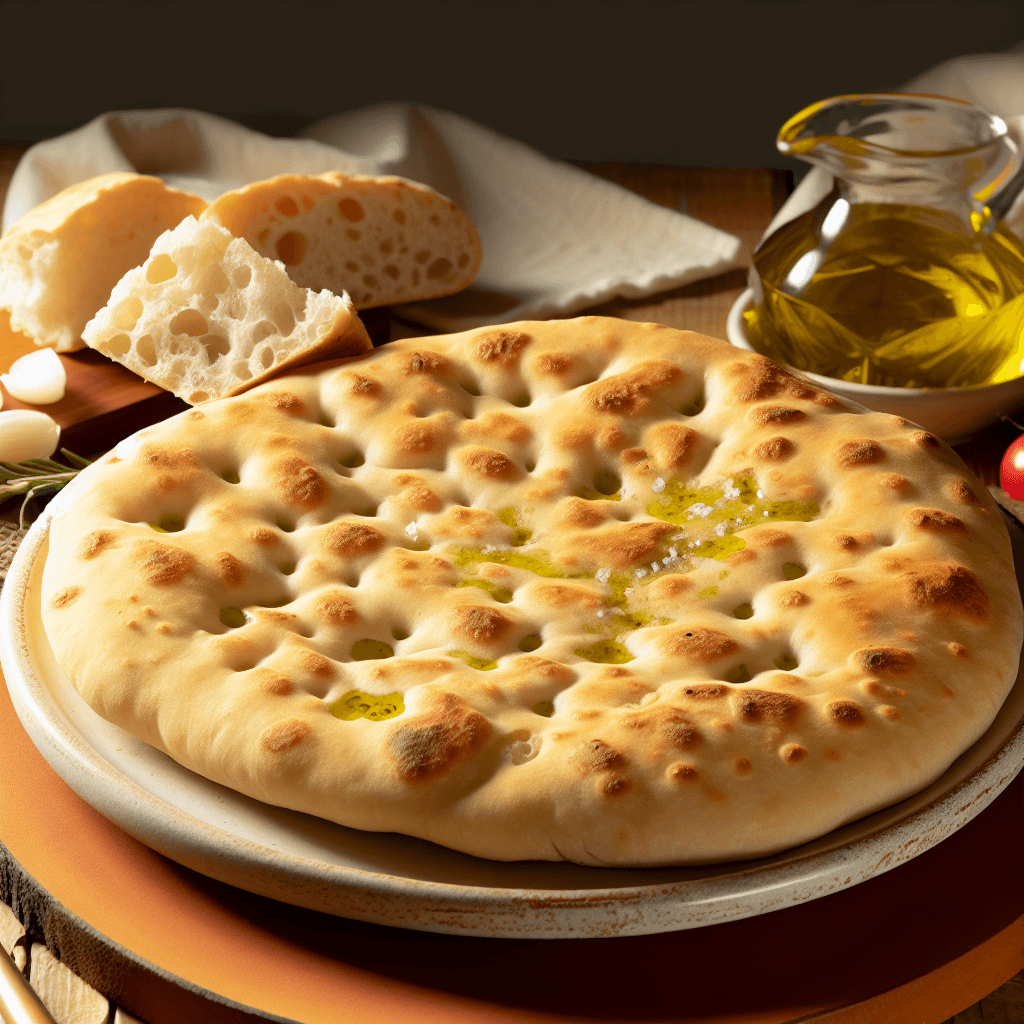
Focaccia Genovese(利古里亚橄榄油小面包)
热那亚著名的橄榄油面包——有酒窝、枕状、涂有大量油并撒有海盐。终极佛卡夏。
关于这个食谱
热那亚佛卡夏 (Focaccia Genovese) 是这道菜的原始版本,而且许多人认为,这是这道菜的最好版本。利古里亚佛卡夏的特点是橄榄油含量高(无论是在面团中还是在烘烤前倒在上面)、独特的凹凸表面和完美平衡的盐皮。内部应该柔软、通风,有轻微的咀嚼感;锅底应该会因锅中的油而形成浅金棕色的外壳。面团比面包面团更湿,富含橄榄油,并进行长时间的首次发酵,然后铺入涂有油的烤盘中,在压凹和烘烤之前再次发酵。在热那亚,佛卡夏面包作为早餐搭配卡布奇诺、作为小吃、作为餐食的佐餐——这是一种生活方式。
食材
服务 8
- 500 克高筋面粉或00面粉
- 375 毫升水,微温的
- 7 克速溶干酵母
- 10 克细盐
- 50 毫升面团用特级初榨橄榄油
- 80 毫升用于托盘和配料的特级初榨橄榄油
- 1 汤匙片状海盐(例如 Maldon)用于装饰
步骤
- 1
做面团
混合面粉、酵母和细盐。加入水和50毫升橄榄油,混合成粗面团,揉捏8分钟,直至光滑且稍有粘性。面团比面包面团湿——不要添加额外的面粉。
- 2
第一次崛起
将面团放入涂了油的碗中,盖上盖子,在室温下放置 1-1.5 小时,直至发酵至两倍大。
- 3
转移到托盘
将 40 毫升橄榄油倒入大有边烤盘(30×40 厘米)中。将面团转到托盘上,轻轻拉伸使其适合。如果弹回来,请休息 10 分钟,然后重试。
- 4
二次崛起
将剩余的 40 毫升橄榄油淋在表面。盖上盖子,发酵 45 分钟直至蓬松。
- 5
酒窝和盐
将烤箱预热至 230°C (445°F)。将手指用力按入面团,在面团上留下深深的凹痕。撒上大量的片状盐。
- 6
烘烤
烘烤 20-25 分钟,直至顶部呈金黄色,边缘呈深棕色。橄榄油应该使底部稍微酥脆。
- 7
冷却即可食用
切割前休息 10 分钟。吃温热的。
你做过这道菜吗?
给它评分,帮助其他人找到真正好用的食谱。
一键登录,我们会保存你刚刚选择的评分。
规划一周饮食所需的一切 — 免费
- 膳食日历
- 购物清单
- AI 食谱推荐
记录你的饮食
在免费的 SnapCal 应用中拍下餐食即可记录卡路里和宏量营养素,还能使用断食计时器和饮水记录。
专业提示
- →
橄榄油比你想象的要多——利古里亚佛卡夏并不羞于使用橄榄油。这是决定性的味道。
- →
这些凹痕会阻止佛卡夏面包均匀膨胀并形成充满油的小井。
- →
为了增加风味,请在烘烤前添加新鲜迷迭香或切成薄片的洋葱。
- →
在最后品尝并调整盐——随着液体的减少,味道会集中,最后一小撮片状盐会使整道菜变得更锋利。
变化
- •
Focaccia al rosmarino:添加迷迭香小枝,压入酒窝。
- •
Focaccia col formaggio (Recco):来自热那亚附近 Recco 的一种完全不同的、薄如纸的夹心版本。
- •
素食者:将蛋白质换成烤杏鲍菇、熏豆腐或煮熟的鹰嘴豆——稍微向上调整调味料以进行补偿。
- •
更辣:在芳香剂中添加切碎的新鲜辣椒或一茶匙压碎的阿勒颇/乌尔法胡椒,以获得温暖、分层的热量,而不是单一的强烈刺激。
存储
制作当天最好。包裹好后可在室温下保存最多 2 天,或冷冻切片。
历史与起源
佛卡夏(Focaccia)在利古里亚有着悠久的历史,可以追溯到前罗马时代。利古里亚水手被认为是将其传播到整个地中海的。这个词来自拉丁语“焦点”(炉灶)——它最初是在炉石上烘烤的。
常见问题解答
我可以用通用面粉代替面包粉吗?
是的——通用面粉可以制作出稍软、不太耐嚼的佛卡夏面包。两者都运作良好。
为什么我的佛卡夏不透气?
面团可能发酵过度(气泡破裂)或发酵不足。使用戳测试:面团应缓慢弹回。
我可以提前做这个吗?
是的——大多数成分最多可以提前一天准备好并单独冷藏。轻轻重新加热并在食用前组装,以保持纹理清晰。
如果我没有所有原料,我可以用什么代替?
密切关注每种成分所扮演的角色:将芳香剂替换为类似的芳香剂(将葱替换为洋葱,将酸橙替换为柠檬),并保持脂肪酸盐平衡不变。香料混合物通常可以与橱柜中的香料近似。
营养成分
每份 · 8 总份量
时间总结
指南中精选
此食谱在以下精选指南中有所介绍:
更多意大利食谱
你可能也喜欢
来自世界其他菜系的相似菜肴。
免费厨房工具
与本页搭配使用的计算器和单位换算工具,无需注册。
把它变成计划
加入日历、生成购物清单、掌握家里已有的食材。
社区
加入对话
登录发表评论并保存您最喜欢的食谱