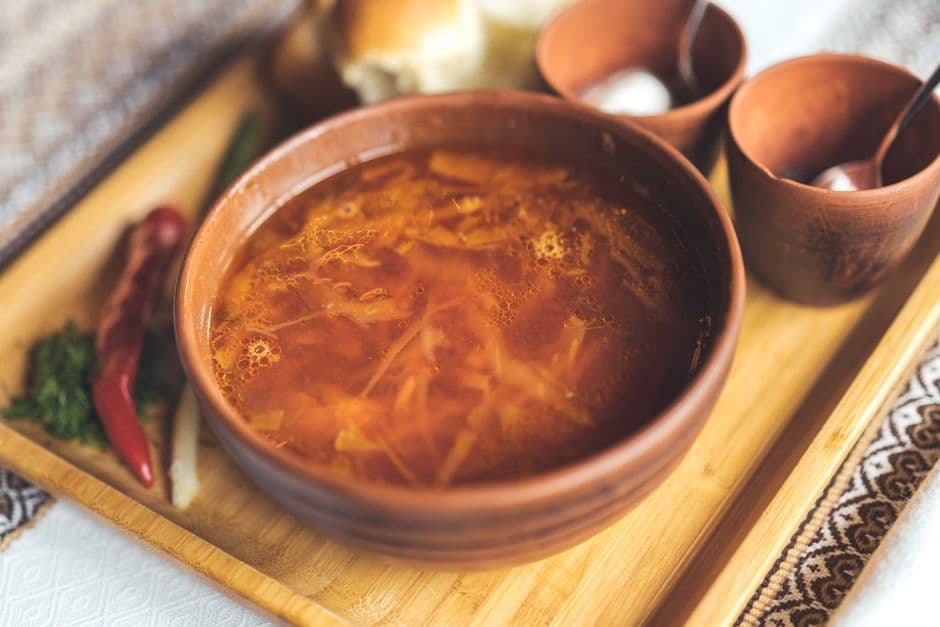
A nourishing green soup made from aibika leaves — Papua New Guinea's 'slippery cabbage' — cooked in coconut broth with garlic and ginger.
Aibika (Abelmoschus manihot), commonly called 'slippery cabbage' for its okra-like mucilaginous texture when cooked, is one of the most nutritionally important leafy vegetables in Papua New Guinea and the wider Pacific. Rich in iron, calcium, and vitamins, it is a dietary staple in both rural villages and Port Moresby households. The leaves are cooked briefly in coconut milk broth with aromatics, producing a green soup with a silky, slightly viscous consistency from the natural mucilage of the leaves. This is honest, everyday PNG home cooking at its most nourishing.
Sirve 4
Heat coconut oil in a saucepan over medium heat. Add onion, garlic, and ginger. Cook for 5 minutes until softened and fragrant.
Pour in the stock and bring to a gentle simmer.
Add the aibika leaves and simmer for 8–10 minutes until completely wilted and tender. Do not overcook — the leaves should retain a bright green colour.
Stir in coconut milk and simmer for 3 minutes. Season with salt and serve hot with boiled sweet potato or steamed rice.
If aibika is unavailable, substitute spinach — though the thickening effect of aibika's natural mucilage won't be replicated.
Young tender leaves are best — older leaves can be tough.
Do not boil vigorously after adding coconut milk as it can curdle.
Pruebe y ajuste la sal al final — los sabores se concentran a medida que los líquidos se reducen, y un pellizco final de sal escamosa afilará todo el plato.
Add cubed tofu for protein.
Stir in a tablespoon of peanut butter for a West African-inspired twist.
Add cooked chicken or prawns in the last 5 minutes.
Vegetariano: intercambie la proteína por champiñones ostra rey asados, tofu ahumado o garbanzos cocidos — ajuste el condimento ligeramente hacia arriba para compensar.
Refrigerate for up to 2 days. The soup thickens on standing — thin with stock when reheating.
Aibika has been cultivated in Papua New Guinea and the Pacific for thousands of years, valued as much for its medicinal properties as its nutritional value. It is believed to aid wound healing and boost immunity, earning it a revered status in village communities.
The leaves contain natural mucilage (similar to okra), which gives the soup a slightly viscous, silky consistency. This is entirely normal and desirable.
Sí — la mayoría de los componentes se pueden preparar hasta un día antes y refrigerar por separado. Recaliente suavemente y ensamble justo antes de servir para que las texturas permanezcan distintas.
Manténgase cerca del papel que juega cada ingrediente: intercambie aromáticos por similares (echalota por cebolla, lima por limón) y mantenga el balance grasa-ácido-sal intacto. Las mezclas de especias generalmente se pueden aproximar con lo que está en la alacena.
La autenticidad se encuentra en un espectro — lo que importa más es honrar la técnica y el balance de sabores. Si el plato tiene un sabor armonioso y respeta cómo los cocineros en su región de origen lo construirían, está en terreno sólido.
Por porción (280g) · 4 porciones totales
Pregúntele a nuestro asistente de cocina con IA cualquier cosa sobre esta receta: sustituciones, técnicas, escalado.
Chatea con AI Chef →Únete a la conversación
Inicia sesión para dejar un comentario y guardar tus recetas favoritas
¿Tienes comentarios o necesitas ayuda?
Leemos todos los correos y respondemos en 1–2 días hábiles.
© 2026 MyCookingCalendar. Todos los derechos reservados.