
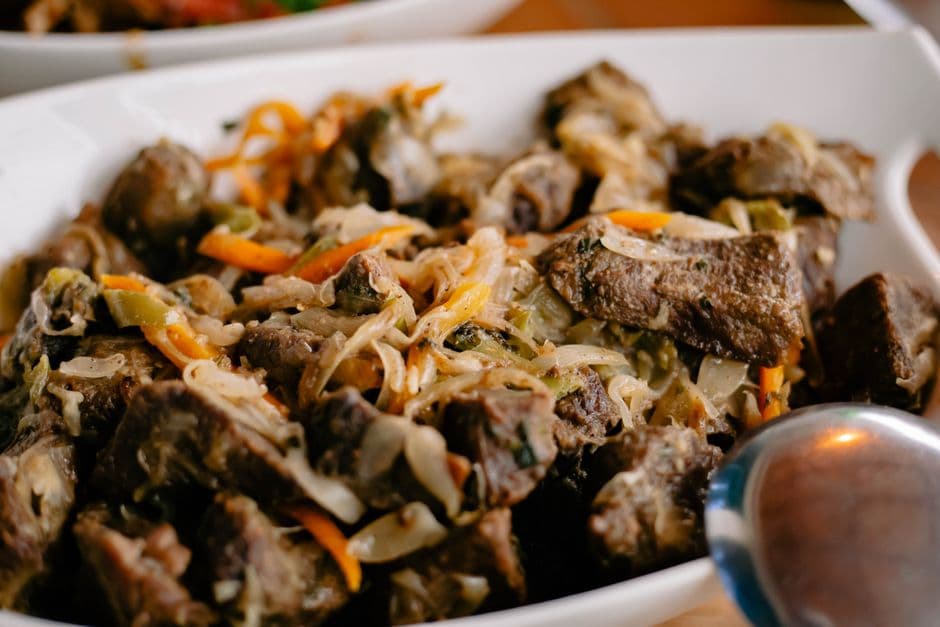
Pit Pit (Wild Sugarcane Shoot Stir-Fry)
Brotes tiernos y tiernos de caña de azúcar silvestre salteados con crema de coco, ajo y chile: un plato de verduras de PNG único y preciado.
Acerca de esta receta
El hoyo (Saccharum edule), también conocido como espárrago de Fiji o brote de caña de azúcar silvestre, es una de las hortalizas más distintivas y preciadas de Papua Nueva Guinea. Las vainas florales jóvenes de la planta se cosechan antes de que se abran, revelando un interior blanco, tierno, parecido al maíz, con un sabor sutilmente dulce a hierba. A diferencia de la caña de azúcar cultivada para obtener azúcar, el hueso se cosecha enteramente para comer y se ha cultivado en PNG, Fiji y las Islas Salomón durante cientos de años. Ligeramente cocinado con crema de coco y aromáticos, el hoyo es un verdadero sabor del jardín del Pacífico.
Ingredientes
Sirve 4
- 600 ghueso (brotes de caña de azúcar silvestre), descascarillado y cortado en rodajas de 3 cm
- 200 mlcoconut cream
- 3 dientesgarlic, sliced
- 1chile rojo, en rodajas
- 1cebolla mediana, en rodajas
- 1 cdaaceite de coco
- 1 cdtasal
- ½ cdtapimienta negra
- 2 cdasalsa de soja
Instrucciones
- 1
Preparar el pit pit
Retire la funda verde exterior de cada hoyo para revelar el interior blanco. Cortar en rodajas de 3 cm en diagonal.
- 2
Sofreír los aromáticos
Calienta el aceite de coco en un wok o en una sartén grande a fuego alto. Agrega el ajo, el chile y la cebolla. Sofría durante 2 minutos hasta que esté fragante.
- 3
Cocinar el pit pit
Agregue las rodajas de hoyo y revuelva para cubrir. Agregue salsa de soja y saltee durante 5 a 6 minutos hasta que el hueso esté tierno con un ligero mordisco.
- 4
Terminar con crema de coco
Vierta la crema de coco, sazone con sal y pimienta y cocine a fuego lento durante 2 minutos hasta que la salsa se reduzca ligeramente y cubra el hueso. Servir con arroz al vapor.
¿Has preparado esta receta?
Valórala y ayuda a otros a encontrar las recetas que de verdad funcionan.
Inicia sesión con un toque y guardaremos la valoración que acabas de elegir.
Todo lo que necesitas para planificar tu semana — gratis
- Calendario de comidas
- Lista de compras
- Ideas de recetas con IA
Cocina con las manos libres
Consigue planes de comida con IA, modo de cocina paso a paso y tus recetas guardadas en la app gratuita Bento.
Consejos profesionales
- →
El hoyo es mejor cuando los brotes son muy jóvenes y están bien cerrados; el interior debe ser de color blanco lechoso.
- →
Si no hay hueso disponible, el maíz tierno o los palmitos son sustitutos razonables.
- →
No lo cocine demasiado: el hueso debe conservar un suave crujido.
- →
Pruebe y ajuste la sal al final — los sabores se concentran a medida que los líquidos se reducen, y un pellizco final de sal escamosa afilará todo el plato.
Variaciones
- •
Agregue pollo o langostinos cocidos para una comida completa.
- •
Use jugo de limón en lugar de salsa de soja para obtener un acabado más brillante.
- •
Ralla jengibre fresco en el salteado para darle más calidez.
- •
Vegetariano: intercambie la proteína por champiñones ostra rey asados, tofu ahumado o garbanzos cocidos — ajuste el condimento ligeramente hacia arriba para compensar.
Almacenamiento
Es mejor comerlo fresco. Las sobras se conservan en el frigorífico durante 1 o 2 días.
Historia y origen
El hoyo se ha cultivado en toda Melanesia durante siglos y es apreciado como un cultivo de hortalizas que crece fácilmente junto con otros cultivos de subsistencia. En los mercados de PNG, el hueso fresco se vende agrupado en gavillas y quienes han crecido comiéndolo lo consideran una verdura de lujo.
Preguntas frecuentes
¿Dónde puedo comprar pit pit fuera de PNG?
El hoyo es raro fuera del Pacífico. Las tiendas de comestibles de las islas del Pacífico en Australia, Nueva Zelanda y Estados Unidos ocasionalmente lo venden fresco o congelado. Los palmitos son el mejor sustituto disponible.
¿Puedo hacer esto con anticipación?
Sí — la mayoría de los componentes se pueden preparar hasta un día antes y refrigerar por separado. Recaliente suavemente y ensamble justo antes de servir para que las texturas permanezcan distintas.
¿Qué puedo sustituir si no tengo todos los ingredientes?
Manténgase cerca del papel que juega cada ingrediente: intercambie aromáticos por similares (echalota por cebolla, lima por limón) y mantenga el balance grasa-ácido-sal intacto. Las mezclas de especias generalmente se pueden aproximar con lo que está en la alacena.
¿Cómo sé si es auténtico?
La autenticidad se encuentra en un espectro — lo que importa más es honrar la técnica y el balance de sabores. Si el plato tiene un sabor armonioso y respeta cómo los cocineros en su región de origen lo construirían, está en terreno sólido.
Datos nutricionales
Por porción (250g) · 4 porciones totales
Resumen de tiempo
¿Tiene preguntas?
Pregúntele a nuestro asistente de cocina con IA cualquier cosa sobre esta receta: sustituciones, técnicas, escalado.
Chatea con AI Chef →Destacado en Guías
Esta receta aparece en las siguientes guías seleccionadas:
Más recetas de Papua-new-guinean
También Te Puede Gustar
Platos similares de otras cocinas del mundo.
Herramientas de Cocina Gratuitas
Calculadoras y conversores que acompañan a esta página — sin registro.
Conviértelo en un Plan
Prográmalo, haz la compra y controla lo que ya tienes.
Sigue Leyendo
Lecturas más largas que profundizan en las ideas detrás de este plato.
Comunidad
Únete a la conversación
Inicia sesión para dejar un comentario y guardar tus recetas favoritas