
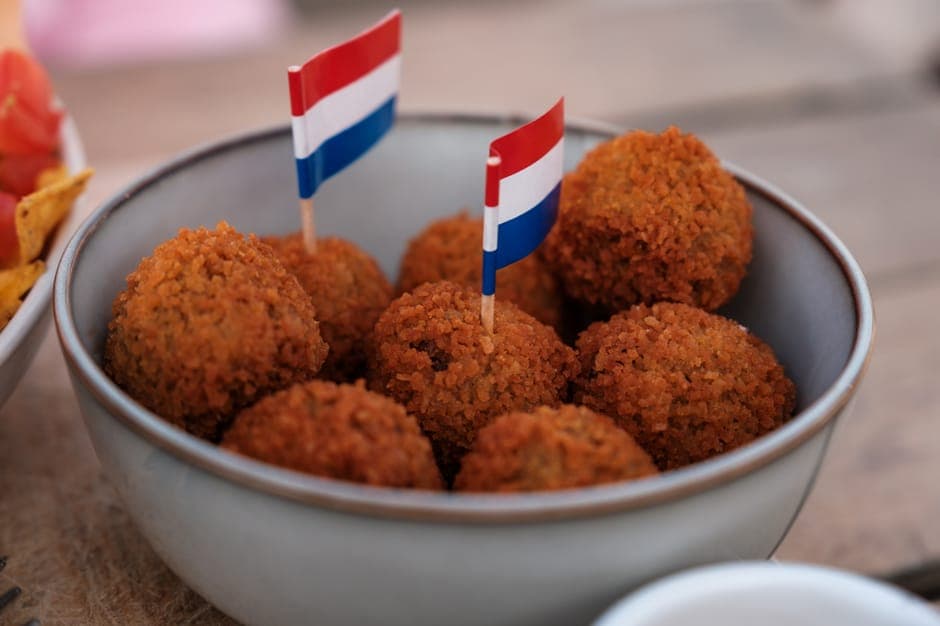
Bitterballen (croquetas holandesas de ragú de ternera)
El snack de bar más popular de los Países Bajos: bolas doradas y crujientes fritas con un centro de ragú de carne fundida. Servido con mostaza holandesa en todas las cafeterías y fiestas de cumpleaños. El bocado holandés imprescindible.
Acerca de esta receta
Los Bitterballen son el bocadillo que define la cultura de los cafés holandeses y se consumen en enormes cantidades: en fiestas de cumpleaños (verjaardagen), en la legendaria institución holandesa de 'borreltijd' (hora de tomar una copa) y en cada bruine kroeg (pub marrón) de Ámsterdam. Son esencialmente croquetas de ternera holandesas pequeñas y esféricas: un ragú de ternera espeso y muy sabroso (hecho de ternera estofado a fuego lento en una rica salsa roux) que se enfría hasta que esté sólido, se le da forma de bolitas, se empana y se fríe hasta que se rompe y queda crujiente por fuera con un centro de ragú humeante y derretido. El desafío y la alegría: morder con cuidado para evitar que el interior se queme mientras se moja en mostaza holandesa picante.
Ingredientes
Sirve 6
- 300 gpechuga de res o chuck(estofado hasta que esté tierno, desmenuzado)
- 60 gmantequilla
- 60 gharina simple
- 400 mlcaldo de res(warm)
- 1 cdasalsa inglesa
- 1 cdamostaza Dijon
- 2 cdaperejil fresco(finely chopped)
- 0.5 cdtanuez moscada
- 1 cdtasal
- 0.5 cdtapimienta blanca
- 3huevos(batido, para recubrir)
- 150 gpan rallado fino y seco
- plain flourfor dusting
- 1 litroaceite vegetal(for frying)
- Dutch mustard (Zaanse mosterd)para servir
Instrucciones
- 1
Preparar el guiso
Derrita la mantequilla en una cacerola. Incorpora la harina y cocina 2 minutos (roux). Agregue gradualmente el caldo tibio, batiendo constantemente hasta que quede suave y espeso. Agregue la carne de res desmenuzada, la salsa Worcestershire, la mostaza, el perejil, la nuez moscada, la sal y la pimienta. Cocine revolviendo 5 min.
- 2
Dejar cuajar el guiso
Vierta en un plato poco profundo. Cubrir con film transparente directamente sobre la superficie. Refrigere por un mínimo de 3 horas o toda la noche hasta que esté completamente sólido; debe estar lo suficientemente firme como para darle forma.
El ragú debe quedar muy firme cuando esté frío. Si está demasiado suave para darle forma, agregue 1 cucharada más de harina a la mezcla y vuelva a cocinar brevemente.
- 3
Shape
Con las manos frías y mojadas, forme bolitas con cucharadas del ragú firme (de 3 a 4 cm de diámetro). Trabaja rápido: el calor los suavizará. Regrese las bolitas formadas a la nevera durante 30 min.
- 4
Bread
Pasar cada bola por harina, luego por huevo batido y luego por pan rallado. Doble capa: sumérjala nuevamente en huevo y luego en pan rallado para obtener una cáscara extra crujiente. Regresar al refrigerador 30 min.
- 5
Freír en abundante aceite
Calentar el aceite a 180°C. Freír los bitterballen en tandas de 6, 2 a 3 minutos hasta que estén dorados. Escurrir sobre toallas de papel.
- 6
Serve
Sirva inmediatamente con mostaza holandesa para mojar. El interior debe estar fundido; advierta a los invitados que muerdan con cuidado.
¿Has preparado esta receta?
Valórala y ayuda a otros a encontrar las recetas que de verdad funcionan.
Inicia sesión con un toque y guardaremos la valoración que acabas de elegir.
Todo lo que necesitas para planificar tu semana — gratis
- Calendario de comidas
- Lista de compras
- Ideas de recetas con IA
Cocina con las manos libres
Consigue planes de comida con IA, modo de cocina paso a paso y tus recetas guardadas en la app gratuita Bento.
Consejos profesionales
- →
El doble empanizado es importante: la capa adicional evita que el interior fundido explote durante la fritura.
- →
El ragú debe estar completamente frío y firme antes de darle forma; el ragú tibio no mantendrá su forma.
- →
Pruebe y ajuste la sal al final — los sabores se concentran cuando los líquidos se reducen, y un último pellizco de sal escamosa realza todo el plato.
- →
Mise en place se paga a sí mismo: pique, mida y mezcle previamente todo antes de encender el calor, especialmente para cualquier paso que se mueva rápido.
Variaciones
- •
Bitterballen de queso: reemplace la carne con una salsa espesa de queso Gouda
- •
Ragú de champiñones para versión vegetariana
- •
Agregue curry en polvo al ragú para obtener una versión de fusión holandesa-indonesia (kroket kari)
- •
Vegetariano: cambie la proteína por champiñones ostra king asados, tofu ahumado o garbanzos cocidos — ajuste el condimento ligeramente hacia arriba para compensar.
Almacenamiento
Los bitterballen empanizados y con forma se congelan muy bien; se fríen directamente desde el congelado, añadiendo 1 minuto más.
Historia y origen
Bitterballen evolucionó a partir del holandés kroket (croqueta) en los siglos XVIII y XIX. El formato esférico más pequeño fue diseñado específicamente como un refrigerio de un solo bocado para acompañar los 'bitters' (ginebra holandesa). La tradición de servir bitterballen en los borrels (reuniones de bebidas) está tan profundamente arraigada en la cultura holandesa que el bitterbal a menudo se cita como el snack holandés más representativo a nivel internacional.
Preguntas frecuentes
¿Qué es la mostaza holandesa (Zaanse mosterd)?
Zaanse mosterd es una mostaza holandesa molida gruesa de la región de Zaandam con una textura fuerte y granulada y un sabor fuerte. Es más picante y picante que la mostaza de Dijon, pero menos que la mostaza inglesa. Está disponible en tiendas especializadas de alimentos holandesas y en algunos supermercados. Cualquier mostaza de grano grueso es un buen sustituto.
¿Puedo hacer esto con anticipación?
Sí — la mayoría de los componentes se pueden preparar hasta un día antes y refrigerar por separado. Recaliente suavemente y ensamble justo antes de servir para que las texturas permanezcan distintas.
¿Qué puedo sustituir si no tengo todos los ingredientes?
Manténgase cerca del papel que juega cada ingrediente: cambie los aromáticos por otros similares (chalota por cebolla, lima por limón) y mantenga el equilibrio de grasa-ácido-sal intacto. Los mezcles de especias generalmente se pueden aproximar con lo que esté en la despensa.
¿Cómo sé que es auténtico?
La autenticidad está en un espectro — lo que importa más es honrar la técnica y el equilibrio de sabores. Si el plato sabe armonioso y respeta cómo los cocineros en su región de origen lo construirían, estás en terreno sólido.
Datos nutricionales
Por porción · 6 porciones totales
Resumen de tiempo
¿Tiene preguntas?
Pregúntele a nuestro asistente de cocina con IA cualquier cosa sobre esta receta: sustituciones, técnicas, escalado.
Chatea con AI Chef →Destacado en Guías
Esta receta aparece en las siguientes guías seleccionadas:
Más recetas de cocina holandesa
También Te Puede Gustar
Platos similares de otras cocinas del mundo.
Explorar por Ingrediente
Más recetas construidas alrededor de los mismos ingredientes principales.
Herramientas de Cocina Gratuitas
Calculadoras y conversores que acompañan a esta página — sin registro.
Conviértelo en un Plan
Prográmalo, haz la compra y controla lo que ya tienes.
Sigue Leyendo
Lecturas más largas que profundizan en las ideas detrás de este plato.
Comunidad
Únete a la conversación
Inicia sesión para dejar un comentario y guardar tus recetas favoritas