
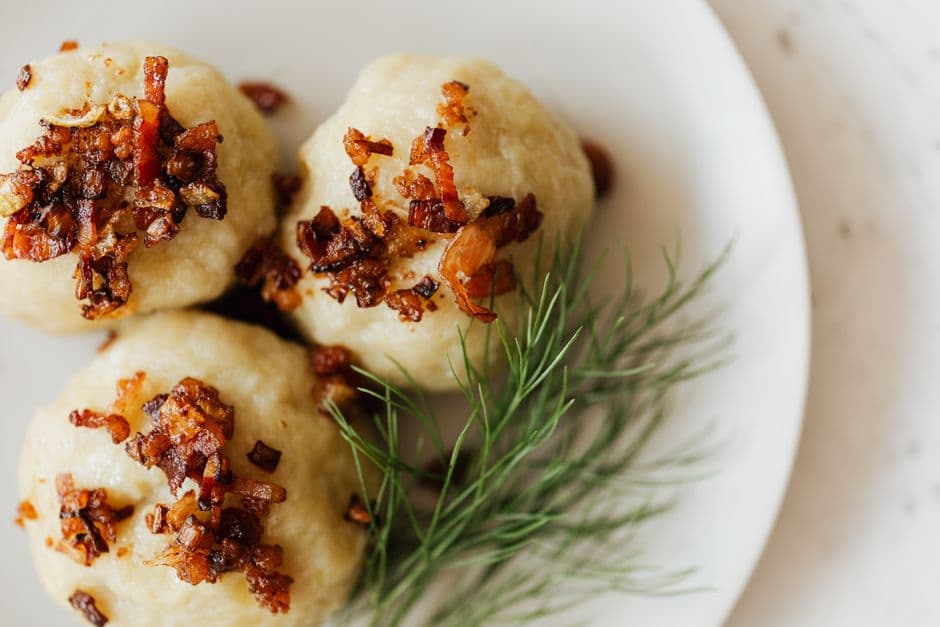
Kibinai
Los pasteles de media luna hojaldra lituanos rellenos de cordero jugoso y cebolla, una especialidad de la comunidad Karaíta.
Acerca de esta receta
Kibinai son el platillo distintivo de los Karaítas, una pequeña comunidad judía de habla túrcica que se estableció en Trakai, Lituania, en el siglo XIV a invitación del Gran Duque Vytautas. La capa de hojaldre mantecoso y estratificada encierra un relleno sabroso de cordero molido y cebolla cruda sazonada con sal y pimienta. Las panaderías kibinai de Trakai atraen a visitantes de toda Lituania, convirtiendo esta pequeña ciudad medieval en un destino culinario. El pastel ha sido otorgado estado de protección como parte del patrimonio cultural inmaterial de Lituania.
Ingredientes
Sirve 8
- 500 gharina común
- 200 gmantequilla fría, cubicada
- 2 grandehuevos
- 100 mlagua fría
- 1 cdtasal
- 400 ghombro de cordero, finamente molido
- 1 grandecebolla, finamente picada
- 1 cdtapimienta negra
- 0.5 cdtasal (para el relleno)
- 1 grandeyema de huevo (para el glaseado)
Instrucciones
- 1
Hacer el pastel
Frotar mantequilla en harina y sal hasta que la mezcla se parezca a migas de pan. Batir huevos con agua fría y mezclar en la harina hasta que forme una masa suave. Envolver y refrigerar durante 30 minutos.
- 2
Preparar el relleno
Combinar cordero molido, cebolla, sal y pimienta. Mezclar bien — no precocinar el relleno.
- 3
Dar forma a kibinai
Dividir masa en 8 bolas. Enrollar cada una en un óvalo de aproximadamente 3 mm de espesor. Colocar 2 cucharadas de relleno en una mitad, doblar la otra mitad sobre ella, y fruncir firmemente los bordes en un sello tipo cuerda.
- 4
Hornear
Cepillar con glaseado de yema de huevo. Hornear a 200 °C durante 35–40 minutos hasta que estén dorados profundamente.
¿Has preparado esta receta?
Valórala y ayuda a otros a encontrar las recetas que de verdad funcionan.
Inicia sesión con un toque y guardaremos la valoración que acabas de elegir.
Todo lo que necesitas para planificar tu semana — gratis
- Calendario de comidas
- Lista de compras
- Ideas de recetas con IA
Cocina con las manos libres
Consigue planes de comida con IA, modo de cocina paso a paso y tus recetas guardadas en la app gratuita Bento.
Consejos profesionales
- →
Mantener todos los ingredientes fríos para el hojaldre más crujiente.
- →
El relleno crudo es tradicional — se cocina al vapor dentro del pastel durante el horneado.
- →
Hacer un pequeño respiradero de vapor en la parte superior para evitar que reventar.
- →
Probar y ajustar sal al final — los sabores se concentran a medida que los líquidos se reducen, y un pizco final de sal de copos agudiza todo el platillo.
Variaciones
- •
Relleno de res o cerdo como alternativa más accesible al cordero.
- •
Kibinai dulce con relleno de manzana o cereza para postre.
- •
Vegetariana: reemplazar la proteína por setas king oyster asadas, tofu ahumado o garbanzos cocidos — ajustar el condimento ligeramente hacia arriba para compensar.
- •
Más picante: agregar un chile fresco finamente picado o una cucharadita de pimienta de Alepo/Urfa molida a los aromáticos para un calor cálido y estratificado en lugar de un único golpe agudo.
Almacenamiento
Mejor comido fresco y caliente. Almacenar sobras en un recipiente hermético durante hasta 2 días y recalentar en el horno.
Historia y origen
Kibinai llegó a Lituania con el pueblo Karaíta hace más de 600 años. Permanecen como la pieza central de la cocina Karaíta y un símbolo de resiliencia cultural.
Preguntas frecuentes
¿Por qué el relleno es crudo?
El relleno crudo libera sus jugos mientras se hornea, manteniendo el interior húmedo y sabroso — un sello distintivo de kibinai auténtico.
¿Puedo usar hojaldre comprado?
El hojaldre comprado en tienda funciona como atajo pero produce una textura diferente y menos auténtica.
¿Puedo hacer esto con anticipación?
Sí — la mayoría de los componentes pueden prepararse con hasta un día de anticipación y refrigerarse por separado. Calentar suavemente y ensamblar justo antes de servir para que las texturas permanezcan distintas.
¿Qué puedo sustituir si no tengo todos los ingredientes?
Mantenerse cerca del rol que cada ingrediente juega: intercambiar aromáticos por similares (chalote por cebolla, lima por limón), y mantener intacto el equilibrio de grasa-ácido-sal. Las mezclas de especias generalmente pueden aproximarse con lo que haya en la alacena.
Datos nutricionales
Por porción (200g) · 8 porciones totales
Resumen de tiempo
¿Tiene preguntas?
Pregúntele a nuestro asistente de cocina con IA cualquier cosa sobre esta receta: sustituciones, técnicas, escalado.
Chatea con AI Chef →Destacado en Guías
Esta receta aparece en las siguientes guías seleccionadas:
Más recetas de Lithuanian
También Te Puede Gustar
Platos similares de otras cocinas del mundo.
Herramientas de Cocina Gratuitas
Calculadoras y conversores que acompañan a esta página — sin registro.
Conviértelo en un Plan
Prográmalo, haz la compra y controla lo que ya tienes.
Sigue Leyendo
Lecturas más largas que profundizan en las ideas detrás de este plato.
Comunidad
Únete a la conversación
Inicia sesión para dejar un comentario y guardar tus recetas favoritas