
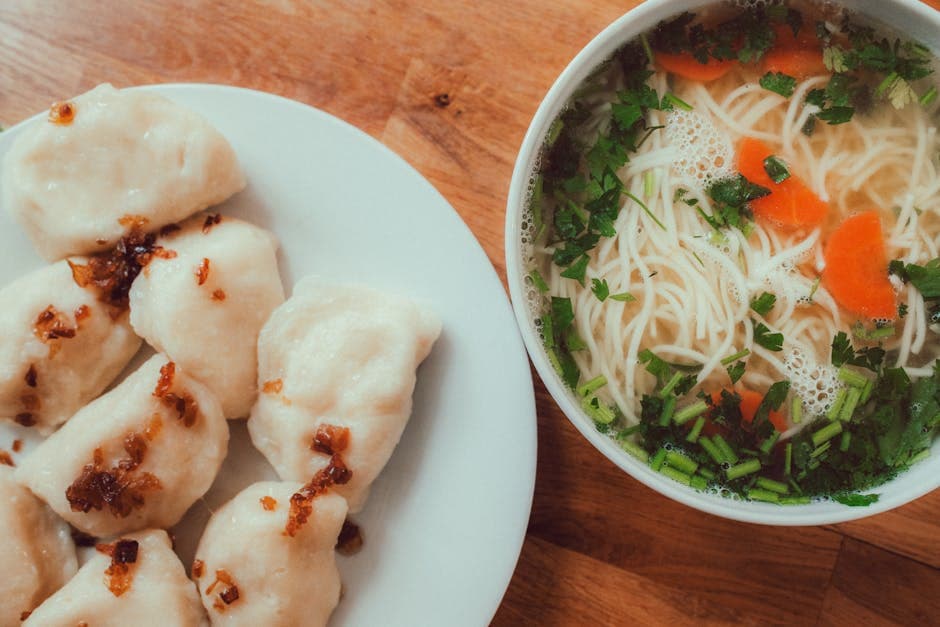
Barszcz Czerwony
Soupe polonaise aux betteraves rouges vibrante servie claire ou avec de petites boulettes champiginons uszka — le joyau du réveillon de Noël polonais.
À propos de cette recette
Barszcz czerwony (bortsch rouge) est l'un des plus beaux plats de Pologne — un bouillon clair et cristallin, profond rouge rubis fait de betterave fermentée ou rôtie avec une balance sucre-aigre qui est étonnamment délicieuse. À la veille de Noël (Wigilia) il est servi en premier plat avec de minuscules uszka (petites boulettes champiginons et sarrasin) flottant dedans. La couleur, la saveur et l'élégance en font l'une des grandes soupes de la cuisine européenne.
Ingrédients
Sert 6
- 1 kgbetterave crue(pelée et râpée)
- 1.5 litresbouillon végétal
- 1 grandeoignon(coupé en deux)
- 4 goussesail
- 2 c. à s.vinaigre de vin rouge
- 1 c. à c.sucre
- 4baies de quatre-épices
- 2feuilles de laurier
- 1 c. à c.sel
- 1 c. à s.jus de citron
Étapes
- 1
Faire le bouillon
Combiner bouillon, betterave, oignon, ail, quatre-épices, feuilles de laurier et sel dans une casserole. Porter à ébullition et mijoter doucement 45 minutes. Ne pas faire bouillir à gros bouillons — cela ternit la couleur.
- 2
Passer
Passer à travers un fin tamis tapissé de mousseline ou d'un tissu propre. Presser doucement — ne pas forcer, ou la soupe deviendra trouble.
- 3
Assaisonner
Ajouter vinaigre, jus de citron et sucre au goût. Le barszcz doit être sucré, aigre et profondément savoureux en équilibre.
- 4
Réchauffer doucement
Réchauffer quand prêt à servir. Ne pas faire bouillir après l'ajout de vinaigre — l'acide aide à préserver la couleur rubis.
- 5
Servir
Verser à la louche dans des tasses ou bols. Ajouter les boulettes uszka si servir pour la veille de Noël. La couleur doit être un profond rouge clair rubis.
Vous l'avez cuisinée ?
Notez-la et aidez les autres à trouver les recettes qui fonctionnent vraiment.
Connectez-vous en un geste : nous enregistrons la note que vous venez de choisir.
Tout ce qu'il faut pour planifier votre semaine — gratuit
- Calendrier des repas
- Liste de courses
- Idées de recettes IA
Suivez ce que vous mangez
Photographiez votre repas pour enregistrer calories et macros, lancez des minuteurs de jeûne et suivez votre hydratation avec l’app gratuite SnapCal.
Conseils de pro
- →
Ne jamais faire bouillir barszcz à gros bouillons — mijoter doucement préserve la couleur vivide.
- →
Ajouter le vinaigre et citron à la fin — cuire l'acide ternit la couleur.
- →
La qualité de la betterave importe énormément; utiliser les betteraves les plus fraîches et les plus sombres possibles.
- →
Goûter et ajuster le sel à la toute fin — les saveurs se concentrent quand les liquides réduisent, et une pincée finale de sel en flocons affûte le plat entier.
Variantes
- •
Servir chaud dans des tasses en tant que consommé clair lors de dîners formels.
- •
Mélanger une partie de la betterave passée pour un barszcz plus épais crémeux (barszcz kremowy).
- •
Végétarien: remplacer la protéine par des champignons huître royaux rôtis, du tofu fumé ou des pois chiches cuits — ajuster l'assaisonnement légèrement vers le haut pour compenser.
- •
Plus épicé: ajouter un piment frais finement haché ou une cuillère à café de piment Alep/Urfa écrasé aux aromatiques pour une chaleur nuancée et en couches au lieu d'un coup sec.
Stockage
Réfrigérer 4 jours — la couleur peut s'approfondir. Réchauffer très doucement.
Histoire et origine
Barszcz est mangé en Pologne depuis des siècles et est l'un des plats définissant la veille de Noël (Wigilia). Il apparaît dans la littérature et poésie polonaise comme un symbole du foyer. La version claire servie avec uszka est spécifique à la tradition de Noël.
Foire aux questions
Pourquoi barszcz devient-il parfois brun?
Faire bouillir trop fort ou ajouter de l'acide pendant la cuisson cause la dégradation des pigments. Garder une douce simulation et ajouter du vinaigre seulement à la fin.
Puis-je préparer cela à l'avance?
Oui — la plupart des composants peuvent être préparés jusqu'à un jour à l'avance et réfrigérés séparément. Réchauffer doucement et assembler juste avant de servir pour que les textures restent distinctes.
Par quoi puis-je remplacer si je n'ai pas tous les ingrédients?
Rester proche du rôle de chaque ingrédient: permuter les aromatiques pour des similaires (échalote pour oignon, citron vert pour citron), et garder intacte la balance gras-acide-sel. Les mélanges d'épices peuvent généralement être approximés avec ce qu'il y a au placard.
Comment savoir si c'est authentique?
L'authenticité se situe sur un spectre — ce qui importe davantage est d'honorer la technique et la balance des saveurs. Si le plat goûte harmonieux et respecte comment les cuisiniers de sa région d'origine le construiraient, vous êtes sur solide terrain.
Faits nutritionnels
Par portion · 6 portions totales
Résumé du temps
Vous avez des questions ?
Demandez quoi que ce soit à notre assistant culinaire IA sur cette recette : substitutions, techniques, mise à l'échelle.
Discutez avec AI Chef →Présenté dans les guides
Cette recette est présentée dans les guides sélectionnés suivants :
Plus de recettes polonaises
Vous Aimerez Aussi
Des plats similaires venus d'autres cuisines du monde.
Parcourir par Ingrédient
D'autres recettes construites autour des mêmes ingrédients principaux.
Outils de Cuisine Gratuits
Calculateurs et convertisseurs qui accompagnent cette page — sans inscription.
Calculateur de proportions
Divisez par deux ou doublez chaque quantité de cette recette sans calcul mental.
Convertisseur de mesures
Convertissez tasses, grammes, onces et millilitres dans les deux sens.
Calculateur de calories et de portions
Calculez les calories et les macros de la portion que vous mangez vraiment.
Transformer en Plan
Programmez-le, faites les courses et suivez ce que vous avez déjà.
Calendrier de planification des repas
Placez cette recette sur un jour et organisez la semaine autour.
Appli de liste de courses
Transformez cette liste d’ingrédients en liste de courses regroupée par rayon.
Importateur de recettes
Enregistrez cette recette — et n’importe quelle URL de recette — dans une bibliothèque organisée.
À Lire Ensuite
Des articles de fond sur les idées derrière ce plat.
Flexitarisme : un argumentaire complet et factuel en faveur du changement alimentaire le plus pratique au monde
9 min.
Cuisine polonaise : un Pierogi complet, un Bigos, un Żurek et la chaleur de la cuisine d'Europe centrale
13 min.
Favoris végétariens internationaux : des dals indiens complets aux mezes turcs
12 min.
Communauté
Rejoignez la conversation
Connectez-vous pour laisser un commentaire et enregistrer vos recettes préférées