
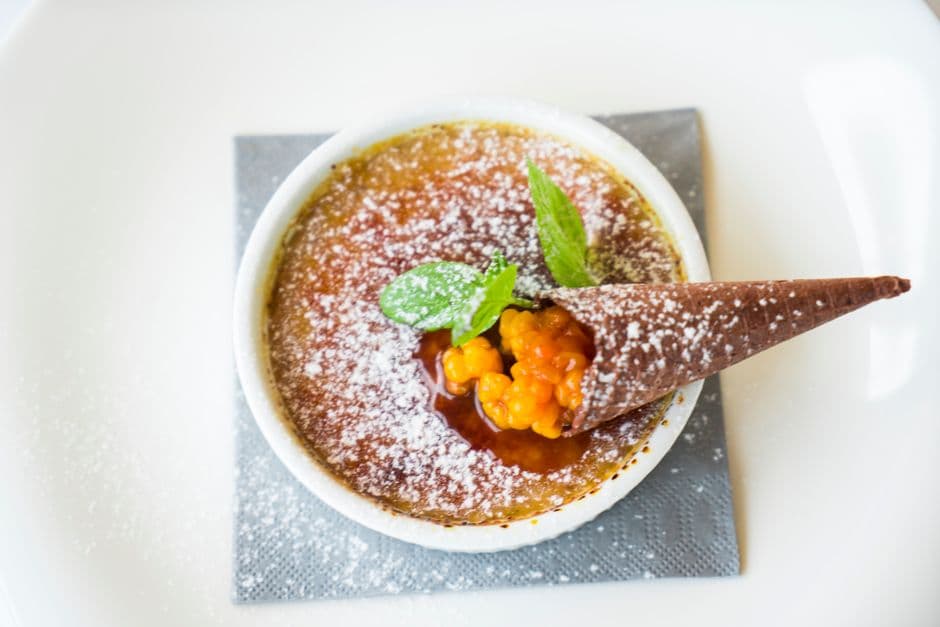
Crème Brûlée Classique
Crème onctueuse à la vanille cuite au bain-marie et garnie d'une croûte de sucre caramélisé croustillant — le coup de cuillère le plus satisfaisant de tous les desserts.
À propos de cette recette
La crème brûlée est l'un des grands paradoxes de la pâtisserie française : des ingrédients incroyablement simples — crème, jaunes d'œufs, sucre et vanille — transformés en un dessert d'une élégance à couper le souffle. Le plat est apparu pour la première fois dans la littérature culinaire française au 17e siècle, bien que Trinity College Cambridge revendique également une version. Le rituel caractéristique de frapper à travers le caramel mince comme du verre pour atteindre la crème pâtissière froide et tremblante en dessous l'a rendu intemporel dans les restaurants et un point culminant mémorable des dîners en famille. Obtenir la bonne texture nécessite de l'attention à la température et une main patiente avec le chalumeau.
Ingrédients
Sert 4
- 500 mlcrème fraîche épaisse(36% de matière grasse ou plus)
- 5 grandejaunes d'œufs
- 80 gsucre cristallisé(plus extra pour le glaçage)
- 1 entiergousse de vanille(fendue et graines grattées, ou 2 c. à café de pâte de vanille)
- 1 pincéesel fin
Étapes
- 1
Infuser la crème
Versez la crème dans une petite casserole. Ajoutez la gousse de vanille et les graines. Chauffez à feu moyen jusqu'à juste avant frémissement — de petites bulles apparaîtront aux bords. Retirer du feu, couvrir et laisser reposer 15 minutes. Retirer la gousse de vanille.
L'infusion de la crème développe beaucoup plus de saveur que l'ajout simple d'extrait de vanille à la crème pâtissière finie.
- 2
Fouetter les jaunes et le sucre
Dans un bol à mélanger, fouettez ensemble les jaunes d'œufs, le sucre cristallisé et le sel jusqu'à ce qu'ils soient pâles et légèrement épaississants, environ 2 minutes. Ne pas fouetter excessivement — incorporer trop d'air crée des bulles dans la crème pâtissière finie.
- 3
Tempérer et tamiser la crème pâtissière
Versez lentement la crème chaude dans le mélange d'œufs en filet mince, en fouettant constamment. Ce tempérage empêche les œufs de brouiller. Passez la crème pâtissière à travers un tamis à mailles fines dans un pichet. Écumez l'écume de la surface.
- 4
Cuire au bain-marie
Préchauffez le four à 150°C (300°F). Placez quatre ramequins de 150 ml dans un plat de cuisson profond. Versez la crème pâtissière uniformément dans les ramequins. Remplissez le plat de cuisson avec de l'eau chaude jusqu'à mi-hauteur des ramequins. Cuire pendant 35-40 minutes jusqu'à ce que les bords soient pris mais que le centre tremble encore comme une gelée lorsqu'on la secoue doucement.
Couvrez légèrement de papier d'aluminium si les sommets commencent à colorer — la crème brûlée doit être d'un or pâle, non brun.
- 5
Refroidir complètement
Retirez les ramequins du bain-marie et refroidissez à température ambiante. Réfrigérez sans couvrir pendant au moins 3 heures ou toute la nuit. La crème pâtissière doit être complètement froide avant le brûlage — la crème pâtissière chaude fondra plutôt que de se figer sous le caramel.
- 6
Caraméliser le sucre et servir
Épongez toute condensation de la surface de la crème pâtissière avec un essuie-tout. Saupoudrez 1-1,5 cuillères à café de sucre cristallisé uniformément sur chaque ramequin. À l'aide d'un chalumeau de cuisine, faites fondre le sucre en mouvements circulaires lents jusqu'à ce qu'il bouillonne et devienne un brun foncé. Laissez le caramel durcir pendant 1 minute avant de servir.
Deux couches minces de sucre caramélisent plus uniformément qu'une seule couche épaisse.
Vous l'avez cuisinée ?
Notez-la et aidez les autres à trouver les recettes qui fonctionnent vraiment.
Connectez-vous en un geste : nous enregistrons la note que vous venez de choisir.
Tout ce qu'il faut pour planifier votre semaine — gratuit
- Calendrier des repas
- Liste de courses
- Idées de recettes IA
Suivez ce que vous mangez
Photographiez votre repas pour enregistrer calories et macros, lancez des minuteurs de jeûne et suivez votre hydratation avec l’app gratuite SnapCal.
Conseils de pro
- →
Utilisez la meilleure vanille que vous puissiez trouver — c'est essentiellement la seule saveur de la crème pâtissière.
- →
Les ramequins froids du réfrigérateur vont directement sous le chalumeau — ne brûlez jamais une crème pâtissière chaude.
- →
Si vous n'avez pas de chalumeau, placez brièvement les ramequins sous un gril (rôtisseur) très chaud pendant 2-3 minutes.
- →
Le test d'oscillation est votre meilleur guide : bords figés, centre qui tremble signifie une crème pâtissière parfaite.
Variantes
- •
Crème Brûlée à la Lavande : Ajouter 1 c. à café de lavande culinaire séchée à la crème pendant l'infusion.
- •
Crème Brûlée au Café : Mélanger 2 c. à café de poudre d'espresso instantané dans la crème chaude avant le tempérage.
- •
Brûlée aux Agrumes : Remplacer la vanille par le zeste d'une orange et d'un citron.
- •
Végétarien : remplacez la protéine par des champignons de panier rôtis, du tofu fumé ou des pois chiches cuits — ajustez l'assaisonnement légèrement vers le haut pour compenser.
Stockage
Les crèmes pâtissières non brûlées se conservent couvertes au réfrigérateur pendant 3 jours maximum. Une fois le sucre caramélisé, servir dans les 30 minutes — le caramel se ramollit et pleure en reposant. Ne pas congeler.
Histoire et origine
La première recette documentée de crème brûlée est apparue dans le livre de cuisine de François Massialot de 1691, bien que les historiens culinaires débattent toujours de savoir si le plat est vraiment français ou a des racines anglaises ou catalanes (crema catalana). Trinity College Cambridge revendique sa propre « Trinity Cream » datant du 17e siècle. Quel que soit son origine, le plat est devenu emblématique de la haute cuisine française tout au long du 20e siècle, et la finition théâtrale au chalumeau l'a rendu signature des restaurants de nouvelle cuisine des années 1980.
Foire aux questions
Pourquoi ma crème pâtissière a-t-elle des bulles à la surface ?
Les bulles de surface proviennent d'un fouettage excessif du mélange d'œufs et de sucre, ou d'un versement trop rapide de la crème pâtissière. Passez la crème pâtissière à travers un tamis à mailles fines et laissez-la reposer 5 minutes avant la cuisson. Toute bulle persistante peut être percée avec un chalumeau de cuisine ou un cure-dent. Couvrir légèrement les ramequins de papier d'aluminium pendant la cuisson aide également à produire une surface lisse et sans défauts.
Comment savoir quand la crème pâtissière est bien prise ?
Poussez doucement le plat de cuisson — la crème pâtissière est prête lorsque les 2 cm externes sont fermes mais que les 3-4 cm centraux tremblent encore comme une gelée qui vient de prendre. Si toute la surface ondule comme un liquide, elle a besoin de plus de temps. Si elle gonfle ou se fissure, elle a été trop cuite. La crème pâtissière se raffermit davantage en refroidissant, donc faites confiance au tremblement et résistez à l'envie de trop cuire.
Puis-je faire une crème brûlée sans chalumeau ?
Oui, mais avec des compromis. Placez les ramequins refroidis sur une plaque de cuisson sous le gril (rôtisseur) de votre four réglé au maximum, positionné à environ 10 cm de l'élément. Regardez de près et tournez pour une couleur uniforme — le sucre devrait caraméliser en 2-4 minutes. L'inconvénient est que la chaleur du gril peut commencer à réchauffer la crème pâtissière, donc servez immédiatement et travaillez par petits lots.
Puis-je préparer cela à l'avance ?
Oui — la plupart des composants peuvent être préparés jusqu'à un jour à l'avance et réfrigérés séparément. Réchauffez doucement et assemblez juste avant de servir pour que les textures restent distinctes.
Faits nutritionnels
Par portion (180g) · 4 portions totales
Résumé du temps
Vous avez des questions ?
Demandez quoi que ce soit à notre assistant culinaire IA sur cette recette : substitutions, techniques, mise à l'échelle.
Discutez avec AI Chef →Présenté dans les guides
Cette recette est présentée dans les guides sélectionnés suivants :
collections
9 recettes pour utiliser les jaunes d'œufs qui vous restent
seasonal
Recettes de dîner de Saint-Valentin pour deux
seasonal
Desserts et friandises des fêtes d'hiver du monde entier
troubleshooting
Pourquoi ma crème a-t-elle tranché ou tourné en œufs brouillés ? Les protéines de l'œuf expliquées
Plus de recettes françaises
Vous Aimerez Aussi
Des plats similaires venus d'autres cuisines du monde.
Outils de Cuisine Gratuits
Calculateurs et convertisseurs qui accompagnent cette page — sans inscription.
Calculateur de proportions
Divisez par deux ou doublez chaque quantité de cette recette sans calcul mental.
Convertisseur de mesures
Convertissez tasses, grammes, onces et millilitres dans les deux sens.
Convertisseur pour friteuse à air
Convertissez le temps et la température du four en réglages pour friteuse à air.
Transformer en Plan
Programmez-le, faites les courses et suivez ce que vous avez déjà.
Calendrier de planification des repas
Placez cette recette sur un jour et organisez la semaine autour.
Appli de liste de courses
Transformez cette liste d’ingrédients en liste de courses regroupée par rayon.
Analyse des calories par photo
Photographiez l’assiette terminée et obtenez une estimation des calories et des macros.
À Lire Ensuite
Des articles de fond sur les idées derrière ce plat.
Cuisine française : les classiques complets du bistro, les sauces mères et les techniques que tout cuisinier devrait connaître
14 min.
Régime carnivore : un regard complet et honnête sur la science, les avantages et les risques
15 min.
Manger pour avoir de l'énergie : Comment éviter le crash de l'après-midi et conserver son énergie toute la journée
10 min.
Communauté
Rejoignez la conversation
Connectez-vous pour laisser un commentaire et enregistrer vos recettes préférées