
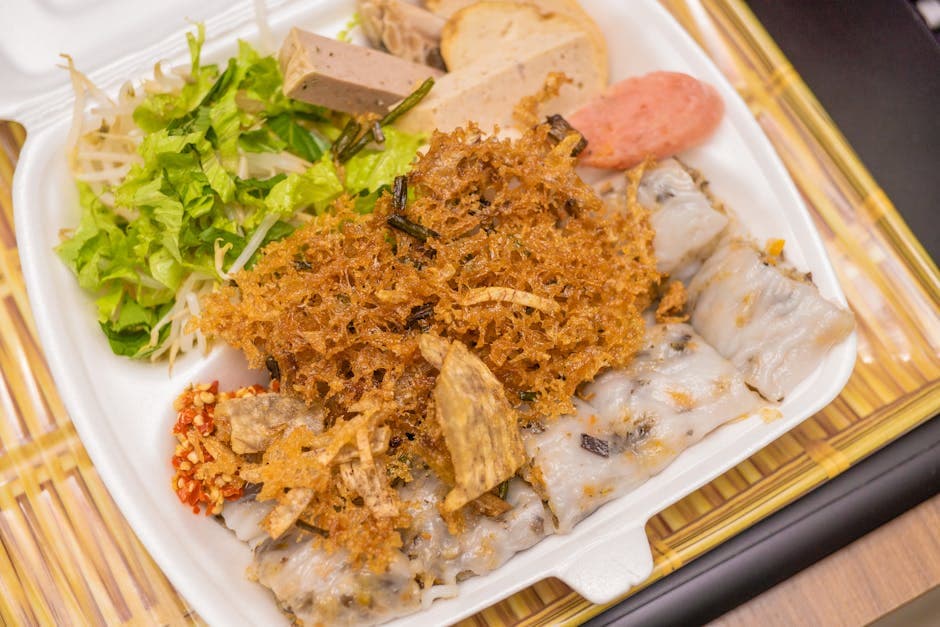
Gỏi Cuốn (Rouleaux de Printemps Frais Vietnamiens avec Sauce Arachide)
Les rouleaux de riz papier iconiques du Vietnam remplis de crevettes, vermicelle de riz, herbes et légumes croustillants — servis avec une sauce arachide hoisin riche. Léger, sain et magnifique.
À propos de cette recette
Gỏi cuốn (littéralement « rouleaux salade ») sont l'antithèse des rouleaux de printemps profonds-frits — frais, lumineux, et remplis de légumes crus, herbes, et protéines enveloppés dans du papier de riz mou. Ils sont l'un des plats les plus internationalement reconnus du Vietnam, aimé pour leurs saveurs propres et l'expérience interactive de les rouler soi-même. L'authentique gỏi cuốn sont remplis d'une architecture spécifique : laitue pour border le bas, vermicelle de riz, herbes effilochées (menthe, basilic thaï, périlla), germes de soja, concombre, et protéine (généralement crevettes et porc ventre, ou juste une des deux). La caractéristique caractéristique est deux ou trois crevettes placées au bas de l'emballage pour qu'elles montrent à travers le papier de riz transparent, créant la présentation magnifique associée au plat. La sauce de trempette arachide hoisin est riche et légèrement sucrée, équilibrant la fraîcheur des rouleaux. Enracinée dans la cuisine quotidienne des cuisines vietnamiennes, Gỏi Cuốn (Rouleaux de Printemps Frais Vietnamiens avec Sauce Arachide) équilibre la technique et la tradition : les emballages de papier de riz (22cm) sont traités avec soin, en s'appuyant sur des ratios consacrés par le temps que les habitants ont affinés au fil des générations. Le plat porte une signature sensorielle distinctive — des arômes qui remplissent la cuisine au fur et à mesure qu'il cuit, des textures superposées qui se révèlent bouchée après bouchée, et une profondeur de saveur qui provient d'un assaisonnement patient plutôt que de raccourcis. Qu'il soit servi comme apéritif en semaine ou comme centre d'une table de célébration, il reflète un garde-manger régional où les produits locaux, les habitudes d'assaisonnement et les ustensiles de cuisine façonnent le résultat final. Les cuisiniers à la maison qui préparent ce plat remarquent souvent à quel point il est indulgent une fois que la méthode de base est comprise, et comment quelques petits choix — la fraîcheur des emballages de papier de riz (22cm), l'ordre des ajouts, le temps de repos à la fin — séparent une bonne version d'une version mémorable. Cette recette explique ces choix pour que le plat arrive avec le caractère qu'il a sur son terrain d'origine.
Ingrédients
Sert 4
- 12emballages papier de riz (22cm)
- 300 ggrandes crevettes cuites, coupées en longueur
- 200 gporc ventre, bouilli 30 minutes, refroidi, finement tranché(optionnel)
- 100 gvermicelle de riz (bún), cuite, égouttée, refroidie
- 1laitue beurre, feuilles séparées
- 100 ggermes de soja
- 1concombre, coupé en allumettes fines
- 40 gfeuilles de menthe fraîche
- 40 gfeuilles de basilic thaï frais
- 20 gfeuilles de périlla fraîche (shiso) ou coriandre
- Sauce de Trempette Arachide Hoisin
- 4 c. à s.sauce hoisin
- 2 c. à s.beurre d'arachide (lisse)
- 2 c. à s.eau
- 1 c. à s.vinaigre de riz
- 1 gousseail, haché
- 2 c. à s.arachides rôties écrasées, pour garnir
Étapes
- 1
Préparer la sauce de trempette
Fouetter la sauce hoisin, le beurre d'arachide, l'eau, le vinaigre de riz et l'ail jusqu'à lisser. Ajouter plus d'eau pour diluer si besoin. Garnir avec les arachides écrasées. Mettre de côté.
- 2
Configurer votre station de roulage
Arranger tous les ingrédients de remplissage dans des bols ou assiettes séparés. Remplir un plat large et peu profond avec de l'eau chaude (pas chaude) pour tremper le papier de riz.
- 3
Tremper le papier de riz
Tremper un emballage papier de riz dans l'eau chaude pendant 15-20 secondes. Il doit être souple mais encore légèrement ferme (il ramollit davantage au fur et à mesure que vous le roulez). Disposer à plat sur un linge humide propre.
- 4
Couche le remplissage
Dans le tiers inférieur de l'emballage : placer 2-3 demi-crevettes côté coupé vers le haut (elles montreront à travers l'emballage). Ajouter quelques tranches de porc ventre si utilisé. Laisser une bordure de 3 cm sur chaque côté.
- 5
Ajouter le remplissage restant
Couche de laitue sur le dessus des crevettes, puis un petit paquet de vermicelle, concombre, germes de soja, et herbes.
- 6
Rouler serré
Plier le bas de l'emballage sur le remplissage. Plier dans les deux côtés. Rouler en avant fermement et serré — les rouleaux lâches se dégagent. Couper en deux sur la diagonale pour montrer la crevette à travers l'emballage. Répéter avec les ingrédients restants.
Vous l'avez cuisinée ?
Notez-la et aidez les autres à trouver les recettes qui fonctionnent vraiment.
Connectez-vous en un geste : nous enregistrons la note que vous venez de choisir.
Tout ce qu'il faut pour planifier votre semaine — gratuit
- Calendrier des repas
- Liste de courses
- Idées de recettes IA
Cuisinez les mains libres
Profitez de plans de repas IA, d'un mode cuisine pas à pas et de vos recettes enregistrées dans l'appli gratuite Bento.
Conseils de pro
- →
Ne pas trop tremper le papier de riz — légèrement insuffisant est mieux que trop mou, qui déchire.
- →
Rouler sur une surface humide (tissu humide ou planche) — les surfaces sèches causent l'adhérence.
- →
Servir dans les 30 minutes du roulage — le papier de riz durcit s'il est laissé trop longtemps.
- →
Sourcer les emballages de papier de riz les plus frais (22cm) que vous pouvez trouver — c'est l'ancre de saveur du plat.
- →
Assaisonner par couches au fur et à mesure ; goûter à chaque étape prévient un résultat plat ou trop salé.
Variantes
- •
Gỏi cuốn tofu : remplacer les crevettes et le porc avec le tofu croustillant cuit au four pour une version végétalienne.
- •
Bò bía (style Teochew) : rempli de jicama, œufs, saucisse lap cheong et crevettes séchées — une variante sino-vietnamienne.
- •
Gỏi cuốn chay (végétarienne) : remplacer la sauce de poisson dans n'importe quelle sauce d'accompagnement avec sauce soja et citron vert supplémentaire.
- •
Végétarienne : remplacer la protéine principale par des champignons, du paneer, du tofu ou des légumineuses consistantes pour une version sans viande.
- •
Plus épicée : ajouter du piment frais, une pâte de piment ou une pincée de cayenne avec les aromates pour un profil plus chaud.
Stockage
Meilleur mangé immédiatement après le roulage. Si préparer à l'avance, couvrir serré avec des serviettes en papier humides et un film alimentaire pour prévenir le durcissement. Ne pas réfrigérer — le papier de riz devient raide quand froid.
Histoire et origine
Gỏi cuốn provient du Vietnam du sud, en particulier Ho Chi Minh City (Saigon) et le Delta du Mékong, où la production de papier de riz a été historiquement concentrée. Le plat s'est propagé au monde avec la diaspora vietnamienne suivant les années 1970 et est devenu l'un des premiers aliments vietnamiens à atteindre la reconnaissance internationale principales.
Foire aux questions
Puis-je préparer Gỏi Cuốn (Rouleaux de Printemps Frais Vietnamiens avec Sauce Arachide) à l'avance ?
Oui — la plupart des composants se conservent bien au réfrigérateur pendant un ou deux jours. Réchauffer doucement avec un trait de liquide pour la ramener à la vie.
Par quoi puis-je remplacer les emballages de papier de riz (22cm) ?
Si les emballages de papier de riz (22cm) sont difficiles à trouver, les substituts les plus proches partagent sa texture et sa teneur en eau. Ajuster légèrement l'assaisonnement car les substituts portent souvent moins de caractère de leur propre.
Cette recette est-elle authentique à la cuisine vietnamienne ?
Elle suit le modèle de cuisines familiales le plus largement accepté. Des variantes régionales existent et nous notons les principales dans la section variations.
Pourquoi ma version s'est-elle avérée fade ?
Généralement sous-assaisonnement ou se précipiter l'étape aromatique. Construire la saveur par couches, goûter au fur et à mesure, et terminer avec un trait d'acide ou de sel pour égayer le plat.
Faits nutritionnels
Par portion · 4 portions totales
Résumé du temps
Vous avez des questions ?
Demandez quoi que ce soit à notre assistant culinaire IA sur cette recette : substitutions, techniques, mise à l'échelle.
Discutez avec AI Chef →Présenté dans les guides
Cette recette est présentée dans les guides sélectionnés suivants :
Plus de recettes vietnamiennes
Vous Aimerez Aussi
Des plats similaires venus d'autres cuisines du monde.
Parcourir par Ingrédient
D'autres recettes construites autour des mêmes ingrédients principaux.
Outils de Cuisine Gratuits
Calculateurs et convertisseurs qui accompagnent cette page — sans inscription.
Transformer en Plan
Programmez-le, faites les courses et suivez ce que vous avez déjà.
À Lire Ensuite
Des articles de fond sur les idées derrière ce plat.
Communauté
Rejoignez la conversation
Connectez-vous pour laisser un commentaire et enregistrer vos recettes préférées