koreandinner✨ New
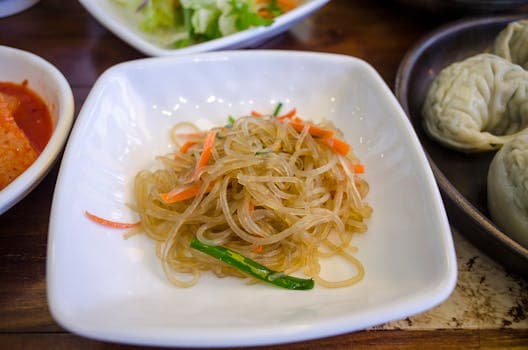
Japchae (Nouilles de Verre Coréennes)
Korea's festive glass noodle dish — sweet potato noodles stir-fried with colourful vegetables, beef and sesame in a soy-sesame sauce.
Prep
30 min
Cook
30 min
Servings
4
Difficulty
Medium
★★★★★
4.8(1 000 notes)#korean#noodles#glass-noodles#stir-fry#festive#gluten-free-adaptable
À propos de cette recette
Japchae is the centrepiece of Korean festive tables, present at every birthday, Chuseok (harvest moon festival) and family celebration. Dangmyeon (sweet potato glass noodles) are cooked until slippery and chewy, then stir-fried with an array of individually seasoned vegetables (spinach, carrot, mushrooms, onion, bell pepper) and beef, all brought together with a soy, sesame oil and sugar sauce. The key is preparing each component separately to preserve distinct flavours and textures before tossing everything together. The result is a beautiful, flavourful dish that is served warm or at room temperature. Japchae is naturally gluten-free when made with tamari instead of regular soy sauce. Rooted in the everyday cooking of Korean kitchens, Japchae (Korean Glass Noodle Stir-Fry) balances technique and tradition: the dangmyeon (sweet potato glass noodles) is treated with care, drawing on time-honoured ratios that locals have refined across generations. The dish carries an unmistakable sensory signature — aromas that fill the kitchen as it cooks, layered textures that reveal themselves bite by bite, and a depth of flavour that comes from patient seasoning rather than shortcuts. Whether served as a weeknight dinner or as the centrepiece of a celebratory table, it reflects a regional pantry where local produce, seasoning habits and cooking vessels shape the final result. Home cooks who make this dish often note how forgiving it is once the core method is understood, and how a few small choices — the freshness of the dangmyeon (sweet potato glass noodles), the order of additions, the resting time at the end — separate a good version from a memorable one. This recipe walks through those choices so the dish arrives with the character it has on its home turf.
Ingrédients
Sert 4
- 200 gdangmyeon (sweet potato glass noodles)
- 200 gbeef sirloin, thinly sliced
- 30 gdried shiitake mushrooms, soaked and sliced
- 150 gspinach
- 1carrot, julienned
- 1yellow onion, thinly sliced
- 1red bell pepper, thinly sliced
- 4 tbspsoy sauce
- 3 tbspsesame oil
- 2 tbspsugar
- 3 clovesgarlic, minced
- 4 tbspvegetable oil
- 2 tbspsesame seeds
- to tastesalt and black pepper
Instructions
- 1
Make japchae sauce
Mix 4 tbsp soy sauce, 2 tbsp sesame oil, sugar and garlic. Divide between the beef, mushrooms and the final noodle toss.
- 2
Cook noodles
Cook glass noodles in boiling water for 6–8 minutes until just tender. Drain, rinse with cold water, cut into 15 cm lengths with scissors. Toss with 1 tbsp sesame oil to prevent sticking.
- 3
Cook beef
Marinate beef in some of the sauce for 10 minutes. Stir-fry in hot oil for 2–3 minutes. Set aside.
- 4
Cook vegetables separately
Stir-fry each vegetable separately with a pinch of salt until just tender. Blanch spinach briefly and season with sesame oil and salt.
- 5
Combine
Add noodles to a large pan or wok. Add remaining sauce and toss over medium heat for 2 minutes. Add all cooked vegetables and beef. Toss everything together until well combined and glossy.
- 6
Serve
Transfer to a platter. Scatter sesame seeds over the top. Serve warm or at room temperature.
Conseils de pro
- →
Cooking each vegetable separately is the essential technique — combined stir-fry produces soft, watery vegetables.
- →
Cut the noodles with scissors after cooking for easier eating.
- →
Japchae can be made a few hours ahead — it improves as the flavours meld.
- →
Source the freshest dangmyeon (sweet potato glass noodles) you can find — it is the flavour anchor of the dish.
- →
Season in layers as you go; tasting at each stage prevents a flat or over-salted final result.
Variantes
- •
Vegetarian japchae: replace beef with extra mushrooms and tofu.
- •
Add sliced enoki or king oyster mushrooms for a more complex mushroom flavour.
- •
Vegetarian: replace the main protein with mushrooms, paneer, tofu or hearty beans for a meat-free version.
- •
Spicier: add fresh chilli, a chilli paste or a pinch of cayenne with the aromatics for a warmer profile.
- •
Lighter: reduce the fat by a third and use stock in its place — flavour stays intact but the dish feels less rich.
Stockage
Keeps in the fridge for 3 days. Reheat in a pan with a splash of water. Refrigerate in an airtight container for up to 3–4 days. Reheat gently on the stove over low heat with a splash of water or stock to loosen, or microwave at 60% power covered so it warms without drying. Freezes well for up to 2 months in portioned containers; thaw overnight in the fridge before reheating. Dishes built on dairy or fried elements may shift in texture after freezing — refresh with a crisp garnish.
Histoire et origine
Japchae was created in the early Joseon Dynasty as a royal court dish, initially without noodles (just stir-fried vegetables). Noodles were added later. Today it is synonymous with Korean celebrations and appears on every festive table.
Foire aux questions
Can I make Japchae (Korean Glass Noodle Stir-Fry) ahead of time?
Yes — most components hold well in the fridge for a day or two. Reheat gently with a splash of liquid to bring it back to life.
What can I substitute for dangmyeon (sweet potato glass noodles)?
If dangmyeon (sweet potato glass noodles) is hard to find, the closest substitutes share its texture and water content. Adjust seasoning slightly since substitutes often carry less character of their own.
Is this recipe authentic to Korean cooking?
It follows the most widely accepted home-cook template. Regional variants exist and we note the main ones in the variations section.
Why did my version turn out bland?
Usually under-seasoning or rushing the aromatic stage. Build flavour in layers, taste as you go, and finish with a touch of acid or salt to brighten the dish.
Faits nutritionnels
Par portion · 4 portions totales
Calories520kilocalories
Protéine24g
Glucides66g
Fat18g
Fibre4g
Protéine24g
Glucides66g
Fat18g
Résumé du temps
Temps de préparation30 min
Temps de cuisson30 min
Durée totale60 min
Vous avez des questions ?
Demandez quoi que ce soit à notre assistant culinaire IA sur cette recette : substitutions, techniques, mise à l'échelle.
Discutez avec AI Chef →Présenté dans les guides
Cette recette est présentée dans les guides sélectionnés suivants :
More Korean Recipes
Communauté
Rejoignez la conversation
Connectez-vous pour laisser un commentaire et enregistrer vos recettes préférées