
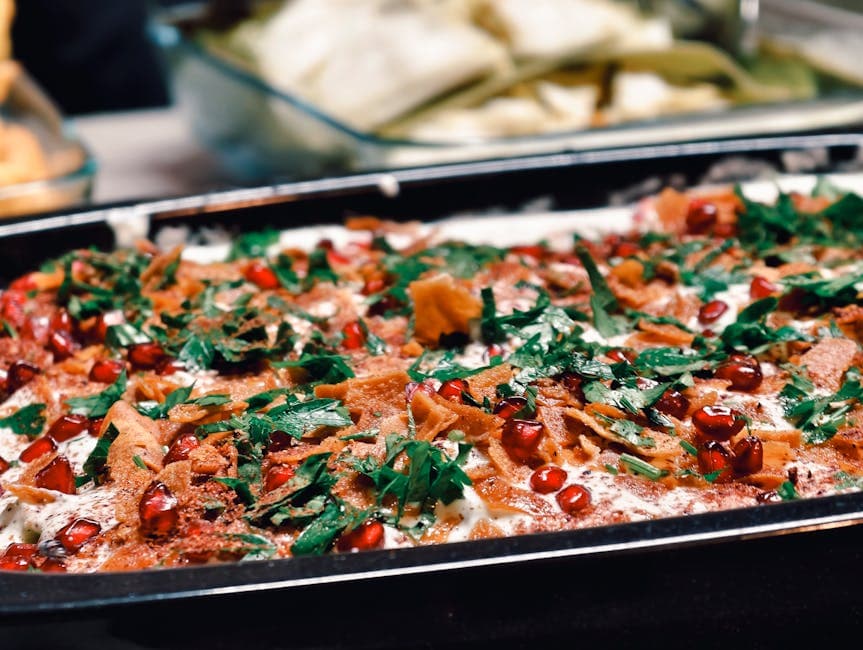
Mujaddara (Lentilles libanaises riz et oignons croustillants caramélisés)
L'ancien plat du Moyen-Orient qui prouve que les ingrédients humbles peuvent atteindre la grandeur — lentilles brunes et riz cuits lentement ensemble et couronnés d'oignons croustillants profondément caramélisés. Vegan bon marché extraordinaire.
À propos de cette recette
Le mujaddara est l’une des recettes enregistrées les plus anciennes de l’histoire de l’humanité – des versions apparaissent dans des livres de cuisine arabes du XIIIe siècle – et reste l’un des plats quotidiens les plus populaires au Levant, en Égypte et dans le monde arabe dans son ensemble. Le nom dérive du mot arabe signifiant « grêlé », décrivant l'apparence des lentilles dans le riz. Ses composants sont d'une simplicité désarmante : lentilles brunes ou vertes, riz à grains longs, oignons, huile d'olive et cumin. Mais la technique consistant à caraméliser lentement des oignons tranchés jusqu'à ce qu'ils ressemblent presque à de la confiture, puis à les faire frire jusqu'à ce qu'ils soient croustillants et foncés, élève le plat à quelque chose d'exceptionnel. Les oignons apportent trois choses simultanément : la douceur, la profondeur de la saveur et le contraste de texture. Mujaddara est la preuve que la cuisine la plus satisfaisante est souvent la plus sobre. Enracinée dans la cuisine quotidienne des cuisines libanaises, la Mujaddara (lentilles libanaises, riz et oignons caramélisés croustillants) équilibre technique et tradition : les lentilles brunes ou vertes, rincées, sont traitées avec soin, en s'appuyant sur des proportions séculaires que les locaux ont affinées au fil des générations. Le plat porte une signature sensorielle indubitable : des arômes qui remplissent la cuisine pendant la cuisson, des textures superposées qui se révèlent bouchée par bouchée et une profondeur de saveur qui vient d'un assaisonnement patient plutôt que de raccourcis. Qu'il soit servi comme dîner de semaine ou comme pièce maîtresse d'une table de fête, il reflète un garde-manger régional où les produits locaux, les habitudes d'assaisonnement et les récipients de cuisson façonnent le résultat final. Les cuisiniers amateurs qui préparent ce plat notent souvent à quel point il est indulgent une fois la méthode de base comprise, et comment quelques petits choix — la fraîcheur des lentilles brunes ou vertes, rincées, l'ordre des ajouts, le temps de repos à la fin — séparent une bonne version d'une mémorable. Cette recette passe en revue ces choix pour que le plat arrive avec le caractère qu'il a sur son terrain d'origine.
Ingrédients
Sert 4
- 250 glentilles brunes ou vertes, rincées
- 200 griz à grains longs (basmati fonctionne bien), rincé
- 900 mleau ou bouillon de légumes
- 4gros oignons, coupés en deux et tranchés finement en demi-lunes
- 5 c. à s.huile d'olive
- 1.5 c. à c.cumin moulu
- 0.5 c. à c.quatre-épices
- 0.5 c. à c.cannelle
- 1.5 c. à c.sel
- 1 c. à c.poivre noir
- To serve
- 200 gyaourt nature entier ou yaourt végétalien
- 1citron, coupé en quartiers
- 1 c. à s.menthe fraîche ou persil plat
Étapes
- 1
Caraméliser les oignons
Faites chauffer 4 cuillères à soupe d'huile d'olive dans une grande casserole à fond épais à feu moyen. Ajoutez tous les oignons émincés et une pincée de sel. Cuire pendant 30 à 35 minutes, en remuant toutes les quelques minutes, jusqu'à ce qu'ils soient profondément dorés et réduits à une fraction de leur volume d'origine. La patience n'est pas négociable : c'est le cœur du plat. Retirez la moitié des oignons (la plus belle moitié) et poursuivez la cuisson du reste jusqu'à ce qu'ils soient très foncés et presque croustillants. Réserver les deux portions séparément.
- 2
Cuire les lentilles
Ajoutez 1 cuillère à soupe d'huile d'olive dans la même casserole à feu moyen. Ajouter les lentilles, le cumin, le piment de la Jamaïque et la cannelle. Remuer pendant 1 minute. Ajoutez 600 ml d'eau ou de bouillon, portez à ébullition, puis laissez mijoter 15 minutes jusqu'à ce que les lentilles soient partiellement cuites mais encore un peu croquantes.
- 3
Ajouter le riz
Ajouter le riz rincé, les oignons légèrement caramélisés (pas les croustillants), le reste de l'eau/du bouillon, du sel et du poivre. Remuer pour combiner. Portez à ébullition, puis couvrez hermétiquement et laissez cuire à feu le plus bas possible pendant 18 minutes.
- 4
Laisser reposer et servir
Retirer du feu. Reposez-vous couvert pendant 10 minutes. Remuer délicatement avec une fourchette. Transférer dans un plat de service, garnir d'oignons croustillants. Servir avec du yaourt (froid), des quartiers de citron et des herbes fraîches.
Vous l'avez cuisinée ?
Notez-la et aidez les autres à trouver les recettes qui fonctionnent vraiment.
Connectez-vous en un geste : nous enregistrons la note que vous venez de choisir.
Tout ce qu'il faut pour planifier votre semaine — gratuit
- Calendrier des repas
- Liste de courses
- Idées de recettes IA
Suivez ce que vous mangez
Photographiez votre repas pour enregistrer calories et macros, lancez des minuteurs de jeûne et suivez votre hydratation avec l’app gratuite SnapCal.
Conseils de pro
- →
Les oignons doivent être vraiment dorés – l’or pâle ne suffit pas. La saveur provient d'une caramélisation profonde.
- →
Séparez les oignons en « doux caramélisés » (pour la cuisson dans le plat) et « presque croustillants » (pour la garniture). Chacun sert un objectif différent.
- →
Le plat est délibérément terreux et savoureux – égayez-le à table avec du yaourt froid, du citron et des herbes fraîches.
- →
Procurez-vous les lentilles brunes ou vertes les plus fraîches, rincées, que vous puissiez trouver – c'est le point d'ancrage de la saveur du plat.
- →
Assaisonner en couches au fur et à mesure; la dégustation à chaque étape évite un résultat final plat ou trop salé.
Variantes
- •
Mujaddara aux lentilles rouges : utilisez des lentilles rouges (qui cuisent plus vite et se décomposent davantage) pour une consistance semblable à une bouillie plus proche du koshari égyptien.
- •
Mujaddara au boulgour : remplacez le riz par du boulgour grossier pour une version plus noisette et plus rustique traditionnelle de certains villages libanais.
- •
Mujaddara épicé : ajoutez 1 cuillère à café de paprika fumé et 0,5 cuillère à café de poivre de Cayenne pour un profil épicé plus affirmé.
- •
Végétarien : remplacez la protéine principale par des champignons, du paneer, du tofu ou des haricots copieux pour une version sans viande.
- •
Plus épicé : ajoutez du piment frais, une pâte de piment ou une pincée de poivre de Cayenne avec les aromates pour un profil plus chaleureux.
Stockage
Se conserve 4 jours au réfrigérateur. Se réchauffe magnifiquement avec un peu d’eau. La garniture à l'oignon ramollit au stockage – rafraîchissez-la avec un filet d'huile d'olive.
Histoire et origine
Mujaddara apparaît dans le livre de cuisine arabe du XIIIe siècle Kitab al-Tabikh de Muhammad bin Hasan al-Baghdadi, ce qui en fait l'un des plats préparés en continu les plus anciens jamais enregistrés. Sa popularité au Levant, en Égypte et en Irak suggère des origines anciennes et préislamiques. Dans l'Ancien Testament, le « plat de lentilles » d'Ésaü (Genèse 25) est largement interprété comme une des premières formes de mujaddara.
Foire aux questions
Puis-je préparer du Mujaddara (lentilles libanaises, riz et oignons caramélisés croustillants) à l'avance ?
Oui, la plupart des composants se conservent bien au réfrigérateur pendant un jour ou deux. Réchauffez doucement avec un peu de liquide pour lui redonner vie.
Par quoi remplacer les lentilles brunes ou vertes, rincées ?
Si les lentilles brunes ou vertes rincées sont difficiles à trouver, les substituts les plus proches partagent leur texture et leur teneur en eau. Ajustez légèrement l'assaisonnement, car les substituts ont souvent moins de caractère.
Cette recette est-elle authentique de la cuisine libanaise ?
Il suit le modèle de cuisine maison le plus largement accepté. Des variantes régionales existent et nous notons les principales dans la rubrique variantes.
Pourquoi ma version est-elle devenue fade ?
Généralement sous-assaisonné ou précipité la phase aromatique. Créez de la saveur en couches, goûtez au fur et à mesure et terminez avec une touche d'acide ou de sel pour égayer le plat.
Faits nutritionnels
Par portion · 4 portions totales
Résumé du temps
Vous avez des questions ?
Demandez quoi que ce soit à notre assistant culinaire IA sur cette recette : substitutions, techniques, mise à l'échelle.
Discutez avec AI Chef →Présenté dans les guides
Cette recette est présentée dans les guides sélectionnés suivants :
Plus de recettes libanaises
Vous Aimerez Aussi
Des plats similaires venus d'autres cuisines du monde.
Parcourir par Ingrédient
D'autres recettes construites autour des mêmes ingrédients principaux.
Outils de Cuisine Gratuits
Calculateurs et convertisseurs qui accompagnent cette page — sans inscription.
Calculateur de proportions
Divisez par deux ou doublez chaque quantité de cette recette sans calcul mental.
Convertisseur de mesures
Convertissez tasses, grammes, onces et millilitres dans les deux sens.
Convertisseur pour friteuse à air
Convertissez le temps et la température du four en réglages pour friteuse à air.
Transformer en Plan
Programmez-le, faites les courses et suivez ce que vous avez déjà.
Calendrier de planification des repas
Placez cette recette sur un jour et organisez la semaine autour.
Appli de liste de courses
Transformez cette liste d’ingrédients en liste de courses regroupée par rayon.
Nutritionniste IA
Posez vos questions sur les substitutions, les macros et les portions de ce plat, en langage simple.
À Lire Ensuite
Des articles de fond sur les idées derrière ce plat.
Céréales anciennes : un amarante, du teff et du sorgho complets pour la nutrition moderne
11 min.
Repas végétaliens riches en protéines : 15 recettes complètes avec plus de 25 g de protéines par portion
13 min.
Flexitarisme : un argumentaire complet et factuel en faveur du changement alimentaire le plus pratique au monde
9 min.
Communauté
Rejoignez la conversation
Connectez-vous pour laisser un commentaire et enregistrer vos recettes préférées