
Ambuyat
Brunei's national dish — a sticky, gluey sago-starch porridge eaten by twirling it on a bamboo fork and dipping into tangy, fiery accompaniments.
About This Recipe
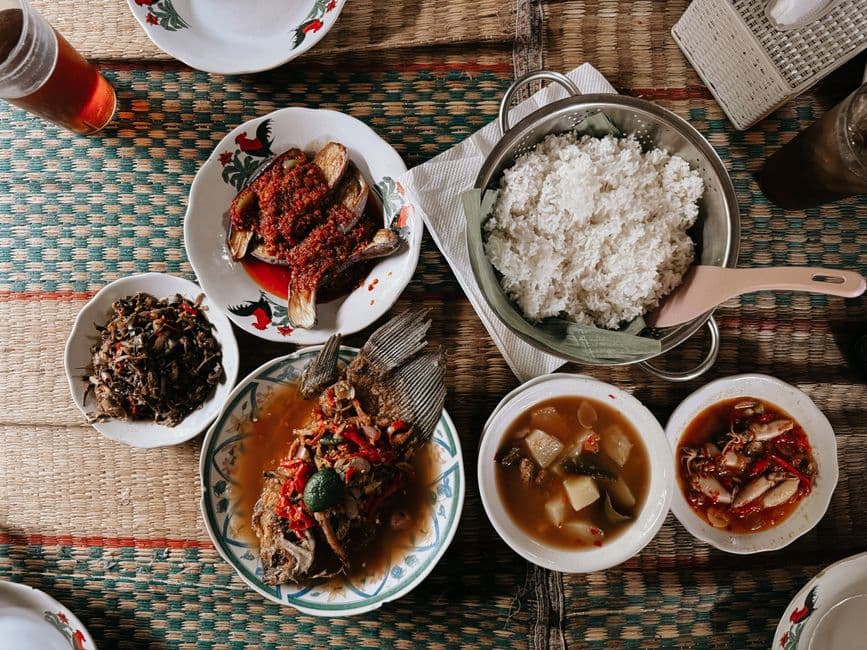
Ambuyat is the defining dish of Bruneian cuisine and one of the most unique eating experiences in Southeast Asia. Made by stirring sago starch (extracted from the sago palm, ubiquitous in Borneo's rainforests) into boiling water until it forms a thick, translucent, gelatinous mass with no flavour of its own, the dish entirely relies on its dipping sauces — the most important being cacah, a sour fruit-based sauce of binjai (wild mango) or bambangan, spiked with dried shrimp and chilli. Ambuyat is eaten with a special two-pronged bamboo fork called a chandas, which is twirled to capture the sticky starch. It is deeply communal food, central to royal banquets and everyday family meals alike.
Ingredients
Serves 4
- 2 cupssago starch (not sago pearls)
- 3 cupsboiling water
- 2 tbspdried shrimps (udang kering), ground
- 3red chillies, blended
- 2 tbsplime juice
- 1 tbspvinegar
- 1 tspsugar
- 0.5 tspsalt
- 1 green mangograted (as binjai substitute)
- 4 piecesfried salted fish
- 200 gstir-fried water spinach (kangkong)
Instructions
- 1
Make the cacah sauce
Mix ground dried shrimps, blended chillies, lime juice, vinegar, sugar, and salt. Stir in grated green mango. Taste and balance sourness, heat, and saltiness. Refrigerate until ready to serve.
- 2
Cook the ambuyat
Measure sago starch into a heavy pot or serving vessel. Pour boiling water over the starch, stirring vigorously and continuously with a wooden spoon in one direction for 3–5 minutes until the mixture becomes a thick, cohesive, slightly translucent paste. It should leave the sides of the pot cleanly.
- 3
Prepare accompaniments
Fry salted fish until golden. Stir-fry kangkong with garlic and soy sauce. Arrange accompaniments in small dishes around the table.
- 4
Serve communally
Place the ambuyat in the centre of the table. Using a chandas (bamboo fork) or two chopsticks, scoop a portion of ambuyat and twirl to form a ball. Dip into cacah sauce and eat in one bite alongside the accompaniments.
Did you make this?
Rate it and help other cooks find the recipes that actually work.
One tap to sign in, and we'll save the rating you just picked.
Everything you need to plan your week — free
- Meal calendar
- Grocery list
- AI recipe ideas
Track what you eat
Snap your meal to log calories and macros, run fasting timers and track water in the free SnapCal app.
Pro Tips
- →
Stir in one direction only — changing direction breaks the starch structure.
- →
The water must be vigorously boiling when poured onto the starch.
- →
The dish must be eaten hot — ambuyat hardens quickly as it cools.
- →
The cacah sauce is the heart of the dish; make it bold and tangy.
Variations
- •
Serve with beef rendang or prawn curry as a more elaborate accompaniment.
- •
Sour curry (singgang) with river fish is the most traditional pairing.
- •
Some households mix coconut milk into the ambuyat for extra richness.
- •
Vegetarian: swap the protein for roasted king oyster mushrooms, smoked tofu or cooked chickpeas — adjust seasoning slightly upward to compensate.
Storage
Ambuyat cannot be stored — it sets solid on cooling and does not reheat well. Make fresh and eat immediately. Cacah sauce keeps refrigerated for 3 days.
History & Origin
Ambuyat has been the staple of Bruneian Malay communities for centuries, sustained by the abundant sago palm of Borneo's rainforests. When rice was scarce or expensive in interior Borneo, sago provided the carbohydrate foundation of the diet. It remains a point of national pride and cultural identity, served at state ceremonies and cultural festivals.
Frequently Asked Questions
Where can I buy sago starch?
Look in Southeast Asian or Asian grocery stores. It is different from tapioca starch — sago starch comes specifically from the sago palm.
What does ambuyat taste like?
By itself, ambuyat is almost entirely neutral in flavour. Its appeal is textural — smooth, elastic, and satisfying — and it acts as a vehicle for its dipping sauces.
Can I make this ahead of time?
Yes — most of the components can be prepared up to a day in advance and refrigerated separately. Reheat gently and assemble just before serving so textures stay distinct.
What can I substitute if I don't have all the ingredients?
Stay close to the role each ingredient plays: swap aromatics for similar ones (shallot for onion, lime for lemon), and keep the fat-acid-salt balance intact. Spice blends can usually be approximated with what's in the cupboard.
Nutrition Facts
Per serving (350g / 12.3 oz) · 4 servings total
Time Summary
Have Questions?
Ask our AI cooking assistant anything about this recipe — substitutions, techniques, scaling.
Chat with AI Chef →Featured in Guides
This recipe is featured in the following curated guides:
More Bruneian Recipes
You Might Also Like
Similar dishes from other cuisines around the world.
Free Kitchen Tools
Calculators and converters that pair with this page — no signup needed.
Put This Into a Plan
Schedule it, shop for it, and track what you already have.
Read Next
Longer reads that go deeper on the ideas behind this dish.
Community
Join the conversation
Sign in to leave a comment and save your favourite recipes