
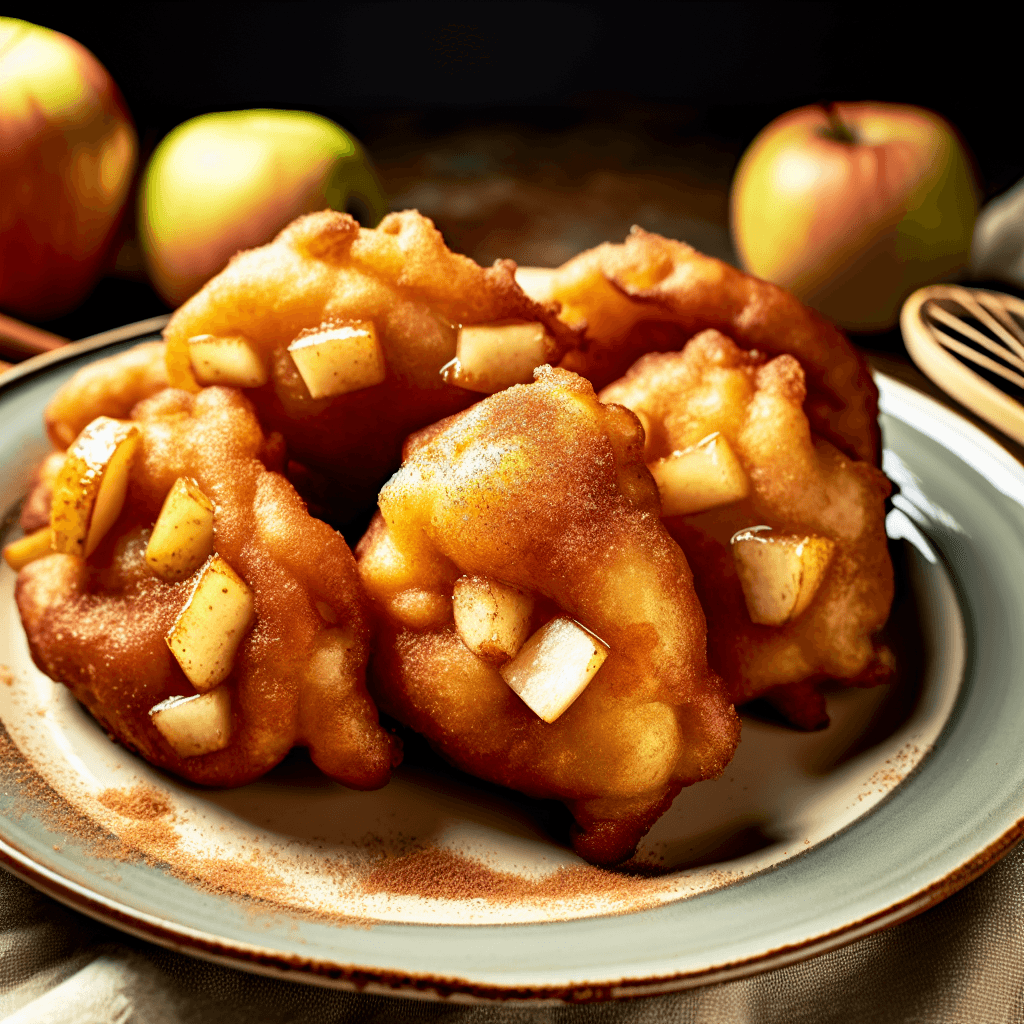
Apple Fritters
Warm, fluffy fried apple pastries with cinnamon sugar coating.
About This Recipe
American apple fritters occupy a beloved middle ground between a doughnut and a fritter proper — they're not the flat, pancake-style fritters common in European cooking, but rather irregular, craggy puffs of batter loaded with tender apple pieces, fried until golden amber on the outside and steaming-soft within, then tossed in cinnamon sugar while still hot so the sugar caramelizes slightly against the warm surface. The batter is intentionally thicker than a crepe batter and thinner than a muffin batter, designed to cling to the apple chunks without forming a thick shell — every fritter should have jagged, uneven edges where pockets of batter fried separately from the main mass, creating maximum crunch surface area. The apple choice matters considerably. Granny Smith is the classic fritter apple because its firm texture holds up in the hot oil without turning to mush, and its tartness contrasts the sweetness of the cinnamon sugar coating. Honeycrisp and Fuji apples are sweeter alternatives that soften slightly more during frying. Whatever variety you use, dice the apple into small, uniform ½-inch cubes so they cook through in the 3–4 minutes the fritter spends in the oil. Larger chunks leave raw apple in the center; smaller pieces disappear into the batter. The cornstarch in the batter is not an accident — it dilutes the gluten development that would otherwise make the crust tough, and it crisps up faster than pure flour alone. Fry in a deep vessel rather than a shallow skillet so the fritters have room to puff and brown on all sides without constant turning.
Ingredients
Serves 12
- 1.5 cupsall-purpose flour
- ½ cupcornstarch
- 2 tspbaking powder
- ½ tspfine salt
- ¼ tspfreshly grated nutmeg
- 1 tspground cinnamon(for batter)
- 2 tbspgranulated sugar
- 1large egg
- ¾ cupwhole milk
- 2 tbspunsalted butter(melted and cooled)
- 3 mediumGranny Smith apples(peeled, cored, diced into ½-inch cubes)
- vegetable or peanut oilfor frying(about 4 cups)
- ¼ cupgranulated sugar(for cinnamon sugar coating)
- 1 tspground cinnamon(for coating)
Instructions
- 1
Prep the apples
Peel, core, and dice the apples into ½-inch cubes. Pat them thoroughly dry with paper towels — surface moisture dilutes the batter that clings to each piece and creates steam pockets that make the fritters puff unevenly. Toss the dried apple cubes with 1 tablespoon of sugar to draw out a little juice and season them lightly.
Granny Smith apples hold their texture during frying better than sweeter varieties; their tartness also balances the cinnamon sugar coating.
- 2
Make the batter
In a large bowl, whisk together the flour, cornstarch, baking powder, salt, nutmeg, cinnamon, and sugar until evenly combined. In a separate bowl, whisk the egg, milk, and melted butter. Pour the wet ingredients into the dry and stir until just combined — the batter will be thick and slightly lumpy, similar to muffin batter. Fold in the sugared apple cubes.
Don't overmix: once the apples are folded in, the batter should look rough and uneven. Overworked batter produces tough, dense fritters.
- 3
Prepare the cinnamon sugar
In a wide, shallow bowl, mix the ¼ cup of sugar with 1 teaspoon of cinnamon until evenly combined. Set aside near the frying station so you can coat the fritters immediately while still hot.
- 4
Heat oil to 350°F
Pour 3–4 inches of oil into a Dutch oven or deep heavy-bottomed pot and set over medium-high heat. Use a deep-fry thermometer to monitor the temperature carefully — 350°F is the target. Below 325°F the fritters absorb too much oil and turn greasy; above 375°F the exterior browns before the center cooks through.
A Dutch oven retains heat better than a shallow skillet and gives the fritters room to expand without touching the sides.
- 5
Fry in batches
Using two large spoons or a cookie scoop, drop rough mounds of batter (about 3 tablespoons each) into the hot oil, working in batches of 3–4 so the oil temperature stays steady. Fry for 3–4 minutes total, turning once or twice with a spider or slotted spoon, until the fritters are deep golden amber all over and feel firm when nudged.
The craggy, irregular shape is correct — don't try to make them round. The jagged surface creates more crispy edges.
- 6
Drain and coat immediately
Lift the fritters out with a spider or slotted spoon, let excess oil drain for 10 seconds, then transfer directly to the bowl of cinnamon sugar. Toss gently while still very hot so the sugar melts slightly against the surface and adheres. Transfer to a wire rack — not paper towels, which traps steam.
- 7
Serve warm
Apple fritters are at their absolute peak within 10 minutes of frying, when the cinnamon sugar crust is still slightly crisp, the interior is steaming-hot, and the apple pieces are at perfect tenderness. Serve with coffee, hot cider, or hot chocolate.
Did you make this?
Rate it and help other cooks find the recipes that actually work.
One tap to sign in, and we'll save the rating you just picked.
Everything you need to plan your week — free
- Meal calendar
- Grocery list
- AI recipe ideas
Track what you eat
Snap your meal to log calories and macros, run fasting timers and track water in the free SnapCal app.
Pro Tips
- →
Maintain 350°F oil throughout frying — use a clip-on thermometer and adjust the burner between batches, because each cold batch of batter drops the temperature by 20–30 degrees.
- →
Pat the apple cubes very dry before folding into the batter; excess moisture from the apples creates steam inside the fritter that can make the crust soggy rather than crispy.
- →
Use a Dutch oven or deep pot rather than a shallow skillet — deep oil allows the fritters to roll and brown on all sides, while shallow oil requires constant turning and produces uneven browning.
- →
Coat the fritters in cinnamon sugar while they're still very hot, straight from the oil — the residual surface heat melts the sugar slightly so it adheres like a crust rather than falling off.
- →
Transfer drained fritters to a wire rack rather than paper towels; towels trap steam against the bottom and create a soft, greasy underside.
Variations
- •
Glazed apple fritters: skip the cinnamon sugar and instead drizzle each fritter with a simple glaze made from 1 cup powdered sugar whisked with 2 tablespoons milk — this is the doughnut-shop style.
- •
Pear and cardamom fritters: substitute Bosc pears for the apples and add ½ teaspoon ground cardamom to the batter in place of the cinnamon — a more sophisticated, floral variation.
- •
Bourbon apple fritters: add 1 tablespoon of bourbon to the batter along with the wet ingredients and toss the diced apples with 1 teaspoon of brown sugar and a pinch of vanilla — a grown-up version ideal for brunch.
- •
Baked version: brush a baking sheet with 2 tablespoons of oil and preheat in a 425°F oven. Drop mounds of batter onto the hot sheet, press gently to flatten slightly, and bake for 12–14 minutes, flipping halfway — the result is less crispy than fried but substantially lighter.
Storage
Apple fritters are best within 30 minutes of frying when the cinnamon crust is at its crunchiest. If you need to hold them, place uncovered on a wire rack in a 200°F oven for up to 30 minutes. Leftover fritters can be refrigerated for up to 1 day and reheated in a 350°F oven or air fryer for 4–5 minutes to partially restore crispness, though they will not fully recapture the texture of freshly fried fritters.
History & Origin
Fritters — batter-fried morsels of fruit, meat, or vegetables — have appeared in European cookbooks since at least the medieval period, arriving in America with English and Dutch colonists. The distinctly American apple fritter as a doughnut-shop staple emerged in the early 20th century, shaped by the expansion of commercial frying operations and the abundance of American apple varieties. By mid-century, apple fritters had become a fixture in diner showcases and bakery cases across the country, particularly in apple-producing states like Washington, Michigan, and New York. The irregular, craggy shape that distinguishes an American apple fritter from its flatter European counterparts is a feature, not a flaw — it maximizes crust surface area and became a hallmark of the American style.
Frequently Asked Questions
How do I keep apple fritters crispy?
The two most important factors are oil temperature and resting surface. Fry at a steady 350°F — too cool and the batter absorbs oil, producing greasy fritters that go soft quickly. After frying, rest the fritters on a wire rack rather than paper towels; the rack allows air to circulate underneath, while paper towels trap steam and make the bottom soft. Coat in cinnamon sugar immediately while hot so the sugar forms a light crust.
Can I make apple fritters ahead of time?
You can prep the batter components separately — whisk the dry ingredients into one bowl and the wet ingredients into a sealed jar, refrigerate overnight, and combine in the morning. However, once the batter is mixed with the apples it should be fried immediately, because the baking powder begins activating on contact and the apple juices will thin the batter over time. Fried fritters can be held in a 200°F oven for up to 30 minutes, but they're genuinely best within 10 minutes of frying.
What apples work best in fritters?
Granny Smith is the classic choice because the flesh stays firm in the hot oil and the tartness provides contrast to the sweet cinnamon sugar coating. Honeycrisp and Fuji apples are sweeter alternatives with slightly more give in the finished fritter. Avoid Red Delicious and McIntosh varieties — both turn mushy during frying and can make the interior of the fritter wet and dense. Whatever variety you choose, dice into ½-inch cubes for the best texture balance.
What oil is best for frying fritters?
Use a neutral oil with a high smoke point: vegetable oil, peanut oil, or canola oil are all excellent choices. Peanut oil has a very clean flavor and fries particularly crispy due to its composition. Avoid olive oil, which smokes at lower temperatures (around 375°F) and imparts a strong flavor that clashes with the cinnamon apple profile. Coconut oil works in a pinch but gives the fritters a faint coconut flavor.
Can I use an air fryer for apple fritters?
The thick, batter-style dough used in apple fritters doesn't perform well in an air fryer — it tends to drip through the basket before it sets, and the result lacks the puffed, craggy texture that makes fritters distinctive. The baked version (425°F oven on an oiled preheated sheet pan) is a much more reliable oven-based alternative, producing a result closer to the fried original than air frying does.
Nutrition Facts
Per serving (100g / 3.5 oz) · 12 servings total
Time Summary
Have Questions?
Ask our AI cooking assistant anything about this recipe — substitutions, techniques, scaling.
Chat with AI Chef →Featured in Guides
This recipe is featured in the following curated guides:
More American Recipes
You Might Also Like
Similar dishes from other cuisines around the world.
Free Kitchen Tools
Calculators and converters that pair with this page — no signup needed.
Put This Into a Plan
Schedule it, shop for it, and track what you already have.
Read Next
Longer reads that go deeper on the ideas behind this dish.
Community
Join the conversation
Sign in to leave a comment and save your favourite recipes