
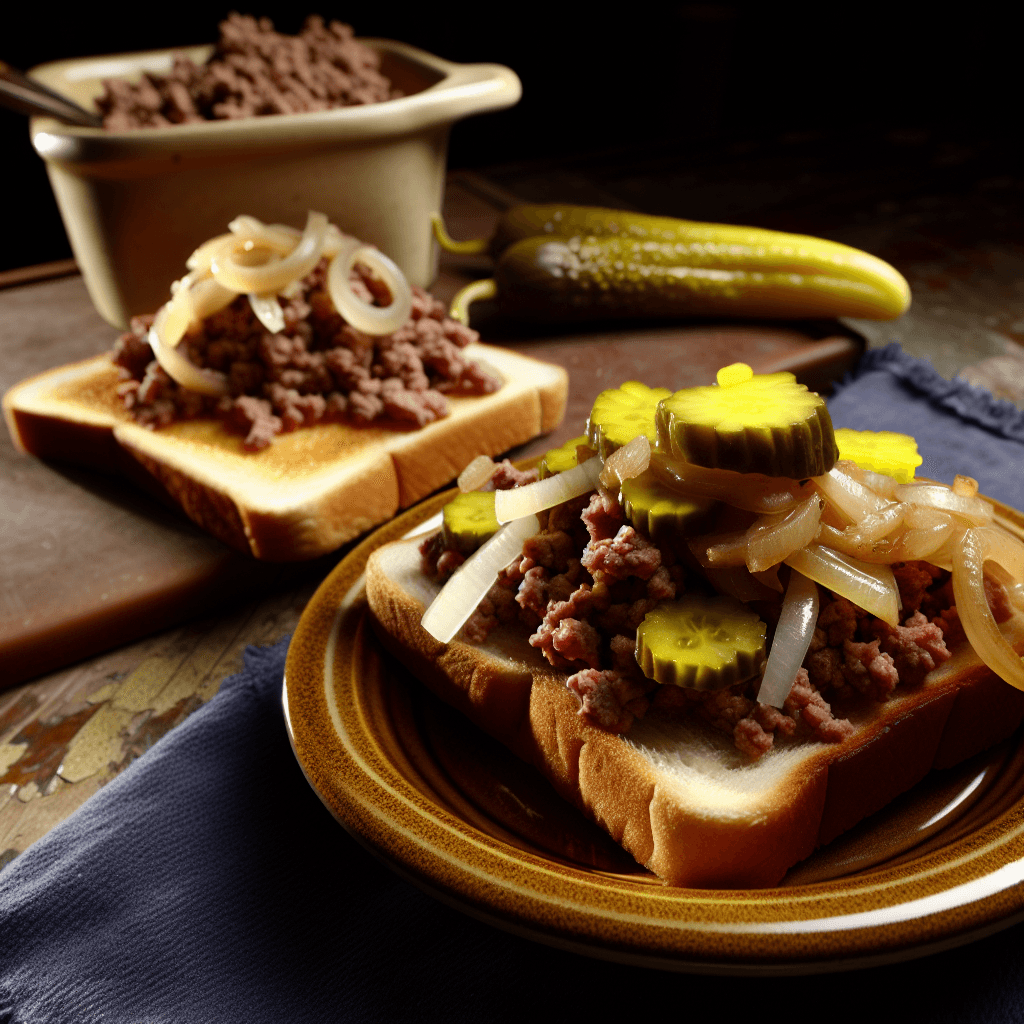
Iowa Loose Meat Sandwich
Seasoned crumbled ground beef on toast with onions.
About This Recipe
The Iowa Loose Meat Sandwich occupies a unique and stubbornly specific place in Midwestern culinary identity — it is what a hamburger looks like when you remove the pretension, the bun architecture, and the saucy mess, and return to something genuinely humble and honest. The defining characteristic is right there in the name: the beef is cooked loose, broken into fine, seasoned crumbles, never formed into a patty, never bound into a sauce. This leaves the meat juicy from its own fat rather than wet from a condiment, and when piled high on buttered, golden-toasted bread with a slick of yellow mustard and cool dill pickle slices, the result is one of those quietly perfect sandwiches that survives on flavour alone. The loose meat tradition is closely associated with the Maid-Rite chain, founded in 1926 in Muscatine, Iowa, which serves nothing but this sandwich and has outlasted every fast-food trend because the simplicity is the point. The key technique is cooking the beef with diced onion from the start — the onion softens completely into the meat, adding sweetness and body without announcing itself. Keep the heat medium-high and resist the urge to press the meat down; the goal is caramelised, slightly crispy bits throughout the loose mixture, not a grey steamed mass. Use 80/20 ground chuck for the fat content that keeps every crumble moist and flavourful even when it hits room temperature.
Ingredients
Serves 4
- 500 gground beef
- 2 mediumonions(diced)
- 8 slicesbread(toasted)
- yellow mustardfor serving
- dill pickleslices for serving
- 2 tbspbutter
- salt and pepper(to taste)
Instructions
- 1
Sweat the onions
Melt the butter in a wide, heavy skillet over medium heat. Add the diced onions and cook for 7–8 minutes, stirring occasionally, until they are completely soft, translucent, and just beginning to colour at the edges. Properly softened onions melt into the meat and disappear — rushed, half-cooked onions stay crunchy and taste raw.
Don't skip this step or combine it with the beef — onions need a head start to cook all the way through in the time it takes ground beef to brown.
- 2
Cook and break down the beef
Add the ground beef to the softened onions. Using a wooden spoon or stiff spatula, break the meat apart constantly as it cooks, working against any clumps and keeping it in small, even crumbles. Cook over medium-high heat for 6–8 minutes until no pink remains and some bits have begun to brown and caramelise slightly.
- 3
Season and drain
Season generously with salt and freshly cracked black pepper. If the beef released significant fat, tip the pan and spoon off the excess, leaving just enough to keep the meat moist — approximately 1–2 tablespoons. The mixture should look loose and just glistening, not swimming in grease.
Use 80/20 ground chuck rather than leaner blends; the fat is what makes each crumble taste rich and keeps the sandwich from drying out.
- 4
Toast the bread
While the beef finishes, toast the bread slices until deeply golden with firm, crunchy surfaces. The structure matters here — soft bread collapses immediately under the warm, juicy beef. You can butter the bread before toasting for extra richness, though traditionalists at Maid-Rite-style diners use plain white toast.
- 5
Assemble and serve
Spread a line of yellow mustard across each slice of toast, then pile the loose meat mixture generously — enough so it mounds slightly and a few crumbles spill. Lay 3–4 dill pickle slices over the meat, press a second slice of toast on top, and serve immediately while the meat is still steaming.
Did you make this?
Rate it and help other cooks find the recipes that actually work.
One tap to sign in, and we'll save the rating you just picked.
Everything you need to plan your week — free
- Meal calendar
- Grocery list
- AI recipe ideas
Track what you eat
Snap your meal to log calories and macros, run fasting timers and track water in the free SnapCal app.
Pro Tips
- →
Use 80/20 ground chuck — anything leaner turns dry and chalky; anything fattier makes the sandwich greasy and hard to handle.
- →
Break the beef into the smallest crumbles possible during cooking; a potato masher is surprisingly effective for this if you don't have a dedicated meat chopper.
- →
Toast the bread just before assembling — bread that cools and softens before the meat goes on will lose its structural integrity within minutes.
- →
Yellow mustard is traditional and its vinegary sharpness is an essential counterpoint to the fatty beef; spicy brown is a good upgrade but French's yellow is the authentic choice.
- →
Adding a splash of Worcestershire sauce to the beef as it cooks adds a subtle depth that elevates the sandwich without changing its character.
Variations
- •
Cheeseburger loose meat: lay a slice of American cheese on the hot meat in the pan in the final 30 seconds, cover with a lid to melt, then transfer to toast — the cheese melts into every crumble.
- •
Mushroom and onion topping: sauté sliced cremini mushrooms alongside the onions for an umami-rich variation sometimes called an Iowa loose meat 'melt.'
- •
Spicy chipotle: season the beef with a teaspoon of chipotle powder and a tablespoon of adobo sauce from a can of chipotles; serve with pepper jack and pickled jalapeños.
- •
Open-face broiled version: pile meat on one slice of toast, top with shredded cheddar, and broil for 2 minutes until the cheese bubbles — closer to a Midwest tavern special than a sandwich.
Storage
The cooked loose meat mixture keeps refrigerated in an airtight container for up to 3 days and reheats beautifully in a skillet over medium heat with a splash of water or broth to restore moisture. Do not assemble sandwiches in advance — the bread turns soggy within minutes. Toast fresh bread and reheat the meat separately at serving time.
History & Origin
The Iowa Loose Meat Sandwich is most directly associated with Fred Angell, who opened the first Maid-Rite restaurant in Muscatine, Iowa, in 1926, creating the sandwich that the chain has served unchanged for nearly a century. However, loose meat-style beef sandwiches were present in Iowa diners at least as early as the 1920s, and similar preparations appear in Midwestern home cooking records from the same era. The sandwich gained national recognition when it appeared in Roseanne Barr's 1990s sitcom Roseanne as the signature item at the fictional Lunch Box diner, introducing it to audiences far outside Iowa. Today Maid-Rite operates more than 80 locations across the Midwest.
Frequently Asked Questions
What is the difference between a Loose Meat Sandwich and a Sloppy Joe?
The distinction is fundamental and fiercely defended by Iowa partisans. A Sloppy Joe binds ground beef in a thick, sweet-tangy tomato sauce, making it deliberately wet and messy. A Loose Meat Sandwich is completely dry — just seasoned ground beef with onions, held together only by its own fat. The condiments (mustard, pickles) go on separately and remain distinct from the meat rather than coating it.
Why is the meat served 'loose' rather than as a patty?
The loose format means every bite has a different ratio of crispy browned edges to soft interior crumbles, creating textural interest that a uniform patty lacks. The individual crumbles also absorb mustard and pickle brine differently from a patty, so each mouthful has its own character. It's a fundamentally different eating experience, not just a deconstructed burger.
What kind of ground beef should I use?
Ground chuck at 80/20 lean-to-fat ratio is the ideal choice. The 20% fat content keeps every crumble moist and flavourful from the first bite to the last and does not require added oil or moisture. Leaner blends (90/10 or leaner) produce noticeably drier, less satisfying results, and the sandwich's simplicity means there's nowhere for dry beef to hide.
Can I make this on hamburger buns instead of toast?
You can, and some shops serve it that way, but traditional Iowa loose meat sandwiches are served on plain white toast or a steamed bun specifically because the bread is secondary to the meat. Fancy brioche buns or artisan rolls work against the democratic, humble spirit of the dish. If you use a bun, steam it briefly so it is warm and soft but not toasted.
Nutrition Facts
Per serving (300g / 10.6 oz) · 4 servings total
Time Summary
Have Questions?
Ask our AI cooking assistant anything about this recipe — substitutions, techniques, scaling.
Chat with AI Chef →Featured in Guides
This recipe is featured in the following curated guides:
More American Recipes
You Might Also Like
Similar dishes from other cuisines around the world.
Browse by Ingredient
More recipes built around the same core ingredients.
Free Kitchen Tools
Calculators and converters that pair with this page — no signup needed.
Put This Into a Plan
Schedule it, shop for it, and track what you already have.
Read Next
Longer reads that go deeper on the ideas behind this dish.
Community
Join the conversation
Sign in to leave a comment and save your favourite recipes