
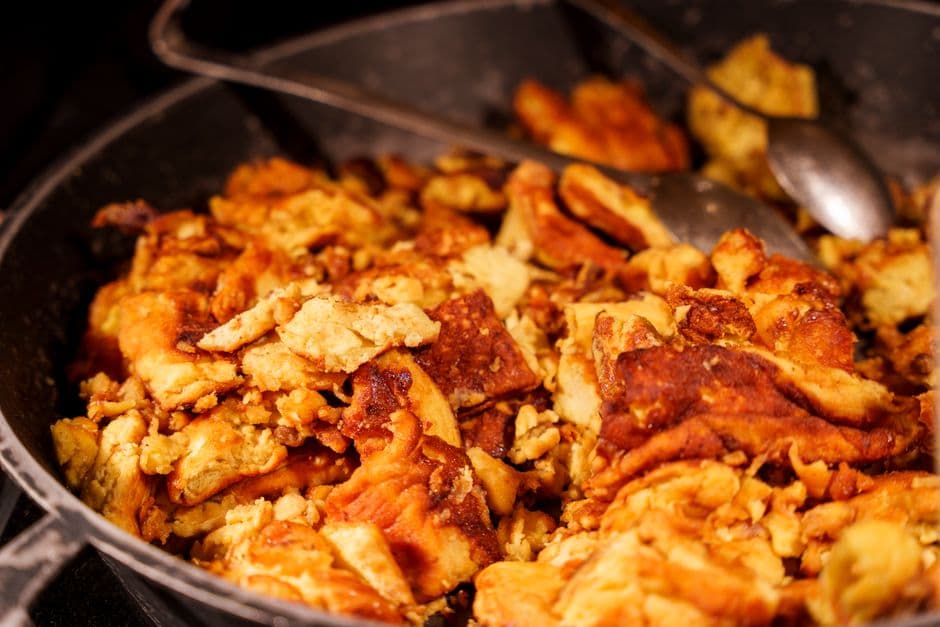
Kaiserschmarrn
Austria's imperial torn pancake — a golden, airy, rum-soaked scrambled pancake dusted with icing sugar and served with warm plum compote.
About This Recipe
Kaiserschmarrn (literally 'Emperor's mess') is the most beloved and theatrical dessert in Austrian and Bavarian cuisine. Legend holds it was created by accident when a pancake was torn while being flipped for Emperor Franz Joseph I — the kitchen improvised, tossed it with butter and sugar, and the Emperor loved it so much it became his favourite dessert. The batter is richer than a normal pancake — filled with raisins soaked in rum, separated eggs with whipped whites folded in — and it is cooked in butter in a heavy pan before being torn into irregular golden pieces and caramelised with a dusting of sugar. It is served in a mountain of eggy, caramelised shards with a side of Zwetschkenröster (warm stewed plums) for the essential sweet-tart contrast.
Ingredients
Serves 4
- 150 gplain flour
- 250 mlwhole milk
- 4 largeeggs(yolks and whites separated)
- 2 tablespoonscaster sugar(plus extra for caramelising)
- 1 teaspoonvanilla extract
- pinchsalt
- 50 graisins(soaked in 2 tablespoons dark rum for 30 minutes)
- 50 gunsalted butter
- icing sugarto serve
- 300 gplums or prunes(stoned, for compote)
- 3 tablespoonscaster sugar(for compote)
- 1 tablespoonlemon juice(for compote)
Instructions
- 1
Make the plum compote
Combine the plums (or prunes), 3 tablespoons sugar, lemon juice and 3 tablespoons water in a small saucepan. Cook over medium heat, stirring occasionally, for 15 minutes until the plums are soft and jammy. Keep warm.
- 2
Make the batter
Whisk together the flour, milk, egg yolks, 2 tablespoons sugar, vanilla and salt until completely smooth. Drain the raisins (reserve the rum for adding to the batter or drinking) and stir them into the batter along with the rum.
- 3
Whip the egg whites
In a clean bowl, whisk the egg whites with a pinch of salt to stiff, glossy peaks. Gently fold the whites into the batter in two additions, preserving maximum airiness.
- 4
Cook the pancake
Melt half the butter in a large (26–28 cm) ovenproof frying pan over medium heat. Pour in all the batter and cook for 3–4 minutes until the base is golden and set but the top still looks slightly wet. Transfer to a preheated oven at 180°C for 5 minutes to set the top.
- 5
Tear and caramelise
Return the pan to the hob over medium heat. Using two forks, tear the pancake into rough, irregular pieces — some larger, some smaller, some just golden crumbs. Add the remaining butter to the pan, scatter over 2–3 tablespoons of caster sugar, and toss and stir the pieces until caramelised and golden all over, about 3 minutes.
- 6
Serve
Transfer to a warm serving dish or bring the pan to the table. Dust generously with icing sugar and serve immediately with the warm plum compote alongside. The contrast of the caramelised, airy pancake pieces with the tart, soft plums is the essence of this dish.
Did you make this?
Rate it and help other cooks find the recipes that actually work.
One tap to sign in, and we'll save the rating you just picked.
Everything you need to plan your week — free
- Meal calendar
- Grocery list
- AI recipe ideas
Cook this hands-free
Get AI meal plans, step-by-step cooking mode, and your saved recipes in the free Bento app.
Pro Tips
- →
The egg whites must be folded in gently to preserve the airiness that makes Kaiserschmarrn so light.
- →
Tearing the pancake while caramelising it is the whole point — embrace the irregularity.
- →
If you do not have an ovenproof pan, cover the pan tightly and finish over very low heat for 6 minutes.
- →
Weigh dry ingredients on a scale instead of using cups — grams are the difference between a tender and a tough crumb.
Variations
- •
Kaiserschmarrn mit Apfelsauce uses warm apple sauce instead of plum compote for a milder pairing.
- •
Add a tablespoon of sour cream to the batter for extra richness and a slight tang.
- •
Vegetarian: swap the protein for roasted king oyster mushrooms, smoked tofu or cooked chickpeas — adjust seasoning slightly upward to compensate.
- •
Spicier: add a finely chopped fresh chile or a teaspoon of crushed Aleppo/Urfa pepper to the aromatics for warm, layered heat instead of a single sharp hit.
Storage
Best eaten immediately. Any leftovers are surprisingly good reheated in a buttered pan the next morning for breakfast.
History & Origin
The legend of Kaiserschmarrn's accidental creation for Emperor Franz Joseph I is probably apocryphal — the dish existed before his reign — but it became irrevocably associated with him and with the grandeur of the Habsburg court.
Frequently Asked Questions
Can I skip the rum-soaked raisins?
Yes — simply omit the raisins or soak them in warm orange juice instead for an alcohol-free version. The dish is still wonderful without them.
Can I make this ahead of time?
Yes — most of the components can be prepared up to a day in advance and refrigerated separately. Reheat gently and assemble just before serving so textures stay distinct.
What can I substitute if I don't have all the ingredients?
Stay close to the role each ingredient plays: swap aromatics for similar ones (shallot for onion, lime for lemon), and keep the fat-acid-salt balance intact. Spice blends can usually be approximated with what's in the cupboard.
How do I know it's authentic?
Authenticity sits on a spectrum — what matters more is honoring the technique and balance of flavors. If the dish tastes harmonious and respects how cooks in its home region would build it, you're on solid ground.
Nutrition Facts
Per serving · 4 servings total
Time Summary
Have Questions?
Ask our AI cooking assistant anything about this recipe — substitutions, techniques, scaling.
Chat with AI Chef →Featured in Guides
This recipe is featured in the following curated guides:
More Austrian Recipes
You Might Also Like
Similar dishes from other cuisines around the world.
Browse by Ingredient
More recipes built around the same core ingredients.
Free Kitchen Tools
Calculators and converters that pair with this page — no signup needed.
Put This Into a Plan
Schedule it, shop for it, and track what you already have.
Community
Join the conversation
Sign in to leave a comment and save your favourite recipes