
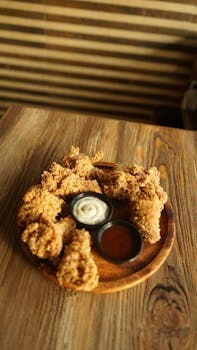
Crispy Fried Chicken (KFC Style)
Crispy, juicy fried chicken with secret spice blend.
About This Recipe
Southern fried chicken is one of the most culturally layered dishes in the American canon — born from West African frying traditions carried by enslaved cooks into plantation kitchens and refined over generations into the crispy, crackling icon that Colonel Harland Sanders pressure-cooked into a global empire starting in Corbin, Kentucky in the 1930s. What makes this copycat version extraordinary is the double-dredge technique: a long soak in seasoned buttermilk tenderizes the meat while giving the flour coating something to grip, and a second dredge right before frying creates that shatteringly thick crust. The spice blend — paprika, garlic powder, onion powder, cayenne, and freshly cracked black pepper — does most of the heavy lifting, but the real secret is temperature discipline: oil at a steady 350°F (175°C) delivers a crust that crisps in the first 90 seconds and then protects the meat as it finishes cooking slowly inside. The result is a piece of chicken where every bite delivers contrasting textures: shatteringly crunchy amber crust giving way to steam-hot, juice-dripping meat. Dark meat pieces — thighs and drumsticks — are the gold standard here because their higher fat content keeps them moist through the full frying time, whereas breasts need careful timing to avoid drying out. Serve fresh off the wire rack with honey biscuits, cream gravy, or coleslaw for the full American comfort-food experience.
Ingredients
Serves 4
- 1.2 kgchicken pieces
- 1 cupbuttermilk
- 1.5 cupsflour
- 1 tbsppaprika
- 1 tbspgarlic powder
- 1 tbsponion powder
- 1 tspcayenne
- oil for fryingvegetable oil
- salt and pepper(to taste)
Instructions
- 1
Marinate in buttermilk
Season the chicken pieces generously with salt and pepper, then submerge in buttermilk in a zip-lock bag or covered bowl. Refrigerate for at least 4 hours, ideally overnight — the lactic acid gently breaks down muscle fibres for noticeably more tender meat.
Add a tablespoon of hot sauce to the buttermilk for subtle heat throughout the meat, not just the crust.
- 2
Build the seasoned coating
Whisk together the flour, paprika, garlic powder, onion powder, cayenne, 1½ teaspoons of salt, and 1 teaspoon of black pepper in a wide, shallow bowl. Taste the raw mix — it should be well-seasoned, since this is the only seasoning the crust gets.
A tablespoon of cornstarch swapped in for some flour increases crunch without changing flavor.
- 3
Double dredge
Lift each piece from the buttermilk, letting excess drip off, then press firmly into the flour mixture on all sides. Return to the buttermilk for 10 seconds, then dredge in flour a second time, pressing into every crevice. The double coating is what creates the signature thick, craggly crust.
Don't shake off too much coating — press it on firmly and the crags are what make it extra crispy.
- 4
Heat oil to 350°F (175°C)
Pour vegetable oil into a deep, heavy-bottomed pot or cast-iron Dutch oven to a depth of 5–6 cm and heat to exactly 350°F (175°C) — use a thermometer. Too cool and the crust absorbs oil and turns greasy; too hot and the outside burns before the inside cooks through.
Fry in batches of 3–4 pieces maximum; overcrowding drops the temperature and leads to soggy coating.
- 5
Fry the chicken
Lower pieces into hot oil skin-side down using tongs, never dropping them. Fry thighs and drumsticks 14–16 minutes, turning once at the halfway point, until deep amber and the internal temperature reads 165°F (74°C) at the thickest point. Breasts take 10–12 minutes.
- 6
Drain and rest
Transfer fried pieces to a wire rack set over a baking sheet — never stack on paper towels, which trap steam and soften the crust. Rest 3–4 minutes before serving; the residual heat finishes cooking the interior while the crust sets into its final texture.
Did you make this?
Rate it and help other cooks find the recipes that actually work.
One tap to sign in, and we'll save the rating you just picked.
Everything you need to plan your week — free
- Meal calendar
- Grocery list
- AI recipe ideas
Track what you eat
Snap your meal to log calories and macros, run fasting timers and track water in the free SnapCal app.
Pro Tips
- →
Double dredge is non-negotiable for an authentically thick, craggy crust — skip one dredge and the coating is thin and slides off.
- →
Use a clip-on deep-fry thermometer and adjust heat between batches; the oil temperature will drop when cold chicken goes in and must climb back to 350°F before the next batch.
- →
Dark meat pieces — thighs and drumsticks — are far more forgiving than breasts; cook them first while you fine-tune the oil temperature.
- →
For overnight marinade, add 1 tsp of salt directly to the buttermilk; this effectively brines the chicken while it soaks.
- →
Rest the dredged chicken on a rack for 10 minutes before frying; this lets the coating hydrate and adhere more firmly to the meat.
Variations
- •
Nashville Hot: brush the fried chicken with a paste of lard, cayenne, brown sugar, garlic powder, and paprika immediately after frying for the famous burn.
- •
Korean Yangnyeom: double-fry at 375°F for extra crunch, then toss in a sweet-spicy glaze of gochujang, honey, garlic, and soy sauce.
- •
Chicken and Waffles: serve pieces over Belgian-style waffles drizzled with hot honey and a dusting of powdered sugar.
- •
Air-fryer version: spray dredged pieces with cooking oil and air-fry at 400°F for 20–22 minutes, flipping halfway — 70% of the crunch with a fraction of the oil.
Storage
Cool completely before refrigerating in an airtight container; keeps 3 days. Reheat on a wire rack in a 375°F (190°C) oven for 12–15 minutes to restore crispiness — microwaving turns the crust irreversibly soft and steams the meat.
History & Origin
Southern fried chicken traces its roots to West African culinary traditions brought to the American South by enslaved people, who seasoned and cooked chicken in rendered fat — a technique that merged with Scottish immigrants' tradition of pan-frying in fat rather than oven-roasting. By the early 20th century it was a Sunday staple across the South. Colonel Harland Sanders opened his first restaurant in Corbin, Kentucky in 1930 and spent years perfecting a pressure-frying method that cooked chicken faster at higher temperature, locking in juices. He franchised the concept in 1952, and by the time he sold the company in 1964 KFC had over 600 locations. The dish remains the defining marker of American comfort food globally.
Frequently Asked Questions
Is buttermilk essential or can I substitute it?
Buttermilk's mild acidity is genuinely important — it tenderizes the meat and gives the flour coating something sticky to grip. If you don't have it, mix 1 cup of whole milk with 1 tablespoon of white vinegar or lemon juice, let it sit 5 minutes to curdle, and use immediately. The result is close but not identical; the longer you can marinate in real buttermilk, the better the texture.
Why does my crust fall off during frying?
There are two main causes: the coating wasn't pressed on firmly enough during dredging, or the oil was not hot enough when the chicken went in. A cold or tepid oil bath prevents immediate crust-setting, and the coating loosens and falls before it can adhere. Make sure oil is at 350°F and press each dredge firmly into the meat.
How do I keep finished pieces warm while frying in batches?
Place a wire rack on a rimmed baking sheet and keep it in a 200°F (93°C) oven. Finished pieces stay hot and carryover heat finishes the interiors without overcooking. Avoid piling pieces on top of each other — steam trapped between them softens the crust within minutes.
What is the difference between home frying and pressure-frying?
Pressure-frying, as used by commercial KFC outlets, uses a sealed vessel that builds steam pressure and raises the boiling point of water in the meat, cooking it significantly faster at higher temperatures. Home cooks cannot replicate pressure-frying safely with standard equipment, but the double-dredge and resting method delivers an excellent approximation.
Can I prepare the chicken ahead for a party?
Marinate up to 24 hours ahead. Dredge no more than 30 minutes before frying — if left too long, the coating turns gummy and won't crisp. Fry in batches close to serving time and hold on a wire rack in a warm oven.
Nutrition Facts
Per serving (300g / 10.6 oz) · 4 servings total
Time Summary
Have Questions?
Ask our AI cooking assistant anything about this recipe — substitutions, techniques, scaling.
Chat with AI Chef →Featured in Guides
This recipe is featured in the following curated guides:
More American Recipes
You Might Also Like
Similar dishes from other cuisines around the world.
Browse by Ingredient
More recipes built around the same core ingredients.
Free Kitchen Tools
Calculators and converters that pair with this page — no signup needed.
Put This Into a Plan
Schedule it, shop for it, and track what you already have.
Read Next
Longer reads that go deeper on the ideas behind this dish.
Community
Join the conversation
Sign in to leave a comment and save your favourite recipes