
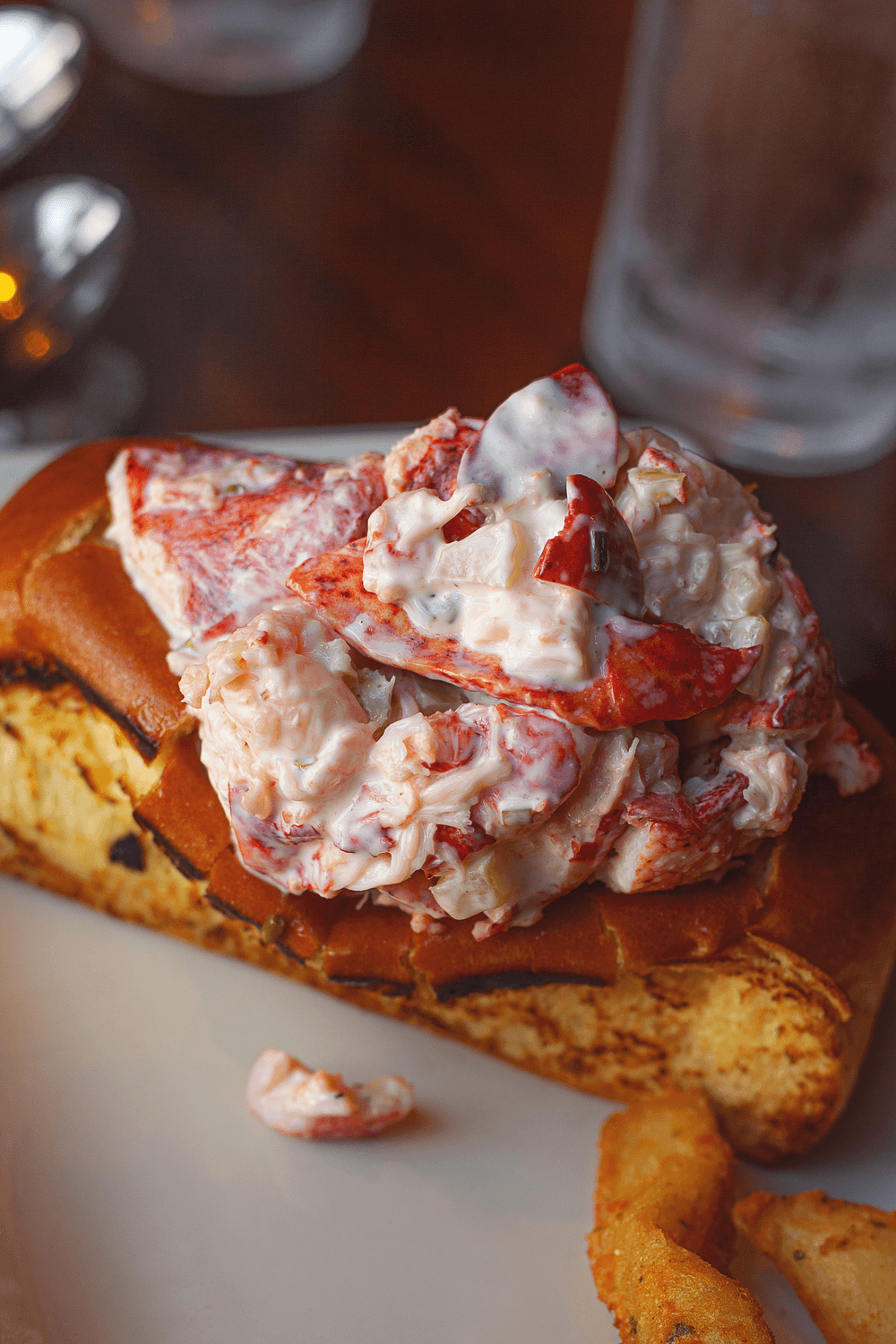
Classic New England Lobster Roll
Sweet Maine lobster tossed in light mayo and lemon, stuffed into a buttery toasted split-top bun.
About This Recipe
The lobster roll is the crown jewel of New England summer food, a deeply satisfying combination of sweet, briny lobster and soft, buttery bread that has been sold from seaside shacks in Maine and Connecticut since the 1920s. It is simultaneously simple and luxurious — a showcase for the excellence of its primary ingredient, demanding nothing more than the best lobster and minimal interference. There are two schools of thought: the Maine style (cold lobster salad with light mayo, celery, lemon and fresh herbs) and the Connecticut style (warm lobster chunks drenched in clarified butter). Both are magnificent. The key is the lobster itself — freshly cooked and still sweet — and the iconic New England-style split-top hot dog bun, toasted in butter on its flat sides until golden and crisp. At home, you can steam fresh lobsters or use high-quality cooked lobster from the fish counter to make this accessible year-round. The result is a restaurant-quality summer luxury that is surprisingly easy to assemble. Serve with kettle chips, a simple green salad and an ice-cold beer for the quintessential New England beach experience anywhere.
Ingredients
Serves 4
- 1½ lbscooked lobster meat(from 3–4 lobster tails or 2 whole lobsters)
- 3 tbspgood-quality mayonnaise(Duke's or Hellmann's)
- 1 stalkcelery(finely diced)
- 1 tbspfresh lemon juice
- 1 tsplemon zest
- 2 tbspfresh chives(finely chopped)
- 1 tbspfresh tarragon(optional but excellent)
- salt and white pepper(to taste)
- 4split-top hot dog buns(New England style)
- 4 tbspunsalted butter(softened, for toasting buns)
Instructions
- 1
Prepare the lobster
If cooking fresh, steam lobsters 8–10 minutes until bright red. Cool completely, then extract meat from claws, knuckles and tails. Chop into generous ¾-inch chunks. Pat dry.
- 2
Make the lobster salad
In a bowl, combine mayo, celery, lemon juice, lemon zest, chives, tarragon, salt and white pepper. Gently fold in lobster chunks — don't overmix or you'll break up the beautiful pieces.
Use white pepper instead of black — it blends invisibly and has a cleaner heat.
- 3
Toast the buns
Butter the flat sides of the split-top buns. Heat a skillet over medium heat. Toast buns butter-side down for 2–3 minutes until deeply golden and crisp. This step transforms a good roll into a great one.
The buttery, toasted exterior is as important as the lobster filling. Don't skip this.
- 4
Fill and serve
Fill each toasted bun generously with chilled lobster salad. Serve immediately with kettle chips, lemon wedges and extra chives.
Did you make this?
Rate it and help other cooks find the recipes that actually work.
One tap to sign in, and we'll save the rating you just picked.
Everything you need to plan your week — free
- Meal calendar
- Grocery list
- AI recipe ideas
Cook this hands-free
Get AI meal plans, step-by-step cooking mode, and your saved recipes in the free Bento app.
Pro Tips
- →
Cold lobster salad should be made no more than 2 hours ahead — lobster releases moisture and the salad becomes watery if it sits too long.
- →
If you can't find split-top buns, use brioche hot dog buns and toast the sides.
- →
Less mayo is more — the lobster should taste of itself, not mayo.
- →
For Connecticut style: skip the mayo entirely and toss warm lobster chunks in 4 tbsp clarified butter with a pinch of salt.
Variations
- •
Connecticut Style: warm lobster chunks tossed in clarified butter, no mayo, served in a toasted bun.
- •
Shrimp Roll: substitute lobster with 1½ lbs cooked large shrimp for a more affordable version.
- •
Lobster BLT Roll: add crispy bacon and a leaf of butter lettuce to the classic.
Storage
Lobster salad keeps refrigerated up to 1 day but is best eaten immediately. Do not freeze assembled rolls — buns become soggy.
History & Origin
The lobster roll was invented around 1929 at Perry's restaurant in Milford, Connecticut. The owner served it as a hot, butter-drenched sandwich. The cold mayo version associated with Maine developed later and became the dominant style. Maine now considers the lobster roll its official state food.
Frequently Asked Questions
Can I use frozen lobster meat?
Yes — look for IQF (individually quick-frozen) lobster meat at better grocery stores. Thaw overnight in the refrigerator and pat dry well before using. The flavor is noticeably inferior to fresh but still delicious.
Where do I find split-top buns?
New England split-top buns (flat sides, no rounded top) are sold at most grocery stores in the Northeast. Outside the region, check Pepperidge Farm or Martin's brands, or substitute with brioche buns.
How much lobster per roll?
A generous roll uses about 5–6 oz of lobster meat. Go more if budget allows — this is not the place to economize.
Nutrition Facts
Per serving (350g / 12.3 oz) · 4 servings total
Time Summary
Have Questions?
Ask our AI cooking assistant anything about this recipe — substitutions, techniques, scaling.
Chat with AI Chef →Featured in Guides
This recipe is featured in the following curated guides:
More American Recipes
You Might Also Like
Similar dishes from other cuisines around the world.
Free Kitchen Tools
Calculators and converters that pair with this page — no signup needed.
Put This Into a Plan
Schedule it, shop for it, and track what you already have.
Read Next
Longer reads that go deeper on the ideas behind this dish.
Community
Join the conversation
Sign in to leave a comment and save your favourite recipes