
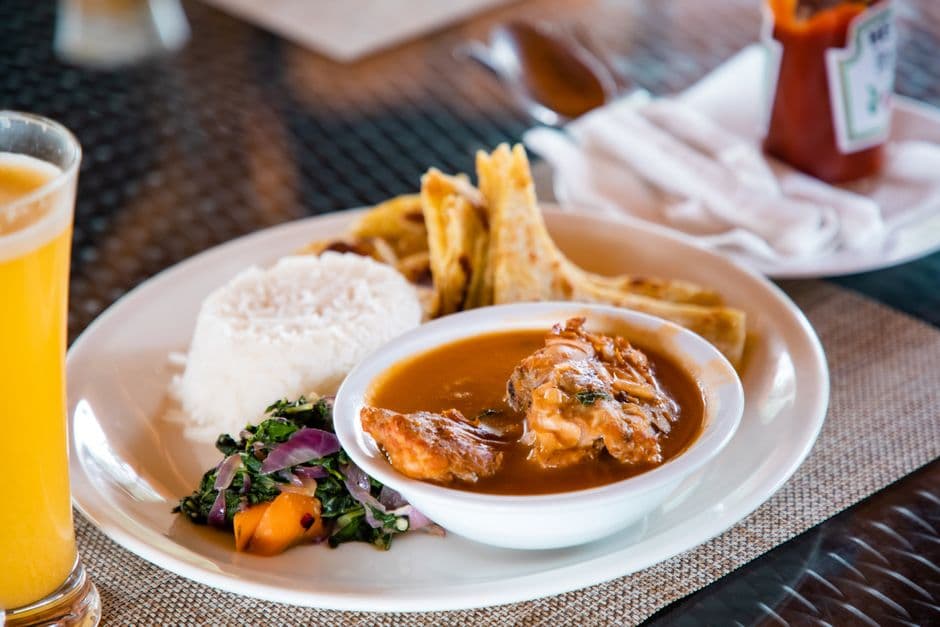
Luwombo
Chicken or beef stew slow-steamed inside banana leaf parcels with mushrooms and groundnut paste. A royal Buganda dish of extraordinary tenderness and aroma.
About This Recipe
Luwombo is one of Uganda's most revered traditional dishes, said to have been created in 1887 by Kawunta, the royal chef of Kabaka Mwanga II of the Buganda Kingdom, as a special preparation for the royal court. The dish involves marinating meat in a groundnut and mushroom sauce and encasing it in banana leaf parcels, which are then steamed for several hours. The enclosed cooking environment concentrates the flavors and the banana leaves impart a subtle grassy, smoky aroma to the stew. Luwombo is a festive and ceremonial dish in Buganda culture, prepared for important guests, weddings, and celebrations—it is never considered everyday food.
Ingredients
Serves 4
- 1 kgbone-in chicken pieces or beef short ribs
- 150 ggroundnut paste (unsweetened peanut butter)
- 100 gdried mushrooms (e.g. shiitake or oyster), soaked and sliced
- 1 largeonion, finely diced
- 3 clovesgarlic, minced
- 1 tspfresh ginger, grated
- 2 largetomatoes, diced
- 200 mlmushroom soaking liquid (strained)
- 100 mlchicken stock
- 2 tbspvegetable oil
- 4 largebanana leaves, softened over flame and cut into 40 cm squares
- 1 tspsalt
- 1 tspblack pepper
- 8 stripsbanana leaf or kitchen string, for tying
Instructions
- 1
Prepare the banana leaves
Pass each banana leaf briefly over a gas flame or dip in boiling water for a few seconds until it turns a deeper green and becomes pliable. Wipe clean with a damp cloth. This prevents splitting when folding.
- 2
Make the groundnut sauce
Heat the oil in a pan over medium heat. Fry the onion for 8 minutes until golden. Add the garlic, ginger, and tomatoes and cook for 5 minutes. Stir in the groundnut paste, mushrooms, mushroom soaking liquid, and stock. Simmer for 5 minutes until smooth. Season with salt and pepper.
- 3
Marinate the meat
Season the chicken or beef pieces and coat thoroughly with the groundnut and mushroom sauce. Leave to marinate for at least 30 minutes at room temperature or up to 4 hours in the refrigerator.
- 4
Make the banana leaf parcels
Place a large banana leaf shiny-side down on a work surface. Spoon a quarter of the marinated meat and sauce into the center. Fold the sides of the leaf over the filling, then fold the top and bottom to create a neat parcel. Tie securely with banana leaf strips or kitchen string. Repeat for each portion.
- 5
Steam the luwombo
Arrange the parcels in a steamer basket or on a rack over a deep pot of boiling water. Cover tightly and steam for 1.5 to 2 hours until the meat is completely tender and falling from the bone. Check the water level regularly and top up as needed. Serve the parcels at the table and open them to release the aromatic steam.
Did you make this?
Rate it and help other cooks find the recipes that actually work.
One tap to sign in, and we'll save the rating you just picked.
Everything you need to plan your week — free
- Meal calendar
- Grocery list
- AI recipe ideas
Track what you eat
Snap your meal to log calories and macros, run fasting timers and track water in the free SnapCal app.
Pro Tips
- →
Softening the banana leaves over heat is essential to prevent them from cracking during wrapping.
- →
If banana leaves are unavailable, use foil lined with parchment—you'll lose the flavor but the dish still works.
- →
The longer steaming time for beef (2 hours) gives the best results; chicken needs only 1 to 1.5 hours.
- →
Open the parcels at the table for maximum dramatic effect and aroma.
Variations
- •
Luwombo ya nkoko: traditional chicken version, the most common.
- •
Luwombo ya ngege: tilapia fish version with a lighter sauce.
- •
Add 2 tablespoons of smoked paprika to the sauce for a smokier depth.
- •
Vegetarian: swap the protein for roasted king oyster mushrooms, smoked tofu or cooked chickpeas — adjust seasoning slightly upward to compensate.
Storage
Luwombo can be refrigerated in its sealed parcels for 2 days or re-steamed from cold for 20–30 minutes to reheat. The filling can be frozen (removed from leaves) for up to 2 months.
History & Origin
Luwombo was created in 1887 by Kawunta, the royal chef of Kabaka Mwanga II of the Buganda Kingdom. The dish was designed to preserve meat and deliver it still hot over long distances for royal consumption. Today it remains the ceremonial dish par excellence of the Baganda people and is prepared for honored guests and important life events throughout Uganda.
Frequently Asked Questions
Where can I find banana leaves?
Banana leaves are available fresh or frozen in African, Caribbean, and Asian grocery stores. Frozen leaves work very well—thaw completely before using and soften over heat as described.
Can I make this ahead of time?
Yes — most of the components can be prepared up to a day in advance and refrigerated separately. Reheat gently and assemble just before serving so textures stay distinct.
What can I substitute if I don't have all the ingredients?
Stay close to the role each ingredient plays: swap aromatics for similar ones (shallot for onion, lime for lemon), and keep the fat-acid-salt balance intact. Spice blends can usually be approximated with what's in the cupboard.
How do I know it's authentic?
Authenticity sits on a spectrum — what matters more is honoring the technique and balance of flavors. If the dish tastes harmonious and respects how cooks in its home region would build it, you're on solid ground.
Nutrition Facts
Per serving (400g / 14.1 oz) · 4 servings total
Time Summary
Have Questions?
Ask our AI cooking assistant anything about this recipe — substitutions, techniques, scaling.
Chat with AI Chef →Featured in Guides
This recipe is featured in the following curated guides:
More Ugandan Recipes
You Might Also Like
Similar dishes from other cuisines around the world.
Free Kitchen Tools
Calculators and converters that pair with this page — no signup needed.
Put This Into a Plan
Schedule it, shop for it, and track what you already have.
Read Next
Longer reads that go deeper on the ideas behind this dish.
Community
Join the conversation
Sign in to leave a comment and save your favourite recipes