
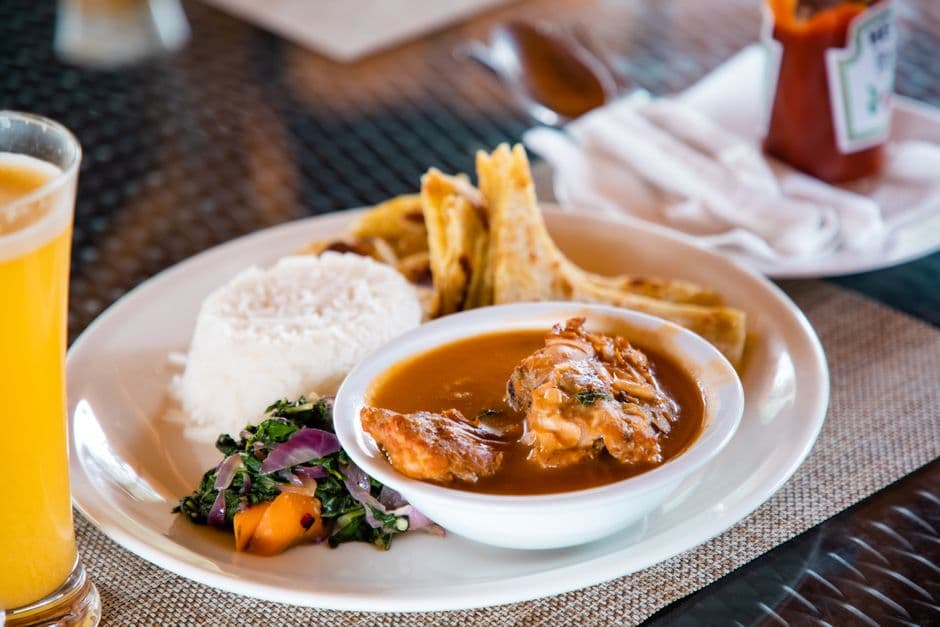
Matoke
Steamed green bananas cooked in a rich groundnut and tomato sauce, Uganda's beloved national staple. Hearty, creamy, and deeply comforting.
About This Recipe
Matoke—steamed and mashed green bananas—is Uganda's national dish and a cornerstone of Baganda culture in the central region of the country. The bananas are wrapped in their own leaves and steamed until soft, then traditionally mashed inside the leaf bundle and served with a variety of stews and gravies. The dish is central to Ugandan ceremonial life, present at weddings, funerals, and celebrations, where serving matoke in abundance is a sign of hospitality and prosperity. Rich in potassium and complex carbohydrates, matoke has sustained Ugandan communities for centuries and remains the preferred staple over rice or maize in much of the country.
Ingredients
Serves 4
- 8 mediumgreen cooking bananas (matoke/green plantains), peeled
- 200 ggroundnut paste (peanut butter, unsweetened)
- 400 gcanned diced tomatoes
- 1 largeonion, finely diced
- 3 clovesgarlic, minced
- 1 tspfresh ginger, grated
- 500 mlvegetable or beef stock
- 2 tbspvegetable oil
- 1 tspground cumin
- 1 tspground coriander
- 1/2 tspturmeric
- 1 handfulfresh coriander leaves, to garnish
- 1 tspsalt to taste
- 1 pinchchilli flakes (optional)
Instructions
- 1
Prepare the bananas
Peel the green bananas (use gloves as the sap stains). Cut in half or leave whole. Immediately place in a bowl of cold salted water to prevent discoloration.
- 2
Steam the matoke
Line a steamer basket with banana leaves or foil. Arrange the banana pieces in the basket, cover tightly, and steam over boiling water for 35–40 minutes until completely soft and yielding. Alternatively, wrap tightly in foil and cook in a 180°C oven for 45 minutes.
- 3
Make the groundnut sauce
Heat the oil in a saucepan over medium heat. Fry the onion for 8 minutes until golden. Add the garlic, ginger, cumin, coriander, and turmeric and cook for 2 minutes. Add the diced tomatoes and cook for 5 minutes until the sauce thickens and the oil separates.
- 4
Add the groundnut paste
Stir the groundnut paste into the tomato sauce until fully incorporated. Pour in the stock gradually, stirring constantly to create a smooth, rich sauce. Simmer for 10 minutes, stirring frequently. Season with salt and chilli flakes if using.
- 5
Mash and serve
Remove the steamed bananas and mash lightly with a fork—leave some texture rather than making a smooth purée. Serve the mashed matoke on plates or in bowls, topped with the groundnut sauce. Garnish with fresh coriander.
Did you make this?
Rate it and help other cooks find the recipes that actually work.
One tap to sign in, and we'll save the rating you just picked.
Everything you need to plan your week — free
- Meal calendar
- Grocery list
- AI recipe ideas
Track what you eat
Snap your meal to log calories and macros, run fasting timers and track water in the free SnapCal app.
Pro Tips
- →
Wear gloves when peeling green bananas—the sap is very sticky and stains hands.
- →
Do not use ripe yellow bananas; they will become too sweet and mushy.
- →
The groundnut sauce can be made ahead and reheated; it thickens as it cools.
- →
For a more traditional presentation, mash the bananas while still in their foil.
Variations
- •
Add 400 g of cubed goat meat or beef to the groundnut sauce for a meaty version.
- •
Stir in 200 g of chopped spinach or kale to the sauce for extra nutrition.
- •
Use coconut milk in place of half the stock for a creamier, sweeter sauce.
- •
Vegetarian: swap the protein for roasted king oyster mushrooms, smoked tofu or cooked chickpeas — adjust seasoning slightly upward to compensate.
Storage
Store the matoke and sauce separately in airtight containers in the refrigerator for up to 3 days. Reheat the sauce with a splash of water. The mashed matoke can be reheated in a microwave or steamer.
History & Origin
Matoke has been the staple food of the Baganda people of central Uganda for over 500 years. The banana cultivars grown for matoke are believed to have been introduced to East Africa from Southeast Asia via the Indian Ocean trade routes. The Buganda Kingdom formalized matoke as a royal food, and its importance in the culture is reflected in the proverb: 'A meal without matoke is not a real meal.'
Frequently Asked Questions
What are the best bananas to use for matoke?
East African highland cooking bananas (also called Matooke or East African highland bananas) are traditional. Green plantains are the best widely available substitute and behave very similarly when cooked.
Can I make this ahead of time?
Yes — most of the components can be prepared up to a day in advance and refrigerated separately. Reheat gently and assemble just before serving so textures stay distinct.
What can I substitute if I don't have all the ingredients?
Stay close to the role each ingredient plays: swap aromatics for similar ones (shallot for onion, lime for lemon), and keep the fat-acid-salt balance intact. Spice blends can usually be approximated with what's in the cupboard.
How do I know it's authentic?
Authenticity sits on a spectrum — what matters more is honoring the technique and balance of flavors. If the dish tastes harmonious and respects how cooks in its home region would build it, you're on solid ground.
Nutrition Facts
Per serving (420g / 14.8 oz) · 4 servings total
Time Summary
Have Questions?
Ask our AI cooking assistant anything about this recipe — substitutions, techniques, scaling.
Chat with AI Chef →Featured in Guides
This recipe is featured in the following curated guides:
More Ugandan Recipes
You Might Also Like
Similar dishes from other cuisines around the world.
Free Kitchen Tools
Calculators and converters that pair with this page — no signup needed.
Put This Into a Plan
Schedule it, shop for it, and track what you already have.
Read Next
Longer reads that go deeper on the ideas behind this dish.
Community
Join the conversation
Sign in to leave a comment and save your favourite recipes