
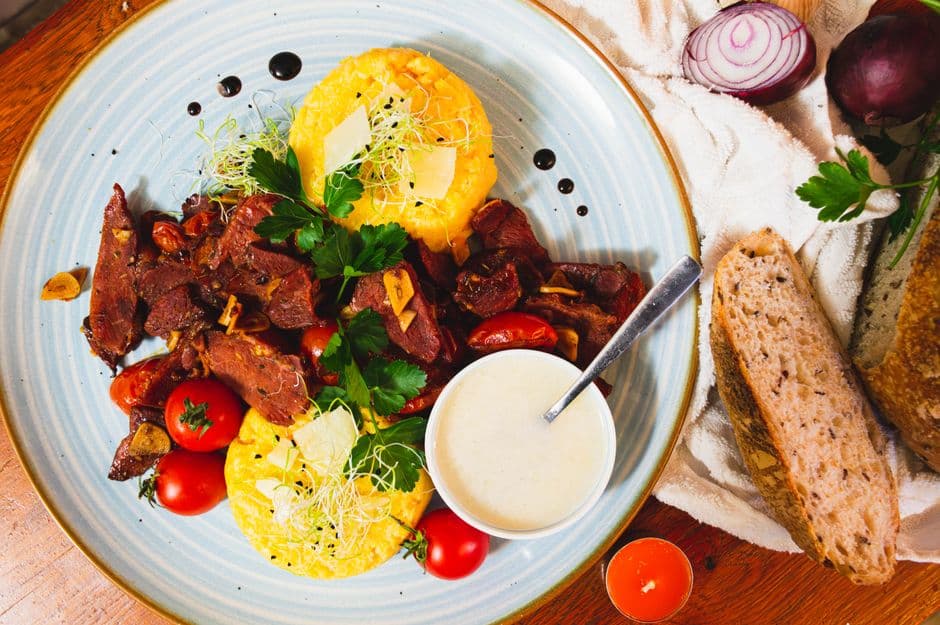
Mămăligă (Romanian Polenta)
A creamy, golden cornmeal porridge that is the cornerstone of Romanian cuisine, served alongside cheeses, sour cream, and stews.
About This Recipe
Mămăligă has been the staple food of Romanian peasants for centuries, often called 'the Romanian bread'. Made from yellow cornmeal, water, and salt, it is deceptively simple yet infinitely versatile. Historically, it was cooked in a ceaun — a cast-iron cauldron — over an open fire and stirred constantly with a wooden spoon. In Transylvania, it is traditionally served with brânză de burduf (a pungent sheep's cheese) and sour cream; in other regions, it accompanies stews and grilled meats. Mămăligă can be served soft and porridge-like, or allowed to firm up and sliced, grilled, or fried.
Ingredients
Serves 4
- 300 gcoarse yellow cornmeal
- 1 literwater
- 1 tspsalt
- 50 gbutter
- 200 gfeta or brânză de burduf (sheep's cheese)
- 200 mlsour cream, for serving
Instructions
- 1
Boil the water
Bring 1 liter of salted water to a rolling boil in a heavy-bottomed pot or cast-iron cauldron.
- 2
Add the cornmeal
Reduce heat to medium. Pour the cornmeal in a thin, steady stream into the boiling water, whisking constantly to prevent lumps from forming.
- 3
Stir and cook
Switch to a sturdy wooden spoon. Stir continuously for 20–30 minutes over medium-low heat until the mămăligă pulls away from the sides of the pot and becomes very thick. The longer you cook it, the more flavorful it becomes.
- 4
Finish with butter
Stir in the butter until fully melted and incorporated. Taste and adjust salt.
- 5
Serve
Turn the mămăligă out onto a wooden board or serve directly from the pot. Accompany with crumbled cheese, a generous spoonful of sour cream, and any desired stew or roasted meat.
Did you make this?
Rate it and help other cooks find the recipes that actually work.
One tap to sign in, and we'll save the rating you just picked.
Everything you need to plan your week — free
- Meal calendar
- Grocery list
- AI recipe ideas
Track what you eat
Snap your meal to log calories and macros, run fasting timers and track water in the free SnapCal app.
Pro Tips
- →
Use coarse-ground cornmeal for the most authentic texture.
- →
Stir constantly in the beginning to avoid lumps.
- →
For a firmer mămăligă that can be sliced, pour into a greased loaf pan and refrigerate until set.
- →
Fried leftover slices in butter are incredible for breakfast.
Variations
- •
Add a handful of grated cheese directly into the mămăligă for a richer version.
- •
Mămăligă cu ciuperci: serve topped with a garlic mushroom sauté.
- •
Topped with a fried egg and bacon for a hearty breakfast.
- •
Vegetarian: swap the protein for roasted king oyster mushrooms, smoked tofu or cooked chickpeas — adjust seasoning slightly upward to compensate.
Storage
Store leftover mămăligă in the fridge for up to 3 days. Slice and pan-fry or grill to reheat.
History & Origin
Cornmeal arrived in Romania in the 17th century and quickly replaced millet porridge as the peasant staple. For many centuries, mămăligă was eaten daily by rural Romanians, sometimes as the only food available.
Frequently Asked Questions
Can I use fine cornmeal?
Yes, but it will cook faster and have a smoother, less rustic texture. Coarse cornmeal is traditional.
How do I prevent lumps?
Pour the cornmeal very slowly while whisking constantly, and keep the heat at medium so the water stays hot.
Can I make this ahead of time?
Yes — most of the components can be prepared up to a day in advance and refrigerated separately. Reheat gently and assemble just before serving so textures stay distinct.
What can I substitute if I don't have all the ingredients?
Stay close to the role each ingredient plays: swap aromatics for similar ones (shallot for onion, lime for lemon), and keep the fat-acid-salt balance intact. Spice blends can usually be approximated with what's in the cupboard.
Nutrition Facts
Per serving (280g / 9.9 oz) · 4 servings total
Time Summary
Have Questions?
Ask our AI cooking assistant anything about this recipe — substitutions, techniques, scaling.
Chat with AI Chef →Featured in Guides
This recipe is featured in the following curated guides:
More Romanian Recipes
You Might Also Like
Similar dishes from other cuisines around the world.
Free Kitchen Tools
Calculators and converters that pair with this page — no signup needed.
Put This Into a Plan
Schedule it, shop for it, and track what you already have.
Read Next
Longer reads that go deeper on the ideas behind this dish.
Community
Join the conversation
Sign in to leave a comment and save your favourite recipes