
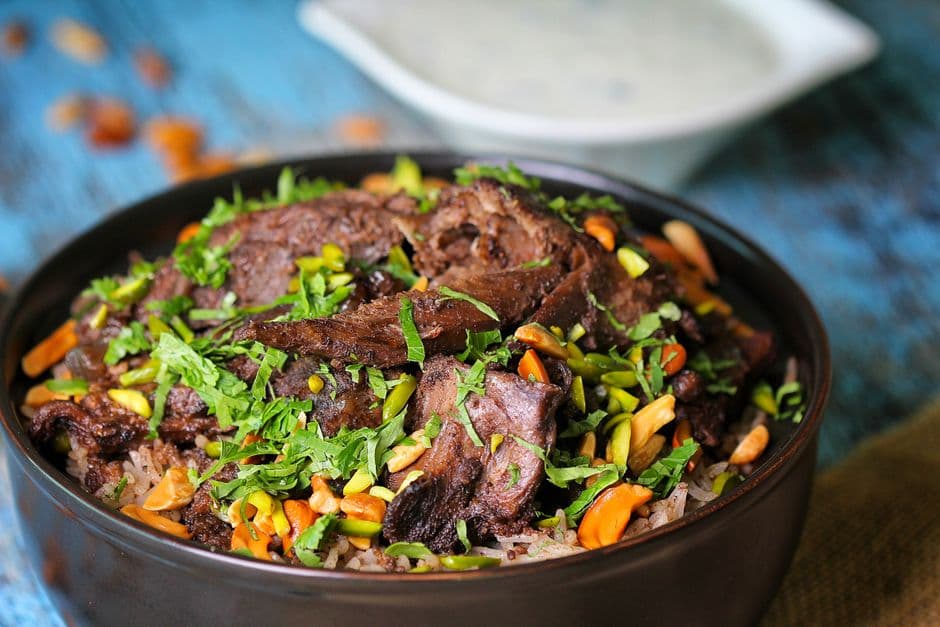
Mansaf (Jordanian National Dish — Lamb in Fermented Yogurt Sauce)
Slow-braised lamb shanks bathed in tangy jameed yogurt sauce, served over saffron rice and crisp shrak bread, crowned with toasted almonds and pine nuts — Jordan's most ceremonial dish.
About This Recipe
Mansaf is not merely Jordan's national dish — it is the centerpiece of every important Bedouin and Jordanian gathering, from weddings and birth celebrations to the conclusion of mourning periods, when serving mansaf signals the return to ordinary life. The dish is built around jameed, a hard, salty, intensely tangy sheep-milk yogurt that Bedouin shepherds developed as a way to preserve milk through the desert seasons by drying balls of strained yogurt in the sun until they became rock-hard. To cook mansaf, the jameed is broken into chunks and reconstituted by long simmering with water until it dissolves back into a thick, ivory-white sauce with a wild, sharp tang unlike any cultured dairy in Western kitchens. Bone-in lamb (traditionally a whole lamb's shoulder or shanks) is cooked in this sauce for hours until the meat slides from the bone and the broth becomes glossy with rendered fat. The serving is theatre: a large round platter is lined with shrak (paper-thin saj bread), heaped with golden saffron rice, the lamb is laid on top, the jameed sauce is ladled generously over everything, and the platter is crowned with toasted almonds, pine nuts, and parsley. Diners gather around the single platter and eat with their right hands, rolling rice, meat and sauce into small balls — a ritual of shared abundance that has not changed in centuries.
Ingredients
Serves 8
- 2 kgbone-in lamb shoulder or shanks, cut into large pieces(ask the butcher to crack the bones)
- 500 gjameed (dried fermented yogurt balls) OR 1 kg full-fat Greek yogurt plus 1 cup whole-milk laban and 2 tsp salt as a substitute
- 500 glong-grain basmati rice, rinsed until clear
- 1 largeonion, halved, plus 2 bay leaves, 6 cardamom pods, 1 cinnamon stick, 1 tsp whole black pepper
- 1 tspground turmeric and a generous pinch of saffron threads steeped in 3 tbsp warm water
- 3 tbspghee or clarified butter
- 60 gblanched almonds, slivered
- 40 gpine nuts
- 4sheets of shrak or markook bread (or large lavash) for the platter
- sea salt, fresh parsley, and a small bowl of extra hot sauce
Instructions
- 1
Reconstitute the jameed
Break the jameed into walnut-sized chunks and place in a large bowl with 1.5 litres warm water. Soak overnight (at least 8 hours) until softened, then blend on high until completely smooth — the consistency of thick buttermilk. If using yogurt substitute, whisk the yogurt with the laban and salt until smooth. Strain to remove any lumps.
- 2
Sear and braise the lamb
Pat the lamb dry and season heavily with salt. In a large heavy pot, brown the lamb in 2 tbsp ghee over high heat in batches, 4 minutes per side until deeply browned. Return all lamb to the pot, add the onion, bay, cardamom, cinnamon and peppercorns, cover with 2 litres water, bring to a boil, skim the foam, then simmer covered 90 minutes until the meat is fork-tender.
Skimming the surface foam in the first 15 minutes is critical for a clean-tasting sauce.
- 3
Build the jameed sauce
Lift the lamb out and set aside, covered. Strain the cooking broth and return 1 litre of it to the pot. Whisk in the reconstituted jameed gradually, then bring to a very gentle simmer over low heat. Stir constantly in one direction with a wooden spoon for 20 minutes — jameed sauce will curdle if it boils or is left unstirred. The sauce will thicken and turn glossy ivory.
- 4
Finish the lamb in sauce
Return the lamb to the simmering sauce and cook gently 30 minutes more — never letting it boil. The meat absorbs the tangy flavor and the sauce takes on richness from the bones. Taste for salt; jameed is already very salty, so adjust carefully.
- 5
Cook the saffron rice
While the lamb finishes, melt remaining ghee in a wide pan, add the rinsed basmati and turmeric, and toast 90 seconds. Add 750 ml boiling water (or strained lamb broth), 1 tsp salt, and the saffron with its water. Bring to a boil, cover, reduce to lowest heat, cook 12 minutes. Rest off heat, covered, 10 more minutes. Fluff with a fork.
- 6
Toast nuts and warm bread
In a small skillet, toast almonds in 1 tbsp ghee until light gold, 2 minutes; lift out. In the same pan, toast pine nuts until deep gold, 2 minutes more. Warm the shrak bread briefly over an open flame or under the broiler — just a few seconds to make it pliable, not crisp.
- 7
Assemble the platter
Line a very large round platter with the warmed shrak, letting it drape over the edges. Ladle a few spoons of jameed sauce over the bread to moisten it. Mound the saffron rice over the centre. Arrange the lamb pieces on the rice. Ladle generous spoonfuls of hot jameed sauce over everything until rice is glistening.
- 8
Crown and serve
Scatter toasted almonds, pine nuts, and parsley across the top. Carry the platter to the table with extra jameed sauce in small bowls for diners to spoon over their portions. Eat communal-style, right hand rolling rice-meat-sauce into bites, or serve plated for a Western setting.
Did you make this?
Rate it and help other cooks find the recipes that actually work.
One tap to sign in, and we'll save the rating you just picked.
Everything you need to plan your week — free
- Meal calendar
- Grocery list
- AI recipe ideas
Cook this hands-free
Get AI meal plans, step-by-step cooking mode, and your saved recipes in the free Bento app.
Pro Tips
- →
Jameed is available at Middle Eastern grocers — buy the whole rocky balls from Karak (the Jordanian capital of jameed-making) if you can; bottled liquid jameed is convenient but less complex.
- →
Never let the jameed sauce boil — it will split into curds and whey. Keep it just barely simmering and stir in one direction.
- →
Bedouin tradition serves mansaf with the lamb's head on top as a sign of honor to the guest; modern households simply use the meat.
- →
If your sauce splits anyway, whisk in a tablespoon of cornstarch slurry off heat to bring it back together — not traditional, but it works.
Variations
- •
Chicken mansaf — replace lamb with bone-in chicken thighs; reduce cooking time to 35 minutes total.
- •
Mansaf with goat — even more traditional in Bedouin households; cook 30 minutes longer than lamb.
- •
City mansaf with extra rice and less bread — the modern Amman restaurant style.
- •
Add a half-cup of chopped flat-leaf parsley to the rice for a fresher, more contemporary version.
Storage
Refrigerate lamb in its jameed sauce up to 3 days; reheat over very low heat without boiling. Rice keeps separately 3 days. The whole assembled platter does not store — assemble fresh for each meal. Freezing is not recommended as jameed sauce splits on thaw.
History & Origin
Mansaf originated with the Bedouin tribes of the Jordanian and Syrian deserts, who developed jameed as a way to carry preserved milk on long migrations. The dish evolved from a simple meat-and-jameed stew into the elaborate communal platter we know today during the Ottoman era, and was officially designated Jordan's national dish in the 1920s.
Frequently Asked Questions
Where do I buy jameed?
Any larger Middle Eastern grocery, especially those serving Jordanian, Palestinian or Syrian communities. Online sources include Jordan-import shops on Amazon. Karak-made jameed is the gold standard.
Can I really use Greek yogurt as a substitute?
Yes — it won't have the wild fermented tang of true jameed, but a mix of full-fat Greek yogurt with extra salt and a splash of fermented buttermilk (laban) gets reasonably close. Add a teaspoon of lemon juice for sharpness.
Is mansaf usually eaten with hands?
In traditional Bedouin settings, yes — diners stand around the platter and use the right hand to form rice-meat-sauce bites. In urban restaurants, individual plates with cutlery are now standard.
Why does my sauce taste so salty?
Jameed is naturally very salty (it's a preservation product). Always taste before adding any extra salt, and dilute with extra water or broth if needed.
Nutrition Facts
Per serving (420g / 14.8 oz) · 8 servings total
Time Summary
Have Questions?
Ask our AI cooking assistant anything about this recipe — substitutions, techniques, scaling.
Chat with AI Chef →Featured in Guides
This recipe is featured in the following curated guides:
More Jordanian Recipes
You Might Also Like
Similar dishes from other cuisines around the world.
Free Kitchen Tools
Calculators and converters that pair with this page — no signup needed.
Put This Into a Plan
Schedule it, shop for it, and track what you already have.
Read Next
Longer reads that go deeper on the ideas behind this dish.
Community
Join the conversation
Sign in to leave a comment and save your favourite recipes