
Maryland Crab Cakes
Lumpy crab meat barely bound with breadcrumbs and Old Bay seasoning.
About This Recipe
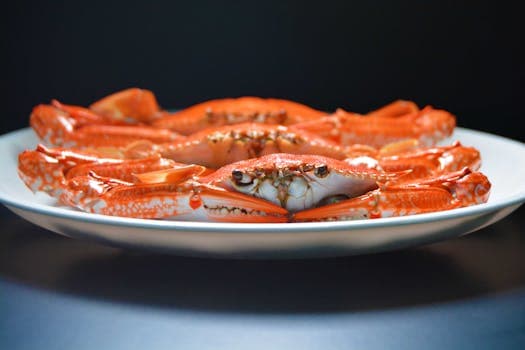
Maryland's relationship with the blue crab (Callinectes sapidus) of the Chesapeake Bay is one of the defining culinary identities of the American Mid-Atlantic — and the Maryland crab cake is its most refined expression. A true Maryland crab cake is an exercise in restraint: the binder exists to hold the crab together, not to fill it out, and purists measure the quality of a crab cake by how much of it falls apart when you eat it, because only a cake with minimal filler does that. The ratio that serious Maryland cooks defend is roughly 90% crab to 10% everything else — breadcrumbs, mayonnaise, egg, mustard, Worcestershire, and Old Bay. The binder is a vehicle, not a statement. Old Bay Seasoning — the proprietary blend of celery salt, paprika, black pepper, red pepper, and multiple other spices created by German immigrant Gustav Brunn in Baltimore in 1939 — is not optional in authentic Maryland crab cakes. Its flavour profile was developed specifically in Baltimore kitchens to complement Chesapeake Bay shellfish, and no other spice blend replicates its particular balance. The crab itself matters even more: jumbo lump meat, the large intact muscle masses from the swimming legs, produces cakes with distinct, identifiable pieces that demonstrate quality. Backfin or claw meat works but produces a more homogenous, less impressive result. Form the cakes gently, refrigerate to set them, and pan-fry in a hot buttered skillet until the exterior forms a crackling, golden-brown crust while the interior stays just barely warm and yielding.
Ingredients
Serves 4
- 500 glump crab meat(picked over for shells)
- ½ cupbreadcrumbs
- ¼ cupmayonnaise
- 1egg
- 1 tbspOld Bay seasoning
- 1 tbspWorcestershire sauce
- 1 tbspmustard
- 2 tbspbutter
- lemon wedgesfor serving
Instructions
- 1
Pick the crab meat
Spread the crab meat on a clean flat surface or rimmed tray and gently run your fingers through it, feeling for shell fragments — even commercially picked crab meat regularly contains pieces. Work gently so the lumps stay intact. A piece of shell in a crab cake ruins the dining experience immediately.
Work by feel rather than by sight; small translucent shell fragments are nearly invisible but unmistakeable underfoot.
- 2
Mix the binder gently
In a large bowl, whisk together the mayonnaise, egg, Old Bay, Worcestershire, and mustard until smooth. Add the breadcrumbs and stir to combine. This binder should look like a thick, well-seasoned aioli — taste it before adding the crab, as this is your last easy chance to adjust seasoning.
- 3
Fold in crab with minimal disturbance
Add the crab meat to the binder and fold very gently with a rubber spatula, using wide sweeping motions and turning the bowl rather than stirring. The goal is to coat every piece of crab without breaking any lumps — 8 to 10 gentle folds is usually enough. Over-mixing produces a uniform paste rather than distinct, visible lumps.
Under-mixing is preferable to over-mixing for a Maryland crab cake; a few unmixed streaks of binder are fine.
- 4
Form and chill
Divide the mixture into 8 equal portions and shape each gently into a round cake about 7 cm across and 2.5 cm thick — do not compact them aggressively. Place on a parchment-lined tray, cover loosely with cling film, and refrigerate for at least 30 minutes (up to 4 hours) to firm up the binder and reduce the risk of the cakes falling apart during cooking.
- 5
Pan-fry to golden
Melt the butter in a heavy skillet (cast iron or stainless) over medium-high heat until the butter foams and subsides, indicating it is hot enough. Add the chilled crab cakes and cook 3–4 minutes without moving until the underside is deeply golden and releases cleanly from the pan. Flip carefully with a thin spatula and cook another 3 minutes.
Do not move the cakes for the first 3 minutes — allowing the crust to set fully before you attempt a flip is what keeps them intact.
- 6
Serve immediately
Transfer to a warm plate and serve at once with lemon wedges, tartar sauce or remoulade, and a simple green salad or corn on the cob. The cakes are at their best in the first 5 minutes after leaving the pan, when the exterior still crackles slightly and the interior is warm throughout.
Did you make this?
Rate it and help other cooks find the recipes that actually work.
One tap to sign in, and we'll save the rating you just picked.
Everything you need to plan your week — free
- Meal calendar
- Grocery list
- AI recipe ideas
Track what you eat
Snap your meal to log calories and macros, run fasting timers and track water in the free SnapCal app.
Pro Tips
- →
Use jumbo lump crab meat for restaurant-quality results — the large intact muscle pieces are visually impressive and signal quality to anyone who knows Maryland crab cakes.
- →
Old Bay is genuinely non-substitutable for authentic Maryland crab cakes; McCormick's Old Bay is widely available and worth seeking out rather than improvising a spice blend.
- →
Refrigerating the formed cakes for 30 minutes minimum is not optional — it is what prevents them falling apart in the pan; don't skip this step when you're in a hurry.
- →
Use a thin flexible fish spatula for flipping — standard spatulas are too thick and tend to push the cake sideways rather than sliding cleanly under it.
- →
Add a thin skim of mayonnaise to the top of each cake before pan-frying; it creates an extra layer that browns beautifully and adds a subtle richness.
Variations
- •
Broiled version: brush formed cakes with melted butter and broil 8 cm from the element for 10–12 minutes without flipping — produces a slightly lighter result popular in Chesapeake Bay restaurants.
- •
Crab cake sandwich: serve a large crab cake on a toasted brioche bun with iceberg lettuce, ripe tomato, and a generous smear of Old Bay remoulade for the classic Maryland boardwalk experience.
- •
Spiced-up Cajun crab cake: substitute Cajun seasoning for Old Bay and add diced jalapeño and a tablespoon of hot sauce to the binder — a Gulf Coast variation that channels New Orleans energy.
- •
Mini crab cake appetizers: form into 2.5 cm rounds and fry 2 minutes per side; serve on a cucumber slice with a dot of remoulade and a sprig of dill for an elegant passed hors d'oeuvre.
Storage
Formed uncooked crab cakes keep refrigerated for up to 24 hours before cooking. Cooked crab cakes keep refrigerated for up to 2 days but lose their crust texture — reheat in a 190°C (375°F) oven for 8–10 minutes on a wire rack rather than microwaving, which makes them rubbery. Do not freeze after cooking.
History & Origin
Blue crab harvesting in the Chesapeake Bay dates back centuries to the Indigenous peoples who lived along the bay's shores, and Chesapeake Bay crabs were a staple of colonial Maryland diet from the 1600s. The specific crab cake recipe as we know it today — fried patties of crab meat bound with breadcrumbs and mayonnaise — began appearing in Maryland cookbooks and newspaper recipes in the early 20th century. Old Bay Seasoning was created in 1939 by Gustav Brunn, a German Jewish immigrant who fled Nazi Germany and settled in Baltimore, eventually developing the spice blend in his Baltimore kitchen. Old Bay became synonymous with Chesapeake Bay seafood within a decade and today sells over 100 million units annually.
Frequently Asked Questions
What are the different grades of crab meat and which should I use?
Jumbo lump is the premium grade — large intact muscle masses from the swimming claws, with distinct, beautiful pieces that make visually impressive cakes. Regular lump is smaller body meat, good for a slightly more affordable cake. Backfin is a mix of small lump and flaked body meat, and claw meat is the least expensive, with a stronger flavour. For Maryland-style crab cakes where the crab is the star, jumbo lump is worth the price premium; backfin works well for mixed preparations.
Is Old Bay seasoning essential or can I substitute it?
Old Bay is genuinely irreplaceable for an authentic Maryland crab cake — its specific combination of celery salt, paprika, and proprietary spices was developed in Baltimore specifically for Chesapeake Bay shellfish and nothing else replicates its balance. You can make a rough approximation with celery salt, paprika, black pepper, and a touch of cayenne, but Maryland natives will notice the difference immediately. Old Bay is available nationwide at most supermarkets.
Why do my crab cakes fall apart when I try to flip them?
Two causes: not enough chilling time before cooking (30 minutes minimum in the refrigerator is essential for the binder to set), or the pan was not hot enough when the cakes went in. A properly hot buttered pan creates an immediate crust on the bottom that anchors the cake during flipping. If your cakes are falling apart, slide them back in shape with a spatula and cook longer before attempting to flip.
Can I use imitation crab meat?
You can, but the result is a completely different product that no Maryland crab cake cook would recognise as such. Imitation crab (surimi) is processed fish paste shaped and flavoured to approximate crab, and it lacks the sweetness, texture, and briny complexity of real crab meat. The crab cake experience depends entirely on the quality of the crab — it is worth spending money on real lump crab meat.
What is the best sauce to serve with Maryland crab cakes?
Maryland traditionalists serve crab cakes with nothing more than lemon wedges and maybe a little tartar sauce on the side, arguing that additional sauce competes with the crab. A Creole remoulade — mayonnaise with Dijon, capers, cornichons, tarragon, and a dash of hot sauce — is a popular upgrade. Cocktail sauce and aioli are also common. Avoid heavy cream sauces or anything that would overwhelm the delicate crab flavour.
Nutrition Facts
Per serving (200g / 7.1 oz) · 4 servings total
Time Summary
Have Questions?
Ask our AI cooking assistant anything about this recipe — substitutions, techniques, scaling.
Chat with AI Chef →Featured in Guides
This recipe is featured in the following curated guides:
More American Recipes
You Might Also Like
Similar dishes from other cuisines around the world.
Free Kitchen Tools
Calculators and converters that pair with this page — no signup needed.
Put This Into a Plan
Schedule it, shop for it, and track what you already have.
Read Next
Longer reads that go deeper on the ideas behind this dish.
Community
Join the conversation
Sign in to leave a comment and save your favourite recipes