
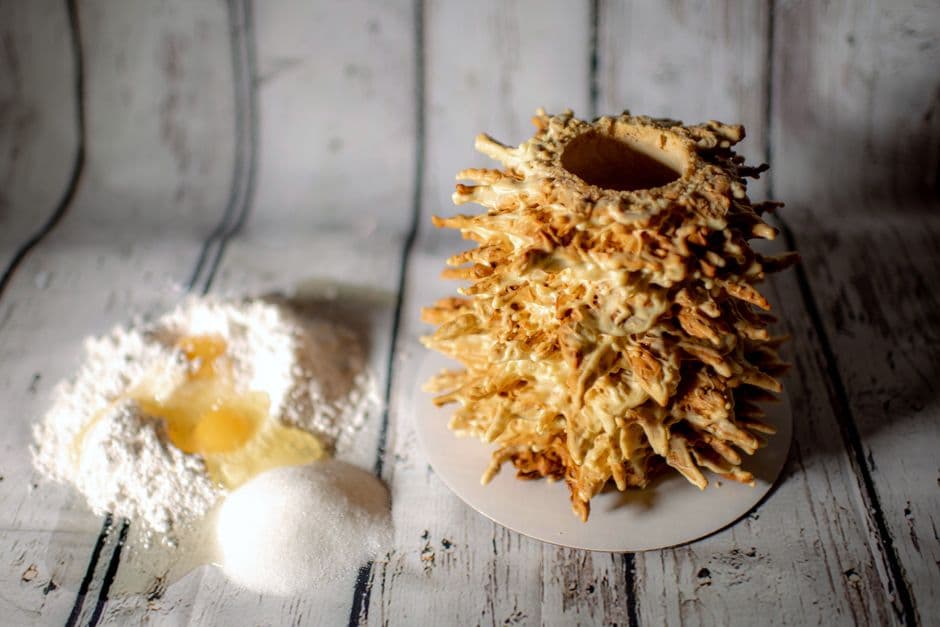
Šakotis
Spectacular Lithuanian tree cake with its characteristic thorn-like spikes, baked on a rotating spit over an open flame.
About This Recipe
Šakotis — meaning 'branchy' in Lithuanian — is one of the most extraordinary cakes in European baking. Layers of rich egg batter are poured over a rotating wooden spit, with each layer allowed to drip and bake into the iconic spike formations before the next is added. The process requires patience and skill, often taking several hours. Traditionally made for weddings and celebrations, a tall, impressive šakotis is considered a mark of the baker's mastery. The cake's golden, crispy exterior gives way to a soft, eggy interior reminiscent of a rich pound cake.
Ingredients
Serves 12
- 300 gunsalted butter, softened
- 300 gcaster sugar
- 12 largeeggs, separated
- 300 gplain flour, sifted
- 100 mldouble cream
- 1 tspvanilla extract
- 1 pinchsalt
- 2 tbsprum (optional)
Instructions
- 1
Prepare batter
Cream butter and sugar until pale and fluffy. Beat in egg yolks one at a time. Stir in cream, vanilla, and rum. Fold in sifted flour. Whisk egg whites with a pinch of salt to stiff peaks and gently fold into the batter.
- 2
Set up spit (oven method)
Wrap a rolling pin tightly in foil, greased well. Position it on the top shelf of the oven under the grill/broiler. Heat grill to high.
- 3
Build layers
Pour a thin layer of batter over the rolling pin. Rotate slowly under the grill for 2–3 minutes until golden. Pour another layer and repeat. Continue building 20–25 layers, rotating after each.
- 4
Cool and remove
Allow to cool on the spit for 10 minutes before carefully sliding off. Stand upright to display.
Did you make this?
Rate it and help other cooks find the recipes that actually work.
One tap to sign in, and we'll save the rating you just picked.
Everything you need to plan your week — free
- Meal calendar
- Grocery list
- AI recipe ideas
Cook this hands-free
Get AI meal plans, step-by-step cooking mode, and your saved recipes in the free Bento app.
Pro Tips
- →
Thin, even layers are the key — pour just enough batter to coat each time.
- →
Rotate slowly and consistently for even browning.
- →
A proper šakotis requires a dedicated spit rotisserie; the oven method is an approximation.
- →
Weigh dry ingredients on a scale instead of using cups — grams are the difference between a tender and a tough crumb.
Variations
- •
Chocolate-dipped šakotis for a modern twist.
- •
Almond-flavored batter with amaretto instead of rum.
- •
Vegetarian: swap the protein for roasted king oyster mushrooms, smoked tofu or cooked chickpeas — adjust seasoning slightly upward to compensate.
- •
Spicier: add a finely chopped fresh chile or a teaspoon of crushed Aleppo/Urfa pepper to the aromatics for warm, layered heat instead of a single sharp hit.
Storage
Keeps at room temperature for up to 5 days wrapped in parchment. Do not refrigerate — it dries out the cake.
History & Origin
Šakotis has roots in German Baumkuchen, introduced to Lithuania via Poland in the 16th–17th centuries. Lithuanian bakers developed their own more spike-heavy, rustic style that became a national tradition.
Frequently Asked Questions
Do I need a special spit?
Traditionally yes — outdoor open-fire šakotis requires a purpose-built rotating spit. Home bakers use the oven broiler method with a foil-wrapped rolling pin.
How tall should it be?
Celebratory šakotis can reach 70–80 cm. Home versions are smaller but no less delicious.
Can I make this ahead of time?
Yes — most of the components can be prepared up to a day in advance and refrigerated separately. Reheat gently and assemble just before serving so textures stay distinct.
What can I substitute if I don't have all the ingredients?
Stay close to the role each ingredient plays: swap aromatics for similar ones (shallot for onion, lime for lemon), and keep the fat-acid-salt balance intact. Spice blends can usually be approximated with what's in the cupboard.
Nutrition Facts
Per serving (120g / 4.2 oz) · 12 servings total
Time Summary
Have Questions?
Ask our AI cooking assistant anything about this recipe — substitutions, techniques, scaling.
Chat with AI Chef →Featured in Guides
This recipe is featured in the following curated guides:
More Lithuanian Recipes
You Might Also Like
Similar dishes from other cuisines around the world.
Free Kitchen Tools
Calculators and converters that pair with this page — no signup needed.
Put This Into a Plan
Schedule it, shop for it, and track what you already have.
Read Next
Longer reads that go deeper on the ideas behind this dish.
Community
Join the conversation
Sign in to leave a comment and save your favourite recipes