
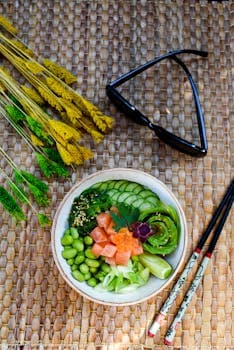
Salmon and Avocado Poke Bowl
Fresh cubed salmon over rice with avocado, edamame, and sesame.
About This Recipe
Poke (pronounced POH-keh, meaning 'to slice or cut crosswise' in Hawaiian) is a traditional Native Hawaiian preparation of seasoned raw fish that has been a staple of island cooking for centuries. Original poke used reef fish — primarily aku (skipjack tuna) — cut into cubes and mixed with sea salt, seaweed (limu), and crushed inamona (roasted kukui nut). When Japanese plantation workers arrived in Hawaii in the late 19th century, they introduced shoyu (soy sauce), sesame oil, and green onion to the marinade, creating the flavour profile that defines the modern poke we know today. The bowl format — rice base plus toppings arranged in colourful sections — emerged in mainland American restaurants from about 2012 onward, transforming the traditional Hawaiian snack into a globally popular lunch format. Salmon, a Pacific fish not traditionally used in Hawaiian poke but readily available on the mainland and in Japan, has become the most popular protein in modern poke bowls worldwide. Its high fat content — around 13 g of fat per 100 g, much of it as EPA and DHA omega-3 fatty acids — makes it both flavourful and genuinely anti-inflammatory. Combined with avocado (rich in oleic acid and vitamin E), edamame (a complete plant protein with isoflavones), and pickled ginger (with gingerols and shogaols that inhibit inflammatory pathways), this bowl delivers an exceptional nutritional profile alongside layers of savoury, umami, creamy, and bright flavour.
Ingredients
Serves 2
- 300 gsushi-grade salmon, cubed
- 200 gcooked sushi rice
- 1 mediumavocado, sliced
- 80 gshelled edamame
- 2 tbsptamari
- 1 tspsesame oil
- 1 tbsprice wine vinegar
- 1 tbspsesame seeds
- 2 tbsppickled ginger
Instructions
- 1
Cube and marinate the salmon
Using a sharp knife on a clean board, cut the salmon into 2 cm cubes, cutting against the grain where possible for the cleanest cuts. Combine tamari, sesame oil, and rice wine vinegar in a bowl. Add the salmon cubes and gently fold to coat. Marinate for 5–10 minutes at room temperature — no longer, as the acid in the vinegar begins to denature the protein after about 15 minutes, changing the texture.
Buy salmon labelled 'sushi-grade' or 'sashimi-grade' — this indicates it has been commercially frozen at -20 °C for at least 7 days to destroy potential parasites. Do not use regular supermarket salmon fillet for raw consumption.
- 2
Season the sushi rice
While the salmon marinates, season freshly cooked warm sushi rice with 1 tbsp rice wine vinegar, 1 tsp sugar, and a pinch of salt, folding gently with a wooden paddle or spatula. The rice should be warm, sticky, and glossy — not cold or mushy. If the rice was cooked ahead, reheat gently with a splash of water in the microwave before seasoning.
Fan the rice with a folded newspaper or kitchen towel as you fold in the vinegar mixture — this cools it quickly to body temperature, which is the correct serving temperature for poke bowls.
- 3
Slice the avocado
Halve the avocado lengthwise, remove the stone, and slice the flesh into 5 mm slices directly in the skin before scooping out with a large spoon. Season immediately with a few drops of lime or lemon juice to prevent browning.
Cut the avocado at the last possible moment — avocado oxidises quickly once cut. If preparing ahead, press cling film directly against the cut surface and refrigerate.
- 4
Divide the rice
Spoon equal portions of warm seasoned sushi rice into two wide, shallow bowls, pressing lightly to create a flat base that can support the toppings.
- 5
Arrange toppings in sections
Working in distinct sections rather than mixing everything together, arrange the marinated salmon cubes, avocado slices, edamame, and pickled ginger in separate quadrants over the rice. The visual appeal of a poke bowl — its mosaic of colours and textures — is part of the eating experience.
Add a few thin slices of cucumber or radish if you have them; both add crunch and brightness that balance the rich salmon and avocado.
- 6
Finish and serve
Sprinkle sesame seeds across the entire bowl and drizzle any remaining marinade in a thin stream over the salmon and rice. Serve immediately with extra tamari and a wedge of lemon on the side.
Did you make this?
Rate it and help other cooks find the recipes that actually work.
One tap to sign in, and we'll save the rating you just picked.
Everything you need to plan your week — free
- Meal calendar
- Grocery list
- AI recipe ideas
Cook this hands-free
Get AI meal plans, step-by-step cooking mode, and your saved recipes in the free Bento app.
Pro Tips
- →
Sushi-grade or sashimi-grade salmon is non-negotiable for raw consumption — it has been commercially frozen at -20 °C for at least 7 days to eliminate parasites. Never use fresh supermarket salmon for poke unless it is specifically labelled for raw eating.
- →
Marinate the salmon for no more than 10–15 minutes — the acid in the rice vinegar begins to 'cook' the protein after that point, changing the texture from silky-raw to chalky.
- →
Warm sushi rice is essential for a proper poke bowl — cold rice clumps and tastes starchy. If using leftover rice, sprinkle with water and microwave in a covered bowl for 90 seconds before seasoning.
- →
Toast sesame seeds in a dry pan for 2 minutes until lightly golden — toasted seeds have a nutty depth that raw seeds lack, and the aroma is markedly better.
- →
For a spicy poke bowl, mix 1 tbsp Kewpie mayonnaise with 1 tsp sriracha and drizzle it over the salmon before serving — this spicy mayo is one of the most popular poke toppings at Hawaiian restaurants.
Variations
- •
Ahi tuna poke bowl: use sashimi-grade yellowfin (ahi) tuna instead of salmon — the classic Hawaiian version. Marinate with shoyu, sesame oil, finely sliced green onion, and a pinch of sea salt for a more traditional preparation.
- •
Vegan tofu poke bowl: cube extra-firm tofu and marinate in tamari, sesame oil, and a drop of liquid smoke for 30 minutes. Bake at 200 °C for 20 minutes until golden. Top the rice bowl identically — the textures and flavours hold up beautifully.
- •
Crunchy poke bowl: add crispy wonton strips (deep-fry wonton wrappers cut into strips) and sliced cucumber for a textural poke experience popular in mainland US poke restaurants.
- •
Brown rice poke bowl: substitute short-grain brown rice for sushi rice — the nutty, chewy base adds fibre and a lower glycaemic index while pairing well with the umami marinade.
Storage
The assembled poke bowl cannot be stored — raw salmon degrades quickly and the rice loses its texture cold. Components can be stored separately: cooked sushi rice refrigerates for up to 2 days (always reheat before serving); raw salmon in its marinade should be consumed within 24 hours and never refrozen if previously frozen. Sliced avocado browns within 2–4 hours even refrigerated. For meal prep, keep everything unmixed and assemble to order.
History & Origin
Poke is documented in Native Hawaiian culture from at least the early 19th century, where native Hawaiians consumed raw reef fish seasoned with sea salt, seaweed, and roasted kukui nut paste (inamona). Japanese contract labourers who arrived in Hawaii from 1868 onward introduced shoyu, sesame oil, and green onions into the seasoning, creating the hybrid Hawaiian-Japanese poke style. Commercial poke stands in Honolulu's Chinatown have operated since at least the 1970s. The mainland US poke bowl phenomenon — rice base plus sectioned toppings in a customisable fast-casual format — emerged from Los Angeles and San Francisco around 2012–2014 and spread globally within the decade.
Frequently Asked Questions
Is it safe to eat raw salmon in a poke bowl?
Yes, provided you use sushi-grade or sashimi-grade salmon that has been commercially frozen at -20 °C for at least 7 days, which destroys parasites like Anisakis. Never use standard fresh supermarket salmon for raw poke — it may not have been frozen to the required temperature. Pregnant women, elderly individuals, and immunocompromised people should avoid raw fish entirely.
What if I can't find sushi-grade salmon?
Ask your fishmonger — many fish counters carry sashimi-grade salmon even if it is not prominently labelled. Alternatively, you can hot-sear the salmon instead: season and sear in a very hot oiled pan for 90 seconds per side so the outside is cooked but the centre is warm and just-set. The flavour is different but excellent. Frozen-at-home salmon should not be used unless you know it was frozen at -20 °C, not the typical domestic -18 °C.
Can I prepare poke bowl components in advance?
Yes — the sushi rice can be cooked 1–2 days ahead and refrigerated; reheat with a splash of water before seasoning and serving. Edamame can be thawed ahead. The salmon marinade (minus the fish) can be made ahead. However, cut the salmon and avocado to order — raw salmon degrades quickly once cut, and avocado browns within 1–2 hours.
What is the difference between poke and sashimi?
Sashimi is Japanese in origin — pristine slices of raw fish served with soy sauce and wasabi, focused entirely on the fish's quality and purity of flavour. Poke is Hawaiian and features cubed raw fish marinated in a seasoning mixture (shoyu, sesame, green onion), typically served over rice with multiple accompaniments. Sashimi is a stand-alone dish that celebrates the fish itself; poke is a composed bowl meal.
Why is my poke bowl rice clumping or dry?
Sushi rice clumps when it has cooled completely before serving — cold starch retrogrades into tight, gluey masses. Always serve it warm or at room temperature, and if using leftover rice, add 1–2 tbsp of water, cover, and microwave for 90 seconds to rehydrate and separate the grains before seasoning. Using too much rice vinegar can also tighten the grains — stick to 1 tbsp per 200 g of cooked rice.
Nutrition Facts
Per serving (340g / 12.0 oz) · 2 servings total
Time Summary
Have Questions?
Ask our AI cooking assistant anything about this recipe — substitutions, techniques, scaling.
Chat with AI Chef →Featured in Guides
This recipe is featured in the following curated guides:
More Japanese Recipes
You Might Also Like
Similar dishes from other cuisines around the world.
Browse by Ingredient
More recipes built around the same core ingredients.
Free Kitchen Tools
Calculators and converters that pair with this page — no signup needed.
Put This Into a Plan
Schedule it, shop for it, and track what you already have.
Read Next
Longer reads that go deeper on the ideas behind this dish.
Community
Join the conversation
Sign in to leave a comment and save your favourite recipes