
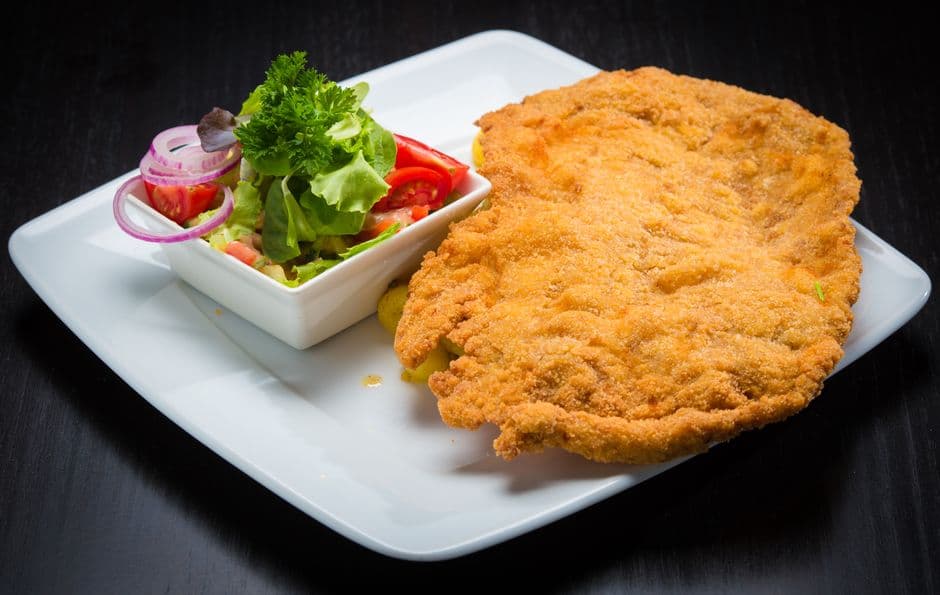
Karađorđeva Šnicla (Serbian Stuffed Schnitzel)
A rolled and breaded veal or pork schnitzel stuffed with kajmak cream, pan-fried golden and served with tartar sauce. Serbia's most festive main course.
About This Recipe
Named after the legendary Serbian leader Karađorđe, this dish was reportedly created in 1956 at the Srpski Kralj restaurant in Belgrade as an improvisation for a French state visit. A thin veal or pork escalope is spread with kajmak (a rich Balkan clotted cream), rolled into a cylinder, breaded in egg and breadcrumbs, and fried until gloriously golden. When sliced, the melted kajmak oozes out dramatically. It became instantly iconic and is now considered one of the signature dishes of Serbian cuisine.
Ingredients
Serves 4
- 4 piecesveal or pork escalopes (about 150 g each)
- 200 gkajmak (or cream cheese mixed with sour cream)
- 2 largeeggs, beaten
- 150 gplain breadcrumbs
- 50 gplain flour
- Salt and pepper(to taste)
- 500 mlsunflower oil for frying
- 1 lemoncut into wedges
- 4 tbsptartar sauce, to serve
Instructions
- 1
Pound the meat
Place each escalope between two sheets of cling film and pound with a meat mallet to an even thickness of about 5 mm. Season both sides with salt and pepper.
- 2
Stuff and roll
Spread a generous tablespoon of kajmak along the center of each escalope. Roll tightly into a cylinder, tucking the ends in as you go. Secure with a toothpick or press seam-side down.
- 3
Bread the rolls
Coat each roll in flour, shaking off excess. Dip in beaten egg, then roll in breadcrumbs, pressing firmly so they adhere all over. For extra crunch, dip in egg and breadcrumbs a second time.
- 4
Fry
Heat oil in a deep frying pan to 170°C. Fry the schnitzels for 6–8 minutes, turning carefully, until deep golden brown all over. Work in batches to avoid crowding.
- 5
Drain and serve
Drain on paper towels. Remove toothpicks. Serve immediately with tartar sauce, lemon wedges, roasted potatoes, and a green salad.
Did you make this?
Rate it and help other cooks find the recipes that actually work.
One tap to sign in, and we'll save the rating you just picked.
Track what you eat
Snap your meal to log calories and macros, run fasting timers and track water in the free SnapCal app.
Pro Tips
Refrigerate the assembled, breaded rolls for 30 minutes before frying — this helps the breading adhere and prevents the kajmak from leaking prematurely.
Do not use a fork to turn the rolls; use tongs to avoid piercing and releasing the filling.
Oil temperature is crucial — too low makes them greasy, too high burns the breading before the inside cooks.
Variations
- •
Stuffed with ham and cheese (cordon bleu-style) instead of kajmak.
- •
Bake at 200°C for 25 minutes after an initial sear in a pan for a lighter version.
Storage
Best eaten fresh. Refrigerate leftovers for 1 day and reheat in the oven at 180°C for 12 minutes.
History & Origin
The dish was invented by chef Mića Stojanović at the Srpski Kralj restaurant in Belgrade in 1956. He named it after Karađorđe Petrović, the leader of the First Serbian Uprising against Ottoman rule, partly because the rolled shape was said to evoke a šajkača (Serbian military cap).
Frequently Asked Questions
What can I substitute for kajmak?
Mix 100 g softened cream cheese with 50 g sour cream and a pinch of salt. It won't be identical but gives a similar richness.
Can I make these ahead?
Bread the rolls and refrigerate up to 4 hours ahead. Fry just before serving.
Nutrition Facts
Per serving (280g / 9.9 oz) · 4 servings total
Estimated values, not lab-tested. Actual numbers depend on your ingredients and portion size.
Time Summary
Have Questions?
Ask our AI cooking assistant anything about this recipe — substitutions, techniques, scaling.
Chat with AI Chef →Featured in Guides
This recipe is featured in the following curated guides:
More Serbian Recipes
You Might Also Like
Similar dishes from other cuisines around the world.
Free Kitchen Tools
Calculators and converters that pair with this page — no signup needed.
Put This Into a Plan
Schedule it, shop for it, and track what you already have.
Read Next
Longer reads that go deeper on the ideas behind this dish.

Community
Join the conversation
Sign in to leave a comment and save your favourite recipes