
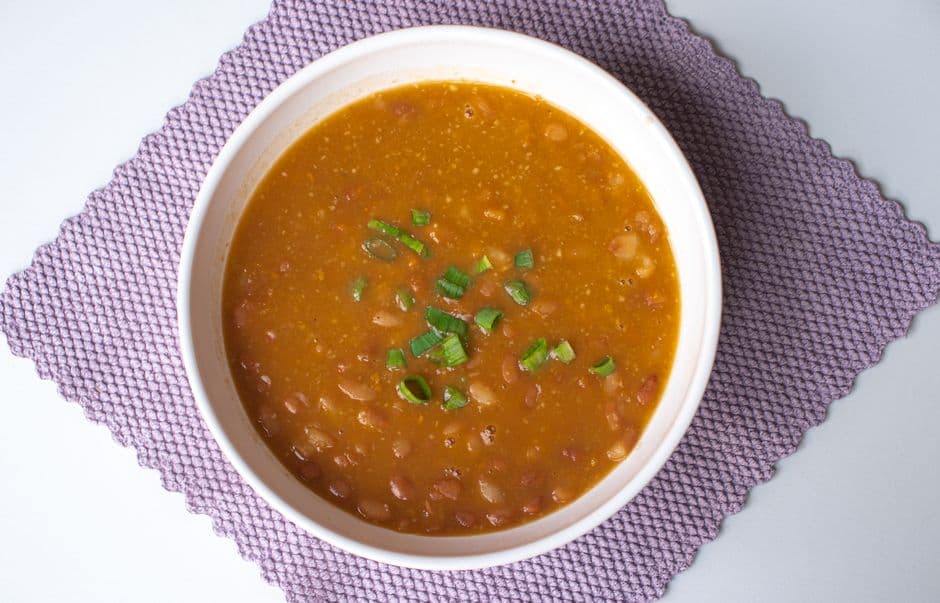
Pasulj (Serbian Bean Soup)
A hearty, smoky bean soup simmered with smoked meat and vegetables — the ultimate Serbian peasant dish elevated to national comfort food.
About This Recipe
Pasulj is Serbia's answer to the question of what to eat when the weather turns cold and the soul needs warming. White beans are slow-cooked with smoked pork ribs or sausage until they become thick and velvety, seasoned with a tempering of fried onion and paprika stirred in at the end — a technique called 'zapržavanje' that adds a deep, roasted note. Every Serbian grandmother has her own version, and no two are identical. It is a staple of Serbian monasteries, army barracks, and family kitchens alike, cherished across all social strata.
Ingredients
Serves 6
- 500 gdried white beans (cannellini or Great Northern)
- 400 gsmoked pork ribs
- 150 gsmoked sausage (kobasica), sliced
- 2 mediumonions, one halved, one diced
- 3 clovesgarlic
- 2 mediumcarrots, diced
- 1 stalkcelery, diced
- 2 bay leaves
- 3 tbspsunflower oil
- 1.5 tspsweet paprika
- 1/2 tsphot paprika
- 1 tbspflour
- Salt and pepper(to taste)
Instructions
- 1
Soak beans
Soak dried beans in cold water overnight or for at least 8 hours. Drain and rinse.
- 2
First boil
Cover beans with fresh water, bring to a boil, cook 10 minutes, then drain. This removes bitterness.
- 3
Slow cook with meat
Place beans, smoked ribs, halved onion, whole garlic cloves, carrots, celery, and bay leaves in a large pot. Cover with 2 litres of fresh water. Bring to a boil, skim foam, then simmer on low for 1.5–2 hours until beans are very tender.
- 4
Remove bones
Take out the smoked ribs, pull the meat from the bones, and return the meat to the pot. Add sliced sausage. Discard the halved onion, garlic, and bay leaves. Season generously with salt and pepper.
- 5
Make the zapržavanje
In a small pan, heat oil over medium-high heat. Add diced onion and cook until golden brown. Sprinkle in flour, stir 1 minute. Add both paprikas, stir 30 seconds. Immediately pour this sizzling mixture into the bean soup and stir well.
- 6
Finish and serve
Simmer the soup for a final 15 minutes to let flavors meld. Adjust seasoning. Serve hot with crusty bread and pickled peppers.
Did you make this?
Rate it and help other cooks find the recipes that actually work.
One tap to sign in, and we'll save the rating you just picked.
Everything you need to plan your week — free
- Meal calendar
- Grocery list
- AI recipe ideas
Track what you eat
Snap your meal to log calories and macros, run fasting timers and track water in the free SnapCal app.
Pro Tips
- →
The flour in the zapržavanje thickens the soup slightly — use more for a stew-like consistency.
- →
Add a ham hock if smoked ribs are unavailable.
- →
Never add salt until the beans are fully tender; salt toughens beans during cooking.
- →
Taste and adjust salt at the very end — flavors concentrate as liquids reduce, and a final pinch of flaky salt sharpens the whole dish.
Variations
- •
Monastir pasulj: Omit meat entirely and use dried mushrooms for a rich vegetarian version.
- •
Add dried red peppers (aleva paprika) for extra color and sweetness.
- •
Vegetarian: swap the protein for roasted king oyster mushrooms, smoked tofu or cooked chickpeas — adjust seasoning slightly upward to compensate.
- •
Spicier: add a finely chopped fresh chile or a teaspoon of crushed Aleppo/Urfa pepper to the aromatics for warm, layered heat instead of a single sharp hit.
Storage
Refrigerate up to 4 days. The soup thickens considerably — add water when reheating. Freezes well for 3 months.
History & Origin
Pasulj has fed Serbs for centuries and is so ingrained in culture that it appears in folk proverbs. During the Ottoman period, beans were one of the few proteins available to the common people year-round, and pasulj became the backbone of Serbian home cooking.
Frequently Asked Questions
Can I use canned beans?
Yes, use 3 cans (400 g each) of drained white beans. Skip steps 1–2 and add canned beans in step 3 for only the last 30 minutes of cooking.
What is zapržavanje?
It is a Serbian hot oil and paprika tempering technique poured into dishes at the end of cooking to add depth and color, similar to the Indian tadka method.
Can I make this ahead of time?
Yes — most of the components can be prepared up to a day in advance and refrigerated separately. Reheat gently and assemble just before serving so textures stay distinct.
What can I substitute if I don't have all the ingredients?
Stay close to the role each ingredient plays: swap aromatics for similar ones (shallot for onion, lime for lemon), and keep the fat-acid-salt balance intact. Spice blends can usually be approximated with what's in the cupboard.
Nutrition Facts
Per serving (400g / 14.1 oz) · 6 servings total
Time Summary
Have Questions?
Ask our AI cooking assistant anything about this recipe — substitutions, techniques, scaling.
Chat with AI Chef →Featured in Guides
This recipe is featured in the following curated guides:
More Serbian Recipes
You Might Also Like
Similar dishes from other cuisines around the world.
Free Kitchen Tools
Calculators and converters that pair with this page — no signup needed.
Put This Into a Plan
Schedule it, shop for it, and track what you already have.
Read Next
Longer reads that go deeper on the ideas behind this dish.
Community
Join the conversation
Sign in to leave a comment and save your favourite recipes