
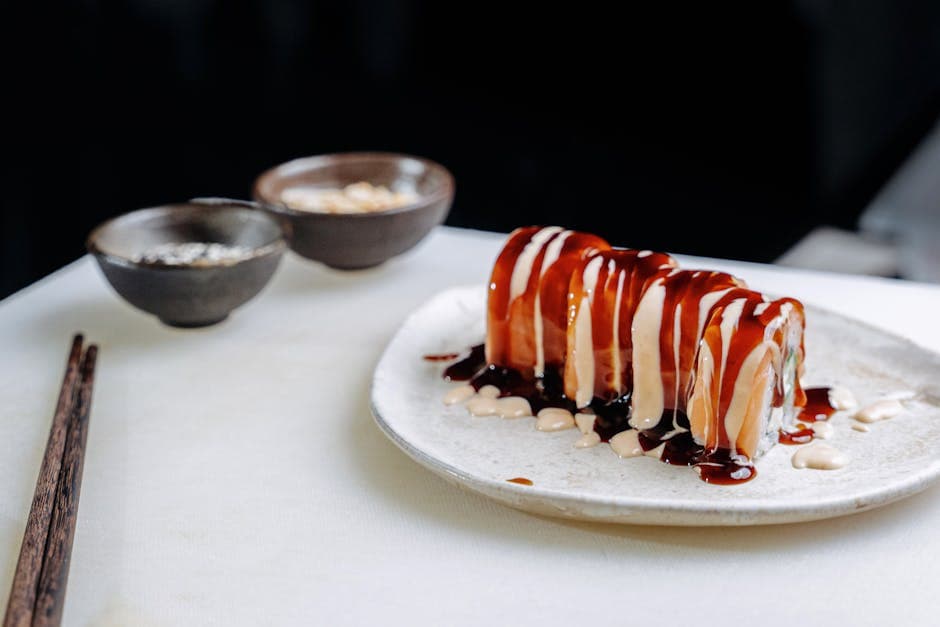
Teriyaki Salmon
Glazed with a sticky sweet-savoury teriyaki sauce, this salmon is ready in 20 minutes and pairs beautifully with steamed rice.
About This Recipe
Teriyaki (照り焼き) literally means 'shine grill' in Japanese — 'teri' refers to the glossy, lacquered finish the sauce creates, and 'yaki' means grilled or broiled. The classic sauce is a simple combination of soy sauce, mirin and sake in equal parts, sometimes with a little sugar, reduced to a sticky glaze that coats ingredients beautifully. Salmon is one of the best proteins for teriyaki: its rich fat content caramelises magnificently with the sauce, and the skin crisps perfectly when seared. This recipe produces restaurant-quality results in under 20 minutes.
Ingredients
Serves 2
- 2 × 200 gsalmon fillets(skin-on)
- 3 tbspsoy sauce
- 3 tbspmirin
- 2 tbspsake
- 1 tbspsugar
- 1 tbspvegetable oil
- 1 tspsesame seeds(to garnish)
- 2 servingssteamed rice(to serve)
Instructions
- 1
Make teriyaki sauce
Combine soy sauce, mirin, sake and sugar in a small saucepan. Simmer 3 minutes until slightly thickened.
- 2
Sear skin-side
Pat salmon dry. Heat oil in a pan over medium-high. Cook skin-side down for 4 minutes without moving.
- 3
Flip
Flip and cook flesh-side 2 minutes.
- 4
Glaze
Pour teriyaki sauce over salmon and baste for 1–2 minutes until glazed and caramelised.
- 5
Serve
Serve over rice, sprinkle with sesame seeds.
Did you make this?
Rate it and help other cooks find the recipes that actually work.
One tap to sign in, and we'll save the rating you just picked.
Everything you need to plan your week — free
- Meal calendar
- Grocery list
- AI recipe ideas
Cook this hands-free
Get AI meal plans, step-by-step cooking mode, and your saved recipes in the free Bento app.
Pro Tips
- →
Do not move salmon while searing skin — it needs to crisp up undisturbed.
- →
The glaze caramelises fast so watch the heat carefully.
- →
Taste and adjust salt at the very end — flavors concentrate as liquids reduce, and a final pinch of flaky salt sharpens the whole dish.
- →
Mise en place pays for itself: chop, measure and pre-mix everything before the heat goes on, especially for any step that moves fast.
Variations
- •
Use chicken thighs instead of salmon and cook 5 minutes per side.
- •
Add freshly grated ginger to the sauce for extra warmth.
- •
Vegetarian: swap the protein for roasted king oyster mushrooms, smoked tofu or cooked chickpeas — adjust seasoning slightly upward to compensate.
- •
Spicier: add a finely chopped fresh chile or a teaspoon of crushed Aleppo/Urfa pepper to the aromatics for warm, layered heat instead of a single sharp hit.
Storage
Best eaten immediately. Leftovers keep 2 days in the fridge; reheat gently.
History & Origin
Teriyaki technique dates back to the Edo period (1603–1868) in Japan. While originally used for yellowtail fish (buri), it became one of the most internationally recognised Japanese cooking methods, popularised globally by Japanese restaurants from the 1960s onwards.
Frequently Asked Questions
Can I use frozen salmon?
Yes — thaw completely, pat very dry, and proceed as normal.
Is there a substitute for mirin?
Mix 2 tbsp sake or dry sherry with 1 tsp sugar as a rough substitute. Mirin is preferable for its natural sweetness.
Can I make this ahead of time?
Yes — most of the components can be prepared up to a day in advance and refrigerated separately. Reheat gently and assemble just before serving so textures stay distinct.
What can I substitute if I don't have all the ingredients?
Stay close to the role each ingredient plays: swap aromatics for similar ones (shallot for onion, lime for lemon), and keep the fat-acid-salt balance intact. Spice blends can usually be approximated with what's in the cupboard.
Nutrition Facts
Per serving · 2 servings total
Time Summary
Have Questions?
Ask our AI cooking assistant anything about this recipe — substitutions, techniques, scaling.
Chat with AI Chef →Featured in Guides
This recipe is featured in the following curated guides:
More Japanese Recipes
You Might Also Like
Similar dishes from other cuisines around the world.
Browse by Ingredient
More recipes built around the same core ingredients.
Free Kitchen Tools
Calculators and converters that pair with this page — no signup needed.
Put This Into a Plan
Schedule it, shop for it, and track what you already have.
Read Next
Longer reads that go deeper on the ideas behind this dish.
Community
Join the conversation
Sign in to leave a comment and save your favourite recipes