
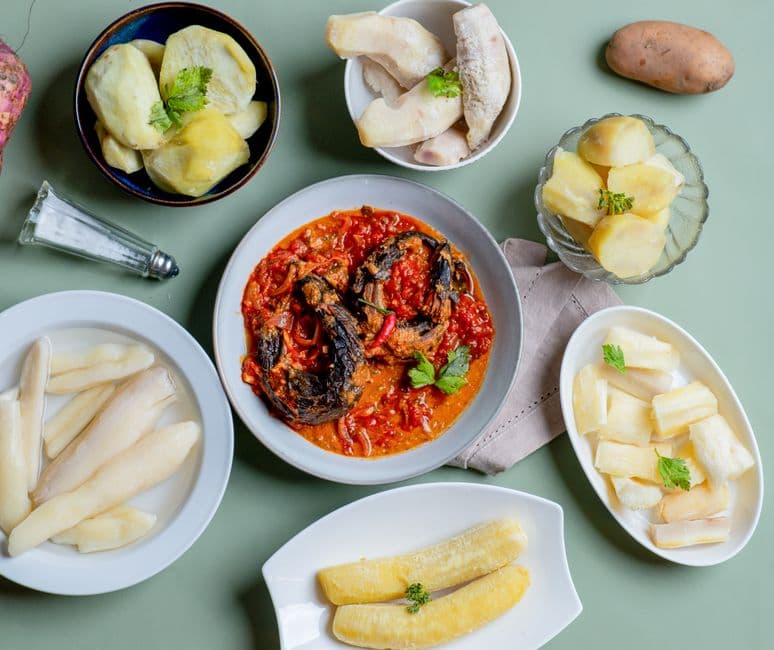
جاربا
طعام الشارع الأكثر شهرة في أبيدجان - أتيكي مع قطع من التونة المقلية أو المشوية، مغطاة بالبصل الطازج والطماطم والفلفل الحار وعصرة من الليمون. سريع ورخيص ولذيذ تمامًا.
حول هذه الوصفة
الغاربا هو غداء العمل في أبيدجان، وهو طبق متأصل في الحياة اليومية للمدينة لدرجة أن الأكشاك المؤقتة التي تخدمه في الشوارع تسمى "بقع الغاربا" وتحتل كل حي تجاري. الطبق بسيط بشكل مخادع: أتيكيه مطهو على البخار (كسكس الكسافا المخمر) مكدس بقطع من سمك الوثاب المقلي أو التونة الصفراء، مغطى بالبصل الخام والطماطم والفلفل الأخضر وعصير الليمون. كان مرتبطًا في الأصل بعمال الهوسا المهاجرين من الشمال، الذين نشروه في جميع أنحاء المدينة، وأصبح منذ ذلك الحين طبقًا يتجاوز جميع الخطوط الطبقية والعرقية. يعد تناول طبق الجاربا في أحد الأكشاك المزدحمة على جانب الطريق، والوقوف أمام ضجيج المدينة من حولك، تجربة أساسية في أبيدجان.
المكونات
يخدم 2
- 300 غattiéké جاهزة
- 400 غشريحة لحم تونة طازجة، مقطعة إلى قطع بحجم 4-5 سم
- 1 كبيربصل، نصفه مقطع إلى شرائح رفيعة، ونصفه مفروم ناعمًا للتزيين
- 2 متوسططماطم مقطعة إلى مكعبات
- 2 كاملفلفل أخضر، مقطع إلى شرائح
- 1 كاملليمون نصف
- 1 ملعقة صغيرةملح
- 1/2 ملعقة صغيرةفلفل أبيض
- 1 ملعقة صغيرةفلفل أحمر
- 1 cubeمكعب ماجي، مفتت
- 4 ملعقة كبيرةزيت نباتي (للقلي)
- 2 ملعقة كبيرةزيت نباتي (للاتيكيه)
التعليمات
- 1
قم بتتبيل التونة
تتبل قطع التونة بالملح والفلفل الأبيض والبابريكا والماجي المفتت. دع الجلوس لمدة 10 دقائق.
- 2
اقلي التونة
سخني الزيت في مقلاة على نار عالية حتى يصبح ساخناً جداً. أضيفي قطع التونة في طبقة واحدة دون أن تتزاحم. تقلى لمدة 3-4 دقائق لكل جانب حتى تكتسب اللون البني الجيد وتتقرمش قليلاً من الخارج. إزالة واستنزاف على المناشف الورقية.
- 3
قم ببخار attiéké
كسر attiéké في مصفاة. قم بالبخار فوق الماء المغلي لمدة 8 دقائق حتى يصبح ساخنًا ورقيقًا. ننقلها إلى وعاء، ونحركها بالشوكة، ونضيف إليها ملعقتين كبيرتين من الزيت النباتي وقليل من الملح.
- 4
اصنع الزينة الطازجة
تُمزج الطماطم المقطعة، والبصل المقطع، والفلفل الحار المقطع في وعاء صغير. يتبل بالقليل من الملح وعصرة من الليمون. إرم معا.
- 5
التجمع والخدمة
كومة attiéké على طبق أو في وعاء. ضعي قطع التونة المقلية في الأعلى. ملعقة طماطم - بصل للتزيين. ترتيب شرائح البصل الخام جنبا إلى جنب. ضغط الليمون بسخاء على كل شيء. يخدم على الفور.
هل جرّبت هذه الوصفة؟
قيّمها وساعد الآخرين في العثور على الوصفات التي تنجح فعلاً.
سجّل الدخول بنقرة واحدة وسنحفظ التقييم الذي اخترته للتو.
كل ما تحتاجه لتخطيط أسبوعك — مجانًا
- تقويم الوجبات
- قائمة التسوق
- أفكار وصفات بالذكاء الاصطناعي
تابع ما تأكله
صوّر وجبتك لتسجيل السعرات والعناصر الغذائية، واستخدم مؤقتات الصيام وتتبع شرب الماء في تطبيق SnapCal المجاني.
نصائح للمحترفين
- →
يجب أن يكون الزيت ساخنًا جدًا عند إضافة التونة - فأنت تريد تحميصًا وليس طهيًا لطيفًا.
- →
لا تفرط في طهي التونة؛ يجب أن يكون لونه بنيًا من الخارج ويُطهى بالكاد في المنتصف.
- →
تناول الغاربا على الفور - التناقض بين التونة الساخنة والزينة الطازجة هو النقطة المهمة.
- →
تذوق واضبط الملح في النهاية - تتركز النكهات مع تقليل السوائل، كما أن رشة أخيرة من الملح القشري تزيد من حدة الطبق بأكمله.
الاختلافات
- •
استخدم سمك الماكريل أو السردين بدلًا من التونة للحصول على نكهة أقوى وأكثر اقتصادًا.
- •
قم بشوي التونة بدلاً من قليها للحصول على نسخة أخف.
- •
أضف شرائح الأفوكادو والليمون الإضافي للحصول على مقبلات أكثر ثراءً ودسمًا.
- •
نباتي: استبدل البروتين بفطر المحار المحمص أو التوفو المدخن أو الحمص المطبوخ - اضبط التتبيل قليلاً لأعلى للتعويض.
تخزين
جاربا هو طعام الشارع يُقصد تناوله على الفور. يمكن تخزين المكونات بشكل منفصل في الثلاجة لمدة يوم واحد؛ أعد طهي البخار على البخار وأعد قلي التونة لفترة وجيزة قبل التجميع.
التاريخ والأصل
ترتبط أصول غاربا في أبيدجان بمجتمع الهوسا من شمال كوت ديفوار والدول المجاورة، الذين أقاموا أكشاك طعام غير رسمية تقدم هذا الطبق لعمال المصانع وتجار الأسواق بدءًا من السبعينيات والثمانينيات. كان يُنظر إليه في البداية على أنه طعام العمال البسيط، لكن نكهاته الجريئة وتكلفته المنخفضة جعلته لا يقاوم في جميع الطبقات الاجتماعية. تعتبر الغاربا اليوم مؤسسة ثقافية – حتى أن هناك مهرجانات الغاربا في أبيدجان.
الأسئلة المتداولة
ما هو نوع التونة المستخدم في الغاربا الأصيلة؟
التونة الوثابة (listao) هي الأكثر تقليدية وتستخدم على نطاق واسع. يعمل Yellowfin أو Albacore بشكل جيد على قدم المساواة. تجنب التونة المعلبة لهذا الطبق.
هل يمكنني استخدام attiéké المجمدة؟
يُباع Frozen attiéké على نطاق واسع ويعمل بشكل مثالي. اتركه ليذوب في درجة حرارة الغرفة لمدة 20-30 دقيقة قبل تبخيره.
هل يمكنني القيام بذلك في وقت مبكر؟
نعم، يمكن تحضير معظم المكونات قبل يوم واحد وتبريدها بشكل منفصل. يُعاد تسخينه بلطف ويُجمّع قبل التقديم مباشرةً حتى يظل القوام مميزًا.
ما الذي يمكنني استبداله إذا لم يكن لدي جميع المكونات؟
ابق على مقربة من الدور الذي يلعبه كل مكون: استبدل المواد العطرية بأخرى مماثلة (الكراث بالبصل، والليمون الحامض بالليمون)، وحافظ على توازن الدهون والأحماض والملح سليمًا. يمكن عادة تقريب خلطات التوابل مع ما هو موجود في الخزانة.
حقائق التغذية
لكل وجبة (400g) · 2 حصص إجمالية
ملخص الوقت
هل لديك أسئلة؟
اسأل مساعد الطبخ الذي يعمل بالذكاء الاصطناعي لدينا أي شيء عن هذه الوصفة - البدائل والتقنيات والقياس.
الدردشة مع AI Chef →المزيد من وصفات Ivorian
قد يعجبك أيضًا
أطباق مشابهة من مطابخ أخرى حول العالم.
أدوات مطبخ مجانية
حاسبات ومحوّلات تكمّل هذه الصفحة — دون الحاجة إلى تسجيل.
حوّلها إلى خطة
جدولها، تسوّق لها، وتابع ما لديك بالفعل.
اقرأ بعد ذلك
مقالات أطول تتعمّق في الأفكار وراء هذا الطبق.
مجتمع
انضم إلى المحادثة
قم بتسجيل الدخول لترك تعليق وحفظ وصفاتك المفضلة