
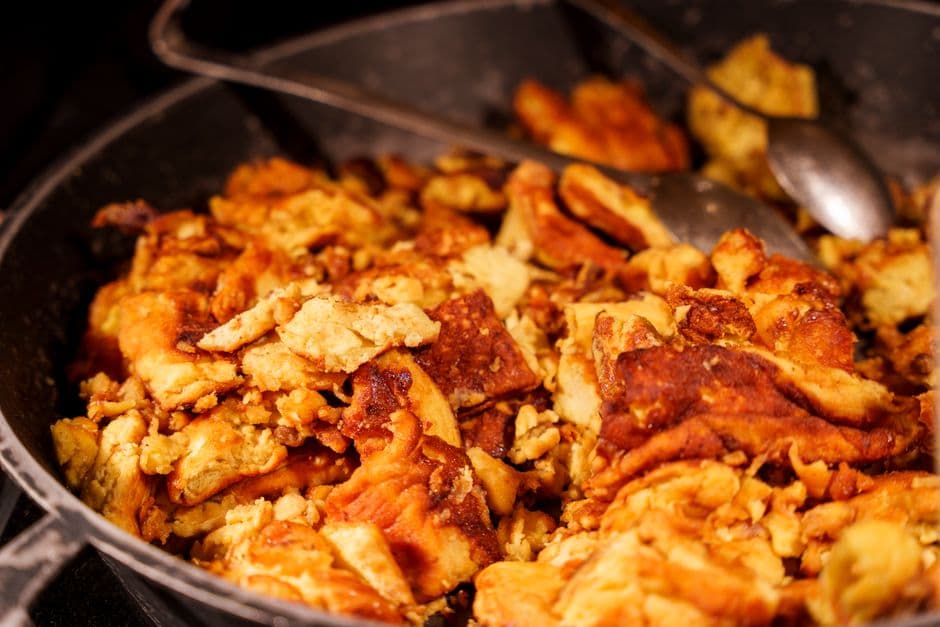
كايزرشمارن
فطيرة الإمبراطورية النمساوية الممزقة - فطيرة ذهبية ومتجددة الهواء ومملوءة بالروم ومغطاة بالسكر البودرة وتقدم مع كومبوت البرقوق الدافئ.
حول هذه الوصفة
كايزرشمارن (حرفيا "فوضى الإمبراطور") هي الحلوى الأكثر شعبية ومسرحية في المطبخ النمساوي والبافاري. تقول الأسطورة أنه تم إعدادها عن طريق الصدفة عندما تمزقت فطيرة أثناء تقليبها للإمبراطور فرانز جوزيف الأول - ارتجل المطبخ، وقذفها بالزبدة والسكر، وقد أحبها الإمبراطور كثيرًا وأصبحت الحلوى المفضلة لديه. الخليط أغنى من فطيرة عادية - مليئة بالزبيب المنقوع في مشروب الروم، والبيض المنفصل مع بياض مخفوق مطوي - ويتم طهيها في الزبدة في مقلاة ثقيلة قبل تمزيقها إلى قطع ذهبية غير منتظمة وكراميلها مع غبار السكر. يتم تقديمه في جبل من قطع البيض والكراميل مع جانب Zwetschkenröster (الخوخ المطهي الدافئ) للحصول على التباين الحلو اللاذع الأساسي.
المكونات
يخدم 4
- 150 غدقيق عادي
- 250 ملحليب كامل الدسم
- 4 كبيرالبيض(يتم فصل الصفار والبياض)
- 2 ملاعق كبيرةالسكر الناعم(بالإضافة إلى المزيد من الكراميل)
- 1 ملعقة صغيرةمستخلص الفانيليا
- pinchملح
- 50 غالزبيب(منقوع في ملعقتين كبيرتين من مشروب الروم الداكن لمدة 30 دقيقة)
- 50 غزبدة غير مملحة
- icing sugarللخدمة
- 300 غالبرقوق أو البرقوق(محشش للكومبوت)
- 3 ملاعق كبيرةالسكر الناعم(للكومبوت)
- 1 ملعقة كبيرةعصير ليمون(للكومبوت)
التعليمات
- 1
اصنع كومبوت البرقوق
يُمزج البرقوق (أو البرقوق المجفف) مع 3 ملاعق كبيرة من السكر وعصير الليمون و3 ملاعق كبيرة من الماء في قدر صغيرة. يُطهى على نار متوسطة مع التحريك من حين لآخر لمدة 15 دقيقة حتى يصبح البرقوق طريًا ومربى. حافظ على الدفء.
- 2
اصنع الخليط
اخفقي الدقيق والحليب وصفار البيض وملعقتين كبيرتين من السكر والفانيليا والملح حتى يصبح المزيج ناعمًا تمامًا. صفي الزبيب (احتفظي بالروم لإضافته إلى الخليط أو للشرب) وحركيه في الخليط مع الروم.
- 3
اخفقي بياض البيض
في وعاء نظيف، اخفقي بياض البيض مع قليل من الملح حتى يصل إلى قمم صلبة ولامعة. قم بطي البياض برفق في الخليط على دفعتين، مع الحفاظ على أقصى قدر من التهوية.
- 4
اطبخ الفطيرة
تُذوب نصف كمية الزبدة في مقلاة كبيرة (26-28 سم) مقاومة للفرن على نار متوسطة. يُسكب كل الخليط ويُطهى لمدة 3-4 دقائق حتى تصبح القاعدة ذهبية اللون وتتماسك ولكن الجزء العلوي لا يزال يبدو رطبًا قليلاً. ندخلها إلى فرن محمى على حرارة 180 درجة مئوية لمدة 5 دقائق لتسوية السطح.
- 5
المسيل للدموع والكراميل
أعيدي المقلاة إلى الفرن على نار متوسطة. باستخدام شوكتين، قطعي الفطيرة إلى قطع خشنة وغير منتظمة - بعضها أكبر، وبعضها أصغر، وبعضها مجرد فتات ذهبية. أضف الزبدة المتبقية إلى المقلاة، ثم انثر عليها 2-3 ملاعق كبيرة من السكر الناعم، ثم قلبي القطع وحركها حتى تصبح مكرملة وذهبية اللون في كل مكان، لمدة 3 دقائق تقريبًا.
- 6
خدمة
انقله إلى طبق التقديم الدافئ أو أحضر المقلاة إلى الطاولة. يُرشّ السكر البودرة بسخاء ويُقدم على الفور مع كومبوت البرقوق الدافئ بجانبه. إن التباين بين قطع الفطائر المكرملة والمتجددة الهواء مع الخوخ الناعم اللاذع هو جوهر هذا الطبق.
هل جرّبت هذه الوصفة؟
قيّمها وساعد الآخرين في العثور على الوصفات التي تنجح فعلاً.
سجّل الدخول بنقرة واحدة وسنحفظ التقييم الذي اخترته للتو.
كل ما تحتاجه لتخطيط أسبوعك — مجانًا
- تقويم الوجبات
- قائمة التسوق
- أفكار وصفات بالذكاء الاصطناعي
اطبخ دون الحاجة للمس الشاشة
احصل على خطط وجبات بالذكاء الاصطناعي ووضع طهي خطوة بخطوة ووصفاتك المحفوظة في تطبيق Bento المجاني.
نصائح للمحترفين
- →
يجب طي بياض البيض برفق للحفاظ على الهواء الذي يجعل كايزرشمارن خفيفًا جدًا.
- →
إن تمزيق الفطيرة أثناء كراميلها هو بيت القصيد - احتضان المخالفة.
- →
إذا لم يكن لديك مقلاة مقاومة للفرن، قومي بتغطية المقلاة بإحكام واتركيها على نار خفيفة جدًا لمدة 6 دقائق.
- →
قم بوزن المكونات الجافة على الميزان بدلًا من استخدام الأكواب، فالجرام هو الفارق بين الفتات الطرية والقاسية.
الاختلافات
- •
يستخدم Kaiserschmarrn mit Apfelsauce صلصة التفاح الدافئة بدلاً من كومبوت البرقوق للحصول على مزيج أكثر اعتدالًا.
- •
أضف ملعقة كبيرة من القشدة الحامضة إلى الخليط لمزيد من الثراء ونكهة خفيفة.
- •
نباتي: استبدل البروتين بفطر المحار المحمص أو التوفو المدخن أو الحمص المطبوخ - اضبط التتبيل قليلاً لأعلى للتعويض.
- •
أكثر توابلًا: أضف الفلفل الحار الطازج المفروم جيدًا أو ملعقة صغيرة من فلفل حلب / أورفا المطحون إلى العطريات للحصول على حرارة دافئة متعددة الطبقات بدلاً من ضربة واحدة حادة.
تخزين
من الأفضل أن تؤكل على الفور. من المدهش أن يتم إعادة تسخين أي بقايا طعام في مقلاة بالزبدة في صباح اليوم التالي لتناول الإفطار.
التاريخ والأصل
من المحتمل أن تكون أسطورة الخلق العرضي الذي قام به كايزرشمارن للإمبراطور فرانز جوزيف الأول ملفقة - كان الطبق موجودًا قبل عهده - لكنه أصبح مرتبطًا به وبعظمة بلاط هابسبورغ بشكل لا رجعة فيه.
الأسئلة المتداولة
هل يمكنني تخطي الزبيب المنقوع بالروم؟
نعم، ما عليك سوى حذف الزبيب أو نقعه في عصير البرتقال الدافئ بدلاً من ذلك للحصول على نسخة خالية من الكحول. الطبق لا يزال رائعا بدونهم.
هل يمكنني القيام بذلك في وقت مبكر؟
نعم، يمكن تحضير معظم المكونات قبل يوم واحد وتبريدها بشكل منفصل. يُعاد تسخينه بلطف ويُجمّع قبل التقديم مباشرةً حتى يظل القوام مميزًا.
ما الذي يمكنني استبداله إذا لم يكن لدي جميع المكونات؟
ابق على مقربة من الدور الذي يلعبه كل مكون: استبدل المواد العطرية بأخرى مماثلة (الكراث بالبصل، والليمون الحامض بالليمون)، وحافظ على توازن الدهون والأحماض والملح سليمًا. يمكن عادة تقريب خلطات التوابل مع ما هو موجود في الخزانة.
كيف أعرف أنها أصلية؟
الأصالة تقع على نطاق واسع - ما يهم أكثر هو احترام التقنية وتوازن النكهات. إذا كان مذاق الطبق متناغمًا ويحترم الطريقة التي سيصنعها بها الطهاة في منطقته الأصلية، فأنت على أرض صلبة.
حقائق التغذية
لكل وجبة · 4 حصص إجمالية
ملخص الوقت
هل لديك أسئلة؟
اسأل مساعد الطبخ الذي يعمل بالذكاء الاصطناعي لدينا أي شيء عن هذه الوصفة - البدائل والتقنيات والقياس.
الدردشة مع AI Chef →ظهرت في الأدلة
هذه الوصفة واردة في الأدلة المنسقة التالية:
المزيد من وصفات نمساوي
قد يعجبك أيضًا
أطباق مشابهة من مطابخ أخرى حول العالم.
تصفّح حسب المكوّن
وصفات أخرى مبنية على المكوّنات الأساسية نفسها.
أدوات مطبخ مجانية
حاسبات ومحوّلات تكمّل هذه الصفحة — دون الحاجة إلى تسجيل.
حوّلها إلى خطة
جدولها، تسوّق لها، وتابع ما لديك بالفعل.
مجتمع
انضم إلى المحادثة
قم بتسجيل الدخول لترك تعليق وحفظ وصفاتك المفضلة