
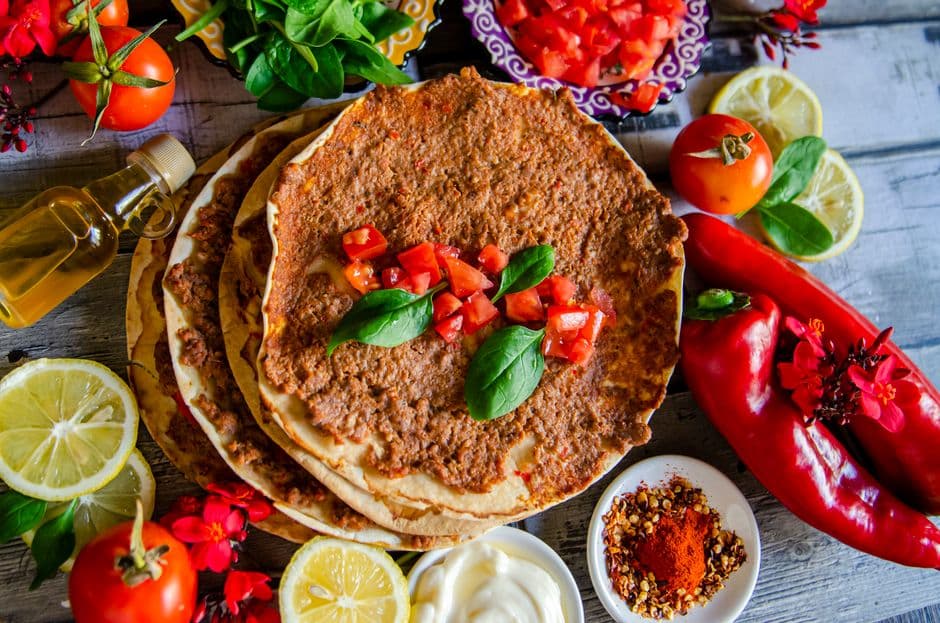
لحماكون – بيتزا الخبز التركي المسطح
خبز تركي مقرمش ورقيق للغاية، مغطى بلحم ضأن متبل وطماطم مفرومة، مع أعشاب طازجة وبذور الليمون والرمان.
حول هذه الوصفة
لحماكون - يُنطق "لحم-آه-جون" - هو أحد أكثر الأطعمة المحبوبة في الشوارع في جميع أنحاء تركيا والعالم المشرقي الأوسع. الاسم مشتق من الكلمة العربية "لحم بالعجين"، ويعني "لحم بالعجين"، ويتكون الطبق من خبز مسطح رفيع للغاية ملفوف إلى شبه شفاف ومغطى بمزيج مفروم ناعمًا ومتبل للغاية من لحم الضأن والطماطم والفلفل والبصل قبل تسخينه على نار عالية للغاية. والنتيجة هي قرص مقرمش، معطر، ورقيق كالورق، يتم تناوله ملفوفًا حول حشوة من البقدونس الطازج، وشرائح البصل الأحمر مع السماق، وعصير الليمون الحامض - وهو أحد أكثر الأطعمة السريعة إرضاءً في العالم.
المكونات
يخدم 4
- 300 غدقيق الخبز القوي
- 1 ملعقة صغيرةالخميرة المجففة الفورية
- 1 ملعقة صغيرةملح
- 1 ملعقة صغيرةسكر
- 180 ملالماء الدافئ
- 2 ملعقة كبيرةزيت الزيتون
- 300 غلحم ضأن مفروم(أو لحم البقر، 15-20% دهون)
- 2 كبيرالطماطم الناضجة(منزوعة البذور ومقطعة إلى مكعبات صغيرة جداً)
- 1 كبيربصل(مفرومة ناعماً جداً أو مبشورة)
- 2فلفل أخضر(أو 1 حبة فليفلة حمراء مفرومة ناعماً جداً)
- 3 فصوصالثوم(مفروم)
- 2 ملعقة كبيرةمعجون الطماطم
- 1 ملعقة صغيرةالكمون المطحون
- 1 ملعقة صغيرةفلفل أحمر(حلوة أو ساخنة)
- ½ ملعقة صغيرةالبهارات الأرضية
- ½ ملعقة صغيرةرقائق الفلفل الحار
- الملح والفلفل الأسود
- 1 حزمة صغيرةالبقدونس ذو الأوراق المسطحة(للخدمة)
- 1ليمون(مقطعة إلى أسافين للتقديم)
- 1بصل أحمر(شرائح رفيعة جداً، للتقديم)
- 1 ملعقة صغيرةالسماق(للخدمة)
التعليمات
- 1
اصنع العجينة
في وعاء كبير، يجمع الدقيق والخميرة والملح والسكر. أضف الماء الدافئ وزيت الزيتون. يُمزج المزيج حتى يصبح عجينة خشنة ويُعجن على سطح مرشوش بالدقيق لمدة 8-10 دقائق حتى يصبح ناعمًا ومرنًا. يجب أن تكون العجينة متماسكة تماماً وغير لزجة. تشكل على شكل كرة وتوضع في وعاء مدهون بالزيت وتغطى بقطعة قماش مبللة وتترك في مكان دافئ لمدة ساعة حتى يتضاعف حجمها.
- 2
تحضير الطبقة العليا
يُمزج لحم الضأن المفروم مع الطماطم المفرومة جيدًا، والبصل، والفلفل، والثوم، ومعجون الطماطم، والكمون، والبابريكا، والبهارات، ورقائق الفلفل الحار في وعاء. يتبل بالملح والفلفل. استخدمي يديك أو محضرة الطعام لخلط الخليط حتى يصبح متجانسًا تمامًا، فأنت تريدين الحصول على عجينة ناعمة ومتساوية بدلًا من اللحم المفروم المتكتل، لأنه ينتشر بشكل أكثر توازنًا ويلتصق بالعجين الرقيق بشكل أفضل. يجب أن يكون الخليط رطبًا تمامًا.
اعصري الرطوبة الزائدة من الطماطم والبصل بقطعة قماش نظيفة قبل إضافتها إلى اللحم، فكثرة السائل تمنع الطبقة العلوية من أن تتقرمش في الفرن.
- 3
التسخين والتحضير
ضع حجر البيتزا أو صينية خبز ثقيلة أو صينية من الحديد الزهر في الفرن وقم بتسخينه مسبقًا إلى أقصى درجة حرارة مطلقة للفرن - من الناحية المثالية 260 درجة مئوية (500 درجة فهرنهايت) أو أعلى. اترك الفرن والحجر يسخن لمدة 30 دقيقة على الأقل. تعد الحرارة العالية أمرًا بالغ الأهمية للحصول على القاعدة الرقيقة والمتقرحة والمتفحمة جزئيًا لللحماكون الأصيل.
- 4
لفة وأعلى
قسمي العجينة الناتجة إلى 8 كرات متساوية. على سطح مرشوش بقليل من الدقيق (أو بالأحرى حصيرة من السيليكون)، قم بلف كل كرة إلى شكل بيضاوي أو دائري رفيع للغاية - اهدف إلى أن يبلغ قطرها 25-30 سم وشبه شفافة، وسمكها حوالي 2 مم. يجب أن تكون رقيقة مثل معجنات الفيلو تقريبًا. وزعي 3-4 ملاعق كبيرة من خليط اللحم في طبقة رقيقة جدًا ومتساوية حتى الحواف، دون ترك أي عجينة عارية.
يجب أن تكون طبقة اللحم رقيقة جدًا - تقريبًا مثل طبقة اللحم على السطح. طبقة سميكة من البخار بدلًا من الكراميل وتجعل اللحم رطبًا.
- 5
اخبز
انقل اللحم بحذر إلى الحجر أو الصينية المسخنة مسبقًا. اخبزيها لمدة 6-8 دقائق حتى تتحول الحواف إلى اللون البني الذهبي، وينضج اللحم بالكامل وتصبح القاعدة مقرمشة مع تفحم خفيف. يجب أن يكون اللحم شبه شفاف في المنتصف ومقرمش عند الحواف. كرر مع أجزاء العجين المتبقية.
- 6
خدمة
يقدم فوراً، مباشرة من الفرن. يُضاف البقدونس ذو الأوراق المسطحة الطازجة والبصل الأحمر المقطع إلى شرائح رقيقة مع السماق وعصرة كبيرة من الليمون. قم بلف اللحمكون أو طيه وتناوله كغلاف. تعتبر بذور الرمان إضافة جميلة وتقليدية. يعتبر وعاء من الزبادي والفلفل المخلل على الجانب من المرافقات الكلاسيكية.
هل جرّبت هذه الوصفة؟
قيّمها وساعد الآخرين في العثور على الوصفات التي تنجح فعلاً.
سجّل الدخول بنقرة واحدة وسنحفظ التقييم الذي اخترته للتو.
كل ما تحتاجه لتخطيط أسبوعك — مجانًا
- تقويم الوجبات
- قائمة التسوق
- أفكار وصفات بالذكاء الاصطناعي
تابع ما تأكله
صوّر وجبتك لتسجيل السعرات والعناصر الغذائية، واستخدم مؤقتات الصيام وتتبع شرب الماء في تطبيق SnapCal المجاني.
نصائح للمحترفين
- →
كلما كانت العجينة أرق، كان اللحم أفضل. قم بتمديده إلى ما هو أكثر راحة - يجب أن يكون رفيعًا جدًا بحيث يمكنك الرؤية من خلاله تقريبًا.
- →
يُحدث حجر البيتزا أو الفولاذ فرقًا هائلاً في المقرمشة الأساسية. إذا لم يكن لديك واحدة، قم بتسخين صينية خبز ثقيلة رأسًا على عقب في الفرن.
- →
في تركيا، يتم طهي اللحم بالعجين بشكل تقليدي في فرن يعمل بالحطب تصل درجة حرارته إلى 400 درجة مئوية. قم بتكرار ذلك بأكبر قدر ممكن باستخدام أقصى درجة حرارة للفرن.
- →
قم بتحضير البصل والطماطم في محضرة الطعام لإزالة أكبر قدر ممكن من السائل قبل مزجهما مع اللحم، فالطبقة الجافة هي المفتاح للحصول على قرمشة.
الاختلافات
- •
لحمكون نباتي: استبدل لحم الضأن بمكعبات الفطر والجوز والعدس الأحمر الممزوجة بنفس التوابل ومعجون الطماطم.
- •
على طريقة بيتي: لف لحمكون مخبوز حول كباب لحم مفروم مشوي ويقدم مع صلصة الزبادي والطماطم للحصول على طبق رئيسي لذيذ.
- •
لحماكون صغير: لف دوائر أصغر (12 سم) لوجبات الحفلات أو المقبلات - اخبزها لمدة 4-5 دقائق.
- •
أكثر توابلًا: أضف الفلفل الحار الطازج المفروم جيدًا أو ملعقة صغيرة من فلفل حلب / أورفا المطحون إلى العطريات للحصول على حرارة دافئة متعددة الطبقات بدلاً من ضربة واحدة حادة.
تخزين
من الأفضل تناول لحماكون مباشرة بعد الخبز. يمكن تبريد كرات العجين لمدة 24 ساعة قبل فردها. يمكن تحضير طبقة اللحم قبل يوم واحد وتبريدها. يمكن إعادة تسخين اللحم المخبوز في مقلاة جافة ساخنة أو في الفرن على حرارة 220 درجة مئوية لمدة 3 دقائق، على الرغم من أن النضارة هي المثالية.
التاريخ والأصل
يتمتع لحماكون بجذور قديمة في جميع أنحاء بلاد الشام والأناضول، مع ظهور تحضيرات مماثلة في تقاليد الطهي الأرمنية والعربية والتركية. ويرتبط هذا الطبق بشكل خاص بمنطقة غازي عنتاب في جنوب شرق تركيا، والتي يتم الاحتفال بها باعتبارها واحدة من أعظم مدن الطعام في تركيا. يؤكد الاسم العربي "لحم بعجين" على التراث الثقافي للطبق. يتم بيعه اليوم في متاجر لحماكون المخصصة (lahmacuncular) في جميع أنحاء المدن التركية وهو من الوجبات السريعة المحبوبة التي يتم تناولها في أي وقت من اليوم.
الأسئلة المتداولة
ما الذي يجعل لحماكون مختلفا عن البيتزا؟
الاختلافات أساسية. يتم لف عجينة اللحم بالعجين إلى درجة شبه شفافة - وهي أرق بكثير من أي بيتزا. تكون طبقة اللحم نيئة عندما تدخل الفرن (يتم طهيها أثناء الخبز) ويتم مزجها في عجينة ناعمة بدلاً من وضعها كطبقة علوية. لا يوجد الجبن. النكهة شرق أوسطية: الكمون والبهارات والفلفل الحار والطماطم بدلاً من الأعشاب الإيطالية وجبن الموتزاريلا. أخيرًا، يتم تناول اللحم بالعجين ملفوفًا حول الأعشاب الطازجة والبصل، ولا يتم تقطيعه إلى شرائح وتقديمه بشكل مسطح.
هل يمكنني استخدام لحم البقر بدلا من لحم الضأن؟
نعم. اللحم المفروم الذي يحتوي على 15-20% دهون يعمل بشكل ممتاز ويستخدم على نطاق واسع في تركيا، خاصة في المناطق التي يكون فيها لحم الضأن أقل تقليدية. ينتج لحم البقر نتيجة أكثر اعتدالًا وأقل متعة. تجنب اللحم المفروم قليل الدهن (أقل من 15% دهون) لأنه سوف يجف أثناء الخبز على درجة حرارة عالية وينتج عنه طبقة جافة متفتتة. يتم أيضًا استخدام مزيج من لحم الضأن ولحم البقر (50/50) بشكل شائع وينتج توازنًا ممتازًا بين الثراء والنكهة.
هل يمكنني تحضير اللحم بالعجين بدون حجر البيتزا؟
نعم. تعمل المقلاة الثقيلة المصنوعة من الحديد الزهر بشكل جيد للغاية، قم بتسخينها في الفرن ثم قم بوضع اللحم بالعجين عليها. كما أن صينية الخبز السميكة التي يتم تسخينها رأسًا على عقب في الفرن تعطي أيضًا نتائج جيدة. يقوم بعض الطهاة بطهي قاعدة اللحم بالعجين مباشرة على الموقد في مقلاة جافة من الحديد الزهر لمدة دقيقتين لتقشير القاعدة قبل نقلها إلى الفرن للانتهاء. الهدف دائمًا هو الحصول على أقصى قدر من الحرارة الفورية من الأسفل لتكرار أرضية فرن اللحم التقليدي.
هل يمكنني القيام بذلك في وقت مبكر؟
نعم، يمكن تحضير معظم المكونات قبل يوم واحد وتبريدها بشكل منفصل. يُعاد تسخينه بلطف ويُجمّع قبل التقديم مباشرةً حتى يظل القوام مميزًا.
حقائق التغذية
لكل وجبة (220g) · 4 حصص إجمالية
ملخص الوقت
هل لديك أسئلة؟
اسأل مساعد الطبخ الذي يعمل بالذكاء الاصطناعي لدينا أي شيء عن هذه الوصفة - البدائل والتقنيات والقياس.
الدردشة مع AI Chef →ظهرت في الأدلة
هذه الوصفة واردة في الأدلة المنسقة التالية:
المزيد من وصفات تركي
قد يعجبك أيضًا
أطباق مشابهة من مطابخ أخرى حول العالم.
تصفّح حسب المكوّن
وصفات أخرى مبنية على المكوّنات الأساسية نفسها.
أدوات مطبخ مجانية
حاسبات ومحوّلات تكمّل هذه الصفحة — دون الحاجة إلى تسجيل.
حوّلها إلى خطة
جدولها، تسوّق لها، وتابع ما لديك بالفعل.
اقرأ بعد ذلك
مقالات أطول تتعمّق في الأفكار وراء هذا الطبق.
مجتمع
انضم إلى المحادثة
قم بتسجيل الدخول لترك تعليق وحفظ وصفاتك المفضلة