
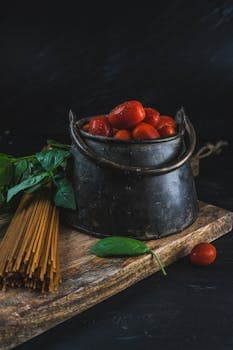
وعاء واحد من المعكرونة بالطماطم والريحان
السباغيتي والطماطم والثوم والريحان وزيت الزيتون المطبوخة في وعاء واحد - يتحول ماء المعكرونة إلى الصلصة خلال 12 دقيقة.
حول هذه الوصفة
إن تقنية المعكرونة ذات الوعاء الواحد - التي ابتكرتها مارثا ستيوارت في عام 2013 وانتشرت عبر وسائل الإعلام الغذائية - تقوم بطهي المعكرونة الجافة مباشرة في الصلصة، مع ما يكفي من الماء لامتصاصها. النشا المنطلق من المعكرونة يثخن الصلصة بشكل طبيعي. لا خطوة منفصلة. إذا تم القيام بذلك بشكل جيد، فإن النتيجة تنافس المعكرونة التقليدية مع غسل أقل بكثير.
المكونات
يخدم 4
- 400 غالسباغيتي أو لينجويني
- 400 غالطماطم الكرزية الناضجة(النصف)
- 1 صغيربصل(شرائح رقيقة)
- 5 فصوصالثوم(شرائح رقيقة)
- 1 ملعقة صغيرةرقائق الفلفل الأحمر(اختياري)
- 1 لالماء المغلي(تقريبا)
- 60 ملزيت الزيتون البكر الممتاز
- 1 ملعقة صغيرةملح(أو أكثر حسب الذوق)
- 1 كبيرحفنة من الريحان الطازج(ممزقة)
- 60 غبارميجيانو ريجيانو(المبشور الطازج، بالإضافة إلى المزيد)
- فلفل أسود مطحون طازجًا(حسب الذوق)
التعليمات
- 1
الجمع في وعاء
ضعي السباغيتي والطماطم الكرزية المقطعة إلى أنصاف والبصل المقطع والثوم ورقائق الفلفل الأحمر وزيت الزيتون والملح في وعاء واسع أو مقلاة عميقة. يُسكب الماء المغلي حتى يغطي الماء قليلًا — حوالي 1 لتر لكل 400 جرام من المعكرونة.
- 2
طهي الطعام بنشاط
يُغلى المزيج بقوة على نار عالية. يُطهى لمدة 9-12 دقيقة مع التحريك بالملقط كل دقيقة لمنع المعكرونة من الالتصاق ببعضها البعض. يجب أن تقل كمية الماء بشكل كبير، لتصبح صلصة كريمية نشوية.
حرك باستمرار، إذا ابتعدت عن المعكرونة، تتكتل المعكرونة.
- 3
تحقق من الملمس
ينبغي أن تكون المعكرونة طرية عندما تمتص معظم الماء وتغطي الصلصة الخيوط. إذا كانت المعكرونة غير مطبوخة جيدًا لكن الماء اختفى، أضيفي 60 مل من الماء الساخن وحركيها.
- 4
الانتهاء من الحرارة
بعيدًا عن النار، أضيفي الريحان الطازج ومعظم البارميجيانو. إرم حتى يصبح كل شيء لامع ودسم. تذوق وضبط الملح.
- 5
طبق ويقدم
برم في أوعية دافئة. ضعي فوقها كمية إضافية من البارميجيانو والمزيد من الريحان الطازج وقطعة من الفلفل الأسود ورذاذ من زيت الزيتون. يخدم على الفور.
هل جرّبت هذه الوصفة؟
قيّمها وساعد الآخرين في العثور على الوصفات التي تنجح فعلاً.
سجّل الدخول بنقرة واحدة وسنحفظ التقييم الذي اخترته للتو.
كل ما تحتاجه لتخطيط أسبوعك — مجانًا
- تقويم الوجبات
- قائمة التسوق
- أفكار وصفات بالذكاء الاصطناعي
تابع ما تأكله
صوّر وجبتك لتسجيل السعرات والعناصر الغذائية، واستخدم مؤقتات الصيام وتتبع شرب الماء في تطبيق SnapCal المجاني.
نصائح للمحترفين
- →
استخدمي قدرًا واسعًا، لأنه ضيق جدًا وسيؤدي إلى تكتل المعكرونة.
- →
الماء النشوي هو الصلصة، لا تصفيها.
- →
أفضل طماطم كرزية ممكنة — وهذا في الأساس طبق طماطم.
الاختلافات
- •
أضف البروتين: أضيفي النقانق الإيطالية المطبوخة أو الروبيان في النهاية.
- •
النسخة الكريمية: أضيفي 4 ملاعق كبيرة من جبنة المسكربون أو الجبن الكريمي قبل التقديم.
- •
نوع البيستو: أضيفي 3 ملاعق كبيرة من البيستو في النهاية بدلاً من الريحان الطازج.
- •
مع الخضار: أضف الكوسا أو الهليون المقطع إلى نصفين في أول 3 دقائق من الطهي.
تخزين
من الأفضل تناولها على الفور، فالمعكرونة تمتص الصلصة وهي واقفة.
التاريخ والأصل
تم نشر تقنية المعكرونة ذات الوعاء الواحد من قبل مجلة مارثا ستيوارت في عام 2013 وانتشرت على مدونات الطعام طوال الفترة 2014-2016. كانت مؤسسة الطهي الإيطالية متشككة في البداية (لا تستنزف الماء!) لكن هذه التقنية أصبحت طريقة حديثة معترف بها لتحضير المعكرونة في نهاية الأسبوع.
الأسئلة المتداولة
ألن يكون طعم المعكرونة نشويًا؟
لا - النشا المنطلق ينتج صلصة كريمية مستحلبة، وليست لزجة. الملمس مشابه للمعكرونة التقليدية مع ماء المعكرونة المحفوظ، ويتم الحصول عليه في خطوة واحدة فقط.
هل يمكنني استخدام أي شكل من أشكال المعكرونة؟
تعمل الأشكال الطويلة والرفيعة (المعكرونة واللينجويني والفيتوتشيني) بشكل أفضل لأنها تطهى بالتساوي عند التقليب. تحتاج الأشكال الأنبوبية (بيني، ريجاتوني) إلى المزيد من الماء والتحريك؛ تتكتل الأشكال الصغيرة (أورزو، ديتاليني) بسهولة. التزم بالطول الرفيع للحصول على نتائج موثوقة.
لماذا تتكتل خيوط المعكرونة معًا؟
إما القليل جدًا من الماء، أو عدم التقليب بشكل متكرر بما فيه الكفاية، أو إضافة المعكرونة إلى الماء غير المغلي. حرك بالملقط كل 60 ثانية لمدة 5 دقائق الأولى لمنع الالتصاق.
هل يمكنني إضافة كريم؟
نعم - قم بإضافة 60 مل من الكريمة المزدوجة في اللحظة الأخيرة من الطهي للحصول على صلصة كريمية أكثر. لكن الطبق لا يحتاج إليه؛ النشا الطبيعي دسم كثيرًا.
حقائق التغذية
لكل وجبة (380g) · 4 حصص إجمالية
ملخص الوقت
هل لديك أسئلة؟
اسأل مساعد الطبخ الذي يعمل بالذكاء الاصطناعي لدينا أي شيء عن هذه الوصفة - البدائل والتقنيات والقياس.
الدردشة مع AI Chef →ظهرت في الأدلة
هذه الوصفة واردة في الأدلة المنسقة التالية:
المزيد من وصفات إيطالي
قد يعجبك أيضًا
أطباق مشابهة من مطابخ أخرى حول العالم.
تصفّح حسب المكوّن
وصفات أخرى مبنية على المكوّنات الأساسية نفسها.
أدوات مطبخ مجانية
حاسبات ومحوّلات تكمّل هذه الصفحة — دون الحاجة إلى تسجيل.
حوّلها إلى خطة
جدولها، تسوّق لها، وتابع ما لديك بالفعل.
اقرأ بعد ذلك
مقالات أطول تتعمّق في الأفكار وراء هذا الطبق.
مجتمع
انضم إلى المحادثة
قم بتسجيل الدخول لترك تعليق وحفظ وصفاتك المفضلة