
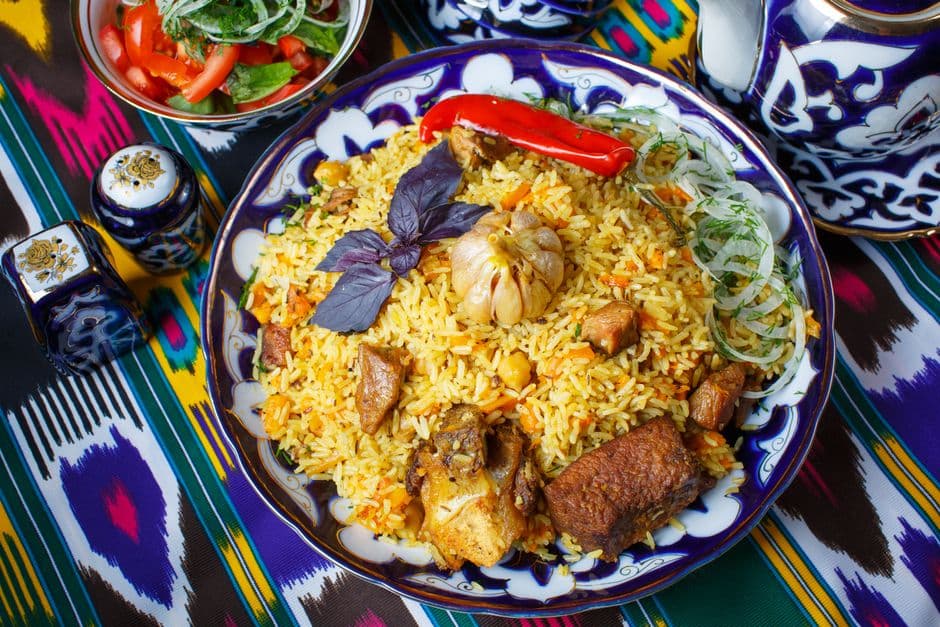
بلوف الأذربيجاني
بيلاف احتفال أذربيجان - أرز بالزعفران معطر مطبوخ بالطريقة الفارسية مع قشرة سفلية مقرمشة ومغطاة بطبقات من لحم الضأن والفواكه المجففة والكستناء.
حول هذه الوصفة
يعتبر بلوف الأذربيجاني أحد أكثر التعبيرات دقة وتفصيلاً عن تقليد بيلاف الأرز في العالم. على عكس البلوف الأوزبكي (المطبوخ مع اللحم في وعاء واحد)، فإن البلوف الأذربيجاني يبقي الأرز وطبقة اللحم والفاكهة (غارا) منفصلة تمامًا حتى التقديم. يُسلق الأرز جزئيًا ثم يُطهى على البخار في قدر مبطن بخبز مسطح (كازماج) أو قشرة بطاطس، مما يخلق التهدج الأسطوري (القاع المقرمش) الذي يعد الجزء الأكثر قيمة في الطبق. وفي الوقت نفسه، يتم طهي الغارا - وهو مزيج معقد من لحم الضأن والبصل والخوخ الحامض (أليتشا) والمشمش المجفف والكرز المجفف والكستناء - بشكل منفصل. على الطاولة، يتم وضع أكوام ثلجية من الأرز الملون بالزعفران على طبق، وتعلوها الغارا العطرية، ويتم كسر القشرة الذهبية المقرمشة وتوزيعها على أنها الجائزة الكبرى. يوجد في أذربيجان أكثر من 200 نوع مختلف من بلوف المسجلة.
المكونات
يخدم 6
- 600 غالبسمتي أو الأرز طويل الحبة
- 500 غكتف خروف(مكعبات)
- 2 كبيرالبصل(شرائح رقيقة)
- 100 غالكرز الحامض المجفف أو البرباريس
- 80 غالمشمش المجفف(النصف)
- 80 غالكستناء المطبوخة(معبأة بالفراغ)
- 1 ملعقة صغيرةخيوط الزعفران(منقوع في 3 ملاعق كبيرة ماء ساخن)
- 1 ملعقة صغيرةالقرفة المطحونة
- ½ ملعقة صغيرةالهيل المطحون
- 4 ملعقة كبيرةزبدة(بالإضافة إلى المزيد للأرز)
- 1خبز مسطح (لافاش)(أو 2 بطاطس مقشرة ومقطعة إلى شرائح رفيعة للقشرة)
- Salt(to taste)
التعليمات
- 1
اسلقي الأرز جزئيًا
اشطف الأرز حتى يصبح الماء صافياً. نقع في الماء البارد المملح لمدة 30 دقيقة. يُغلى وعاء كبير من الماء المملح جيدًا. يُطهى الأرز لمدة تتراوح بين 6 و7 دقائق حتى ينضج تقريبًا ولكن يظل ثابتًا في المنتصف (آل دينتي). بالُوعَة.
- 2
اصنع القشرة المقرمشة
تذوب 2 ملعقة كبيرة زبدة في قدر ثقيل القاع على نار متوسطة. قم بتغطية الجزء السفلي باللافاش (أو شرائح البطاطس المتداخلة). وهذا يشكل الكزماج – قاعدة القشرة المقرمشة.
إن بطانة الكازماج / البطاطس هي ما يصبح التهدج المقرمش الثمين (القشرة السفلية) - الجزء الأكثر رواجًا من البيلوف الأذربيجاني.
- 3
قم ببخار الأرز
كومة من الأرز المسلوق فوق القشرة في كومة. يرش بماء الزعفران ويرش بالزبدة. لف غطاء الوعاء بقطعة قماش نظيفة وأغلقه بإحكام. يُطهى على نار متوسطة إلى منخفضة لمدة 35-40 دقيقة. يمتص القماش البخار ويحافظ على القشرة مقرمشة.
- 4
اطبخ جارا
يقلى البصل في الزبدة المتبقية حتى يصبح ذهبي اللون. أضف لحم الضأن والقرفة والهيل. البني جيدا. أضف الفواكه المجففة والكستناء. يُطهى على نار خفيفة مع القليل من الماء لمدة 20-25 دقيقة حتى ينضج لحم الضأن وتصبح الصلصة غنية. الموسم مع الملح.
- 5
خدمة
يُوضع الأرز في طبق كبير ويُرش عليه المزيد من زبدة الزعفران. قمة مع جارا. قم بفصل القشرة المقرمشة وتكسيرها بعناية ثم ضع قطعًا ذهبية حول الطبق كزينة مميزة.
هل جرّبت هذه الوصفة؟
قيّمها وساعد الآخرين في العثور على الوصفات التي تنجح فعلاً.
سجّل الدخول بنقرة واحدة وسنحفظ التقييم الذي اخترته للتو.
كل ما تحتاجه لتخطيط أسبوعك — مجانًا
- تقويم الوجبات
- قائمة التسوق
- أفكار وصفات بالذكاء الاصطناعي
تابع ما تأكله
صوّر وجبتك لتسجيل السعرات والعناصر الغذائية، واستخدم مؤقتات الصيام وتتبع شرب الماء في تطبيق SnapCal المجاني.
نصائح للمحترفين
- →
يعد الغطاء المغطى بالقماش أمرًا ضروريًا - فهو يمنع التكثيف من التساقط مرة أخرى على الأرز، مما يضمن الحصول على نتيجة جافة ورقيقة.
- →
لا تتعجل في الطهي بالبخار على حرارة منخفضة، فهذا هو ما يخلق قاعًا مقرمشًا مثاليًا.
- →
انقعي الأرز قبل الطهي، فهذا يقلل من وقت الطهي ويمنع تكسره.
- →
تذوق واضبط الملح في النهاية - تتركز النكهات مع تقليل السوائل، كما أن رشة أخيرة من الملح القشري تزيد من حدة الطبق بأكمله.
الاختلافات
- •
استخدم الدجاج بدلاً من لحم الضأن للحصول على نسخة أخف (البلوف مع الدجاج تقليدي أيضًا).
- •
يُضاف مخفف الرمان المرشوش فوق الطبق النهائي.
- •
اصنع بلوفًا حلوًا بدون لحم - فقط أرز بالزعفران والفواكه المجففة والزبدة.
- •
نباتي: استبدل البروتين بفطر المحار المحمص أو التوفو المدخن أو الحمص المطبوخ - اضبط التتبيل قليلاً لأعلى للتعويض.
تخزين
يتم تخزين الأرز والغارا بشكل منفصل لمدة 3 أيام. يُعاد تسخين الأرز مع قليل من الماء والزبدة، وهو مُغطى، على نار خفيفة. القشرة المقرمشة لا تسخن جيدًا – تناولها طازجة.
التاريخ والأصل
تقليد البلوف الأذربيجاني قديم وقد تأثر بتأثيرات الطهي الفارسية والعثمانية وطريق الحرير. موقع البلاد على مفترق طرق الحضارات جلب الزعفران من بلاد فارس، والفواكه المجففة من القوقاز، وتقنيات طهي الأرز من آسيا الوسطى. قدمت أذربيجان تقليد البيلاف الخاص بها إلى اليونسكو كجزء من تراثها الثقافي غير المادي، مما يعكس مدى أهمية البيلاف في الهوية والاحتفالات الأذربيجانية.
الأسئلة المتداولة
ما هو التهديج؟
التهدج (من "قاع القدر" الفارسية) هي القشرة الذهبية المقرمشة التي تتشكل في قاع وعاء الأرز. إنه الجزء الأكثر قيمة من البيلوف الفارسي والأذربيجاني - المقرمش والزبداني والمشوب بالزعفران. كسرها ومشاركتها هو طقوس.
هل يمكنني صنع بلوف بدون لافاش؟
نعم - شرائح البطاطس الرفيعة (المقشرة، بسمك حوالي 3 مم) الموضوعة فوق قاع الوعاء المدهون بالزبدة تعمل بشكل مثالي وتخلق قشرة أكثر هشاشة ولذيذة للأكل بمفردها.
هل يمكنني القيام بذلك في وقت مبكر؟
نعم، يمكن تحضير معظم المكونات قبل يوم واحد وتبريدها بشكل منفصل. يُعاد تسخينه بلطف ويُجمّع قبل التقديم مباشرةً حتى يظل القوام مميزًا.
ما الذي يمكنني استبداله إذا لم يكن لدي جميع المكونات؟
ابق على مقربة من الدور الذي يلعبه كل مكون: استبدل المواد العطرية بأخرى مماثلة (الكراث بالبصل، والليمون الحامض بالليمون)، وحافظ على توازن الدهون والأحماض والملح سليمًا. يمكن عادة تقريب خلطات التوابل مع ما هو موجود في الخزانة.
حقائق التغذية
لكل وجبة · 6 حصص إجمالية
ملخص الوقت
هل لديك أسئلة؟
اسأل مساعد الطبخ الذي يعمل بالذكاء الاصطناعي لدينا أي شيء عن هذه الوصفة - البدائل والتقنيات والقياس.
الدردشة مع AI Chef →ظهرت في الأدلة
هذه الوصفة واردة في الأدلة المنسقة التالية:
المزيد من وصفات Azerbaijani
قد يعجبك أيضًا
أطباق مشابهة من مطابخ أخرى حول العالم.
أدوات مطبخ مجانية
حاسبات ومحوّلات تكمّل هذه الصفحة — دون الحاجة إلى تسجيل.
حوّلها إلى خطة
جدولها، تسوّق لها، وتابع ما لديك بالفعل.
اقرأ بعد ذلك
مقالات أطول تتعمّق في الأفكار وراء هذا الطبق.
مجتمع
انضم إلى المحادثة
قم بتسجيل الدخول لترك تعليق وحفظ وصفاتك المفضلة