
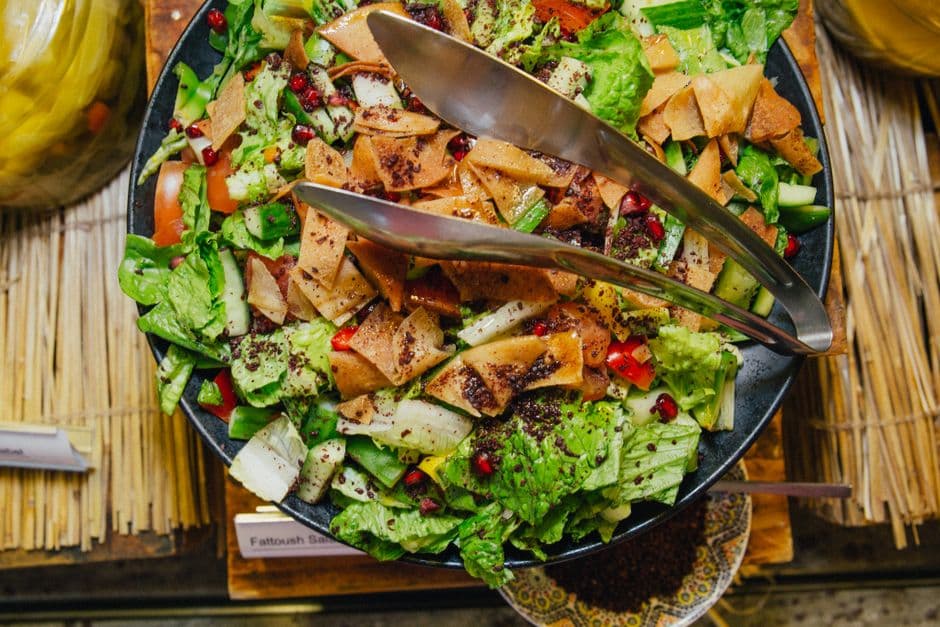
Fattoush Salad
Una brillante ensalada jordana de crujientes trozos de pan plano, hortalizas y hierbas frescas en un picante aderezo de zumaque y granada.
Acerca de esta receta
Fattoush es la gran ensalada de reciclaje de pan del Levante, y la versión jordana se distingue por una mano excepcionalmente generosa con zumaque y un chorrito de melaza de granada en el aderezo que le da una acidez afrutada. Los trozos de pan plano khubz desmenuzados o fritos se mezclan con trozos de tomate, pepino, rábano, cebolleta, lechuga romana, menta fresca y perejil, y luego se terminan con el aderezo de zumaque. El pan absorbe la cantidad suficiente del aderezo para volverse picante y masticable, pero conserva lo suficientemente crujiente para brindar un contraste de textura. Por lo general, se sirve como parte de un mezze junto con hummus, baba ghanoush y carnes a la parrilla.
Ingredientes
Sirve 4
- 2 grandepanes planos khubz
- 3 medianotomates, cortados en trozos
- 1 grandecucumber, diced
- 6 radishesfinamente cortado
- 4 spring onionssliced
- 1 cabezalechuga romana, desmenuzada
- ½ tazahojas de menta fresca
- ½ tazaperejil fresco, picado en trozos grandes
- 1 green peppercortado en cubitos (opcional)
- 4 cdaaceite de oliva virgen extra
- 3 cdajugo de limón
- 1 cdamelaza de granada
- 1½ cdtazumaque y extra para decorar
- 1 dienteajo, picado
- ½ cdtasal
- oilpara freír pan
Instrucciones
- 1
Crujiente el pan plano
Corte los panes planos en trozos ásperos del tamaño de un bocado. Freír en 1 cm de aceite a fuego alto hasta que estén dorados y crujientes (2 minutos por lado), o untar con aceite y hornear a 200 °C durante 8 a 10 minutos. Escurrir sobre toallas de papel y sazonar ligeramente con sal.
- 2
hacer el aderezo
Batir el aceite de oliva, el jugo de limón, la melaza de granada, el zumaque, el ajo picado y la sal hasta que estén emulsionados. Sabor: debe ser audazmente ácido y ligeramente afrutado.
- 3
Assemble
En un tazón grande, combine los tomates, el pepino, los rábanos, las cebolletas, la lechuga, la menta y el perejil. Mezcle con tres cuartos del aderezo.
- 4
Agrega el pan y sirve.
Añade los trozos de pan crujiente y revuelve suavemente. Rocíe el resto del aderezo. Emplatar inmediatamente y espolvorear con una pizca generosa de zumaque.
¿Has preparado esta receta?
Valórala y ayuda a otros a encontrar las recetas que de verdad funcionan.
Inicia sesión con un toque y guardaremos la valoración que acabas de elegir.
Todo lo que necesitas para planificar tu semana — gratis
- Calendario de comidas
- Lista de compras
- Ideas de recetas con IA
Controla lo que comes
Fotografía tu comida para registrar calorías y macros, usa temporizadores de ayuno y controla tu agua en la app gratuita SnapCal.
Consejos profesionales
- →
Echa el pan en el último momento para mantenerlo crujiente.
- →
El zumaque es la especia que define aquí: sea generoso; no sustituir.
- →
Los tomates a temperatura ambiente son mucho más sabrosos que los fríos.
- →
Probar y ajustar sal al final — los sabores se concentran conforme los líquidos se reducen, y una pizca final de sal escamosa realza todo el plato.
Variaciones
- •
Agregue verdolaga en rodajas (baqleh): tradicional y agrega un agradable crujido.
- •
Espolvoree queso feta desmenuzado para obtener una versión más rica.
- •
Utilice pan plano integral para darle más sabor a nuez.
- •
Vegetariano: cambia la proteína por champiñones ostra rey asados, tofu ahumado o garbanzos cocidos — ajusta el condimento ligeramente hacia arriba para compensar.
Almacenamiento
Vista y ensamble justo antes de servir. Las verduras peladas se mantienen refrigeradas durante 1 día. El pan frito se conserva en un recipiente hermético durante 2 días.
Historia y origen
El fattoush es un alimento básico de la cocina campesina levantina, nacido de la necesidad de utilizar pan duro y cualquier verdura que proporcionara el huerto. El nombre deriva del árabe 'fatteh' (desmoronarse). Se extendió por todo el Levante como un contrapunto refrescante a los guisos más pesados y las carnes a la parrilla. La adición de melaza de granada es un toque jordano y sirio que la diferencia de la versión libanesa, que se basa exclusivamente en limón.
Preguntas frecuentes
¿Puedo usar picatostes comprados en la tienda?
En caso de necesidad, sí, pero los picatostes simples carecen del sabor auténtico. El pan árabe frito o al horno es lo que le da al fattoush su carácter distintivo.
¿Puedo hacer esto con anticipación?
Sí, la mayoría de los componentes pueden prepararse hasta un día de anticipación y refrigerarse por separado. Calienta suavemente y ensambla justo antes de servir para que las texturas se mantengan distintas.
¿Qué puedo sustituir si no tengo todos los ingredientes?
Mantente cerca del rol que juega cada ingrediente: cambia los aromáticos por otros similares (chalota por cebolla, lima por limón), y mantén el balance grasa-ácido-sal intacto. Las mezclas de especias generalmente pueden aproximarse con lo que esté en la alacena.
¿Cómo sé que es auténtico?
La autenticidad se encuentra en un espectro; lo que más importa es honrar la técnica y el equilibrio de sabores. Si el plato tiene un sabor armonioso y respeta cómo lo prepararían los cocineros de su región de origen, está en tierra firme.
Datos nutricionales
Por porción (250g) · 4 porciones totales
Resumen de tiempo
¿Tiene preguntas?
Pregúntele a nuestro asistente de cocina con IA cualquier cosa sobre esta receta: sustituciones, técnicas, escalado.
Chatea con AI Chef →Más recetas de Jordanian
También Te Puede Gustar
Platos similares de otras cocinas del mundo.
Herramientas de Cocina Gratuitas
Calculadoras y conversores que acompañan a esta página — sin registro.
Calculadora para escalar recetas
Reduce a la mitad o duplica cada cantidad de esta receta sin hacer cuentas mentales.
Conversor de medidas
Convierte tazas, gramos, onzas y mililitros en ambos sentidos.
Conversor para freidora de aire
Convierte el tiempo y la temperatura del horno a ajustes de freidora de aire.
Conviértelo en un Plan
Prográmalo, haz la compra y controla lo que ya tienes.
Calendario de planificación de comidas
Coloca esta receta en un día y organiza la semana a su alrededor.
App de lista de la compra
Convierte esta lista de ingredientes en una lista de la compra agrupada por pasillo.
Importador de recetas
Guarda esta receta —y cualquier URL de receta— en una biblioteca ordenada.
Sigue Leyendo
Lecturas más largas que profundizan en las ideas detrás de este plato.
Comunidad
Únete a la conversación
Inicia sesión para dejar un comentario y guardar tus recetas favoritas