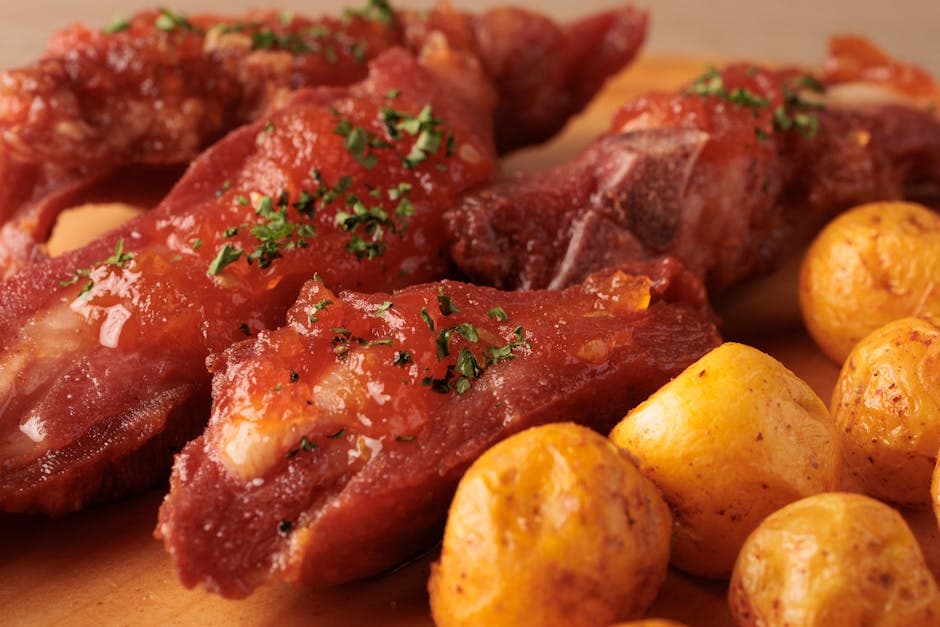
Cuba's national dish — shredded flank steak braised in tomato, pepper and olive sauce, eaten with rice and black beans.
Ropa vieja (literally 'old clothes') is Cuba's most beloved national dish — flank steak braised until completely tender, then pulled into long shreds and returned to a richly flavoured sofrito of tomatoes, peppers, onion, garlic and olives. The shredded meat, falling apart and saturated with the complex sauce, resembles the tattered clothing that gives the dish its evocative name. It is always served with white rice and black beans and is the everyday comfort food of the Cuban diaspora worldwide.
Sirve 6
Cover flank steak with water in a large pot. Add half the onion, green pepper, garlic and cumin seeds. Bring to a boil. Simmer covered 1.5–2 hours until meat is completely tender and easy to shred. Reserve 250ml broth.
Remove meat and shred along the grain into long, thin pieces with two forks. Do not shred too fine — rustic long shreds are correct.
Heat olive oil in a wide pan. Fry remaining onion and peppers (red and green) until very soft, 15 minutes. Add garlic, cumin and oregano. Cook 2 minutes.
Add crushed tomatoes and white wine. Simmer 10 minutes until sauce thickens.
Add shredded beef to the sofrito. Add reserved broth, olives and capers. Simmer uncovered 20 minutes until sauce is thick and coats the meat. Season with salt. Serve with white rice and black beans.
The broth from braising the beef is liquid gold — use it in the sofrito rather than discarding it.
Flank steak gives the most authentic texture; brisket is an excellent substitute.
Long shreds (not minced-looking) are characteristic of well-made ropa vieja.
Prueba y ajusta la sal al final — los sabores se concentran cuando los líquidos se reducen.
Add a splash of tomato paste with the sofrito for a deeper, more intense sauce.
The Canary Islands version (the dish's origin) uses chickpeas — add a can with the beef.
Vegetariano: cambia la proteína por champiñones de ostra rey asados, tofu ahumado o garbanzos cocidos.
Más picante: agrega un chile fresco finamente picado o una cucharadita de pimienta de Alepo/Urfa molida.
Refrigerate for 5 days. Freezes excellently for 3 months. Flavour improves the next day.
Ropa vieja originated in the Canary Islands and arrived in Cuba with the early Spanish settlers, where it became the national dish. The Canarian version uses chickpeas; the Cuban version is defined by the sofrito and olives. After the Cuban Revolution, ropa vieja disappeared from restaurant menus for decades as beef became rationed but survived in Cuban diaspora kitchens worldwide.
Yes — braise the meat under pressure for 45 minutes instead of the stovetop's 1.5 hours. The result is equally tender. The sofrito must still be made separately and the rest of the method is unchanged.
Sí — la mayoría de los componentes se pueden preparar hasta un día de anticipación. Recalienta suavemente y monta justo antes de servir.
Mantente cerca del rol de cada ingrediente: cambia los aromáticos por similares, y mantén intacto el equilibrio.
La autenticidad está en un espectro — lo que importa más es honrar la técnica y el equilibrio de sabores.
Por porción · 6 porciones totales
Pregúntele a nuestro asistente de cocina con IA cualquier cosa sobre esta receta: sustituciones, técnicas, escalado.
Chatea con AI Chef →Únete a la conversación
Inicia sesión para dejar un comentario y guardar tus recetas favoritas
¿Tienes comentarios o necesitas ayuda?
Leemos todos los correos y respondemos en 1–2 días hábiles.
© 2026 MyCookingCalendar. Todos los derechos reservados.