
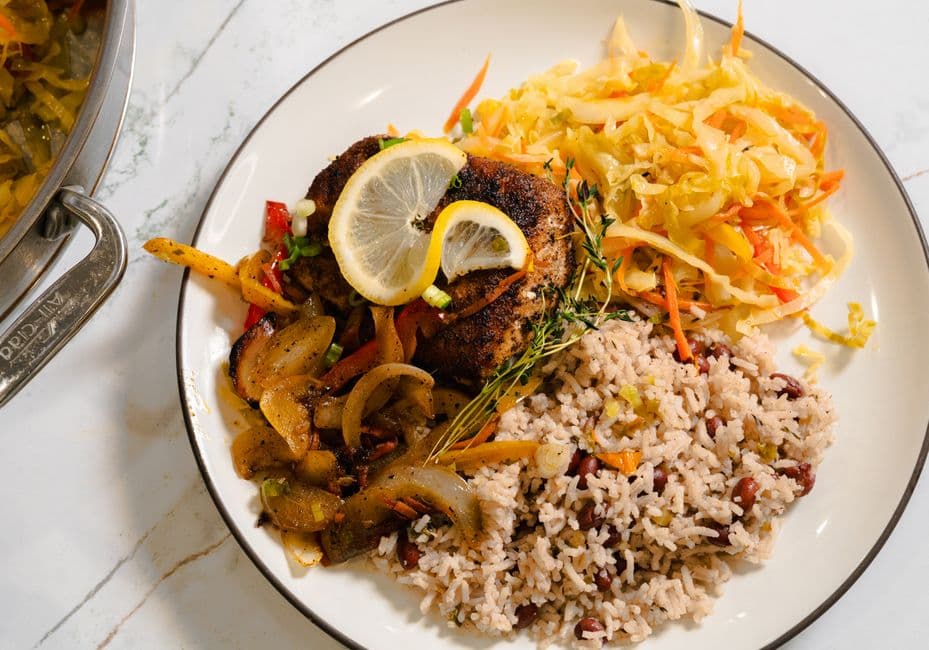
Ackee and Saltfish
Jamaica's national dish — creamy ackee fruit sautéed with shredded salted cod, Scotch bonnet, onion and tomato — a breakfast classic with a flavour unlike anything else.
About This Recipe
Ackee and Saltfish is the national dish of Jamaica, eaten primarily at breakfast but beloved at any hour. Ackee — the bright yellow fruit of the Blighia sapida tree, brought to Jamaica from West Africa in the 18th century — has a soft, buttery texture and a mild, subtly savoury flavour that is frequently compared to scrambled eggs when cooked. Paired with shredded, desalted salted cod and aromatics, the dish is both humble and extraordinary: the ackee coats the saltfish with its richness, the Scotch bonnet adds fruity fire, and the tomatoes and onion provide brightness and balance. It is traditionally served with fried plantain, hard food (boiled yams and dumplings) and bammy (cassava flatbread), making it one of the most distinctive and complete breakfast traditions in the world.
Ingredients
Serves 4
- 540 gcanned ackee(drained and rinsed, or fresh-prepared)
- 300 gsalted cod (saltfish)(desalted — see step 1)
- 2 tablespoonsvegetable oil
- 1 largeonion(thinly sliced)
- 3 clovesgarlic(minced)
- 2 mediumtomatoes(diced)
- 1Scotch bonnet chilli(deseeded and finely chopped)
- 1red bell pepper(sliced)
- 3spring onions(sliced)
- 1 teaspoondried thyme
- 0.5 teaspoonblack pepper
- 2 tablespoonsbutter(optional, for extra richness)
Instructions
- 1
Desalt the saltfish
Cover the salted cod with cold water and soak overnight, or for at least 4 hours, changing the water 2–3 times. Alternatively, place in a pot of cold water, bring to a boil, drain, and repeat twice. Taste — it should be pleasantly salty, not overwhelmingly so.
Do not skip the desalting step — undesalted saltfish will make the dish inedibly salty.
- 2
Cook and flake the saltfish
Simmer the desalted cod in fresh water for 10 minutes until flaky. Drain, remove any skin and bones, and shred the flesh into rough flakes.
- 3
Sauté the aromatics
Heat the oil and butter (if using) in a large frying pan over medium heat. Add the onion, spring onions and red pepper and cook for 5 minutes until softened. Add the garlic, Scotch bonnet and thyme and cook for 1 more minute.
- 4
Add tomatoes and saltfish
Stir in the diced tomatoes and cook for 3 minutes until they soften. Add the shredded saltfish and stir to combine, cooking for 3–4 minutes to meld the flavours.
- 5
Fold in the ackee
Gently fold in the drained ackee. Do not stir aggressively — ackee breaks apart easily. Heat through for 2–3 minutes. Season with black pepper (additional salt should not be needed). Serve immediately.
Did you make this?
Rate it and help other cooks find the recipes that actually work.
One tap to sign in, and we'll save the rating you just picked.
Everything you need to plan your week — free
- Meal calendar
- Grocery list
- AI recipe ideas
Cook this hands-free
Get AI meal plans, step-by-step cooking mode, and your saved recipes in the free Bento app.
Pro Tips
- →
Canned ackee is widely available and perfectly acceptable — fresh ackee outside the Caribbean is rare and requires careful preparation (unripe ackee is toxic).
- →
Fold the ackee gently — it is soft and breaks apart. Visible chunks are desirable.
- →
Serve with fried plantain and hard dough bread for the full Jamaican breakfast experience.
- →
Taste and adjust salt at the very end — flavors concentrate as liquids reduce, and a final pinch of flaky salt sharpens the whole dish.
Variations
- •
Add callaloo (Jamaican spinach) for extra greens.
- •
Some cooks add a pinch of allspice to echo the jerk spice tradition.
- •
Replace saltfish with smoked herring for a different but equally authentic variation.
- •
Vegetarian: swap the protein for roasted king oyster mushrooms, smoked tofu or cooked chickpeas — adjust seasoning slightly upward to compensate.
Storage
Best eaten fresh. Leftovers keep refrigerated for up to 2 days but the ackee becomes softer upon reheating. Reheat gently over low heat.
History & Origin
Ackee was brought to Jamaica from West Africa — likely Ghana or the Ivory Coast — in the 18th century, reputedly by Captain William Bligh of HMS Bounty, hence its scientific name Blighia sapida. Saltfish (salted cod) came via the colonial trade routes, provided as cheap protein to enslaved Africans. The pairing of ackee and saltfish became the definitive Jamaican breakfast by the 19th century. Jamaica declared it the national dish in the 20th century, and it remains the first food that most Jamaicans abroad miss from home.
Frequently Asked Questions
Is ackee safe to eat?
Yes, when properly prepared. Only the yellow arils (fleshy part) of ripe, opened ackee are edible. Canned ackee is pre-prepared and safe to use straight from the tin. Never eat unripe or improperly prepared fresh ackee — it contains the toxin hypoglycin A.
Where can I buy canned ackee?
Caribbean grocery stores carry it widely. Grace brand ackee is the most common export variety and is available online and in many major supermarkets with Caribbean food sections.
Can I make this ahead of time?
Yes — most of the components can be prepared up to a day in advance and refrigerated separately. Reheat gently and assemble just before serving so textures stay distinct.
What can I substitute if I don't have all the ingredients?
Stay close to the role each ingredient plays: swap aromatics for similar ones (shallot for onion, lime for lemon), and keep the fat-acid-salt balance intact. Spice blends can usually be approximated with what's in the cupboard.
Nutrition Facts
Per serving (310g / 10.9 oz) · 4 servings total
Time Summary
Have Questions?
Ask our AI cooking assistant anything about this recipe — substitutions, techniques, scaling.
Chat with AI Chef →Featured in Guides
This recipe is featured in the following curated guides:
More Jamaican Recipes
You Might Also Like
Similar dishes from other cuisines around the world.
Browse by Ingredient
More recipes built around the same core ingredients.
Free Kitchen Tools
Calculators and converters that pair with this page — no signup needed.
Put This Into a Plan
Schedule it, shop for it, and track what you already have.
Read Next
Longer reads that go deeper on the ideas behind this dish.
Community
Join the conversation
Sign in to leave a comment and save your favourite recipes