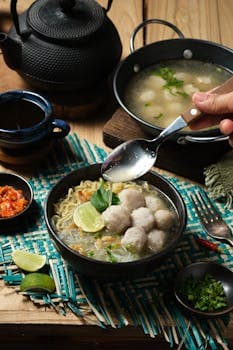
Bakso is arguably Indonesia's most beloved street food — bouncy, springy beef meatballs served in a steaming clear broth with yellow noodles, rice vermicelli, fried wontons, and greens. The meatballs get their distinctive bouncy texture from the use of tapioca starch and vigorous kneading. Bakso carts roam every neighborhood in Indonesia, their distinctive call drawing crowds of eager customers.
Serves 6
Blend beef, tapioca starch, garlic, white pepper, salt, and ice water in a food processor until very smooth and paste-like. Form into walnut-sized balls.
Drop meatballs into simmering beef broth. Cook for 10 minutes until they float and are cooked through.
Season the broth with salt and white pepper. Keep simmering.
Place noodles, vermicelli, and bok choy in bowls. Add meatballs. Ladle hot broth over. Top with fried shallots and celery.
Everything you need to plan your week — free
Cook this hands-free
Get AI meal plans, step-by-step cooking mode, and your saved recipes in the free Bento app.
The key to bouncy meatballs is processing the beef until very smooth and using ice-cold water.
Serve with kecap manis and sambal on the side.
Taste and adjust salt at the very end — flavors concentrate as liquids reduce, and a final pinch of flaky salt sharpens the whole dish.
Mise en place pays for itself: chop, measure and pre-mix everything before the heat goes on, especially for any step that moves fast.
Add tofu and fried wontons for a more loaded bowl.
Vegetarian: swap the protein for roasted king oyster mushrooms, smoked tofu or cooked chickpeas — adjust seasoning slightly upward to compensate.
Spicier: add a finely chopped fresh chile or a teaspoon of crushed Aleppo/Urfa pepper to the aromatics for warm, layered heat instead of a single sharp hit.
Lighter: reduce the fat by a third and finish with a squeeze of citrus or a splash of vinegar to keep brightness without losing body.
Store meatballs and broth separately. Keeps 3 days refrigerated. Meatballs freeze well.
Bakso is shaped by the home cooks who refined it across generations, balancing tradition with everyday practicality. Regional variations are the rule rather than the exception — neighboring villages, families and even individual cooks adapt the dish to what's in the pantry and what's in season, which is why no two versions taste exactly alike and why the recipe has stayed alive for so long.
Yes — most of the components can be prepared up to a day in advance and refrigerated separately. Reheat gently and assemble just before serving so textures stay distinct.
Stay close to the role each ingredient plays: swap aromatics for similar ones (shallot for onion, lime for lemon), and keep the fat-acid-salt balance intact. Spice blends can usually be approximated with what's in the cupboard.
Authenticity sits on a spectrum — what matters more is honoring the technique and balance of flavors. If the dish tastes harmonious and respects how cooks in its home region would build it, you're on solid ground.
The two most common issues are under-seasoning and rushing the heat. Taste as you go, season in layers, and give aromatics and proteins the time they need to develop color and depth before moving on.
Per serving (350g / 12.3 oz) · 6 servings total
Ask our AI cooking assistant anything about this recipe — substitutions, techniques, scaling.
Chat with AI Chef →This recipe is featured in the following curated guides:
Join the conversation
Sign in to leave a comment and save your favourite recipes
Everything you need to plan your week — free
Have feedback or need help?
We read every email and reply within 1–2 business days.
© 2026 MyCookingCalendar. All rights reserved.