
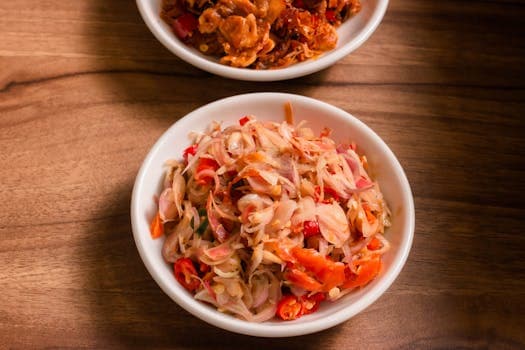
Balinese Sambal Matah — Wongso-Inspired
Raw shallot-lemongrass-chili relish with kaffir lime leaves and toasted coconut oil — Bali's most aromatic table condiment.
⭐Inspired by William Wongso · 🇮🇩 IndonesiaAbout This Recipe
This dish is inspired by William Wongso's championship of regional Indonesian cuisines — particularly the cuisines of Bali. Sambal matah ('raw sambal') is one of Bali's defining contributions to Indonesian cuisine — a fresh, raw relish of finely sliced shallots, lemongrass, kaffir lime leaves and chilies, dressed with hot coconut oil and lime. Unlike most Indonesian sambals, it is never cooked; the heat comes from the oil being poured over the raw ingredients.
Ingredients
Serves 6
- 12small Asian shallots(or 4 medium shallots, very thinly sliced)
- 3 stalkslemongrass(tender white parts only, very thinly sliced)
- 8kaffir lime leaves(stems removed, very thinly sliced into chiffonade)
- 8Thai bird chilies(thinly sliced; adjust to taste)
- 4 clovesgarlic(very thinly sliced)
- 1 tspshrimp paste (terasi)(toasted briefly)
- 1lime(juiced (calamansi if available))
- 0.5 tspfine sea salt
- 60 mlcoconut oil(or neutral oil)
- 0.5 tsppalm sugar(optional, finely grated)
Instructions
- 1
Slice everything VERY thinly
All the ingredients must be sliced paper-thin — the texture is the dish. Use a sharp knife. Shallots into rings, lemongrass into hairlike slices, lime leaves into chiffonade, garlic and chilies into thin slices.
Spend the time on slicing — sambal matah's quality is 90% knife work.
- 2
Toast the shrimp paste
Wrap the terasi in foil. Toast in a dry pan for 60 seconds per side until aromatic. Crumble. (This step makes it food-safe and develops the flavour.)
- 3
Combine the raw ingredients
In a bowl, combine the shallots, lemongrass, lime leaves, chilies, garlic, toasted terasi and salt. Massage gently for 30 seconds.
- 4
Heat the oil
Heat the coconut oil in a small pan until almost smoking — about 180°C.
- 5
The pour
Pour the hot oil OVER the raw ingredients. They should sizzle aggressively. Stir gently. The hot oil 'cooks' the raw ingredients lightly while preserving their fresh character.
This is the moment that defines the sambal — don't pre-cook the ingredients.
- 6
Finish with lime
Off the heat, stir in the lime juice and palm sugar (if using). Taste — it should be bright, hot, fragrant, slightly sweet. Adjust.
- 7
Serve at room temperature
Serve in a small bowl alongside grilled fish, rice or any Indonesian dish. A spoonful per portion is enough.
Did you make this?
Rate it and help other cooks find the recipes that actually work.
One tap to sign in, and we'll save the rating you just picked.
Everything you need to plan your week — free
- Meal calendar
- Grocery list
- AI recipe ideas
Cook this hands-free
Get AI meal plans, step-by-step cooking mode, and your saved recipes in the free Bento app.
Pro Tips
- →
Knife work is the dish — slice everything paper-thin.
- →
Don't skip toasting the terasi — raw shrimp paste tastes harsh.
- →
Best made fresh — sambal matah loses its fragrance after a few hours.
Variations
- •
Sambal Matah Salmon: serve over seared salmon for a Wongso-style fusion.
- •
Coconut-Heavy: increase coconut oil to 100ml and add 30g toasted desiccated coconut.
- •
Garlic-Free: omit garlic for a more delicate variation popular in Karangasem regency.
Storage
Best eaten same day. Refrigerates for 24 hours; loses fragrance quickly.
History & Origin
Sambal matah originates from Bali, where it is a daily table condiment. Unlike most Indonesian sambals (which are cooked or pounded), matah is uniquely raw and fresh. William Wongso has championed Bali's regional cuisines through his Indonesian Cultural Ambassador work and his cookbook 'Flavors of Indonesia.'
Frequently Asked Questions
Why isn't sambal matah cooked?
Matah literally means 'raw' in Balinese. Unlike sambal merah or sambal kacang (which are cooked or pounded), matah relies on the freshness of raw shallots, lemongrass and herbs. The hot oil pour 'wilts' them slightly without truly cooking — preserving the bright, alive character of the dish.
What is terasi?
Terasi is Indonesian shrimp paste — fermented salted shrimp pressed into bricks. Foundational to Indonesian sambal-making. It must be toasted before use (to make it food-safe and develop flavour). Sold in plastic-wrapped blocks at Indonesian and Asian groceries.
How spicy is this?
Genuinely spicy — Balinese sambal matah uses 8-12 bird chilies per portion. Reduce to 3-4 chilies for a moderate heat level. The chilies can be deseeded for less heat.
What dishes pair well?
Sambal matah is traditionally served alongside ikan bakar (grilled fish), nasi campur (mixed rice plate) or any Balinese rice dish. It also works as a topping for plain steamed rice as a single-bowl meal.
Nutrition Facts
Per serving (50g / 1.8 oz) · 6 servings total
Time Summary
Have Questions?
Ask our AI cooking assistant anything about this recipe — substitutions, techniques, scaling.
Chat with AI Chef →Featured in Guides
This recipe is featured in the following curated guides:
More Indonesian Recipes
You Might Also Like
Similar dishes from other cuisines around the world.
Browse by Ingredient
More recipes built around the same core ingredients.
Free Kitchen Tools
Calculators and converters that pair with this page — no signup needed.
Put This Into a Plan
Schedule it, shop for it, and track what you already have.
Read Next
Longer reads that go deeper on the ideas behind this dish.
Community
Join the conversation
Sign in to leave a comment and save your favourite recipes