
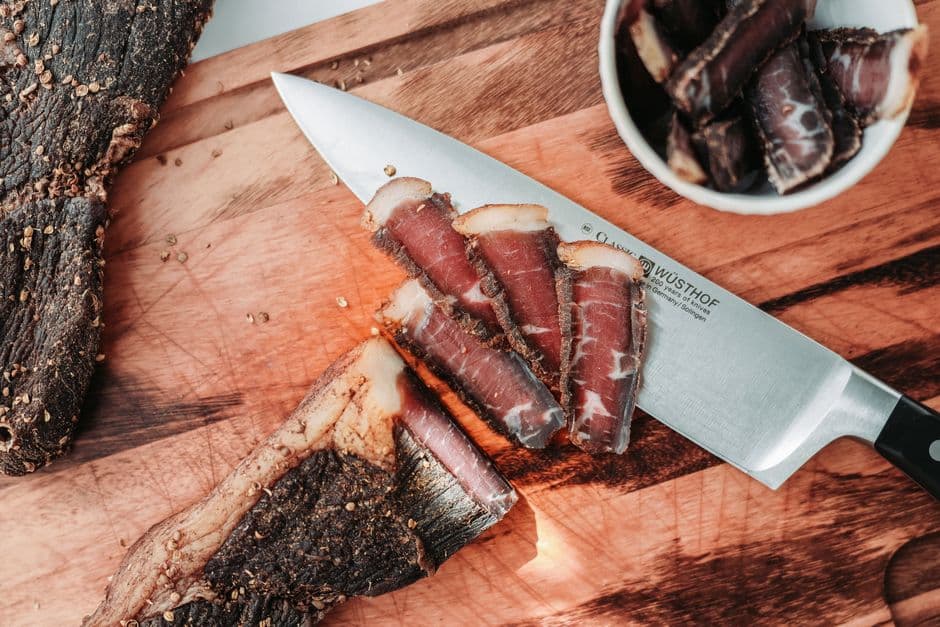
Namibian Biltong
Air-dried, spice-cured beef strips with coriander and vinegar — Namibia's iconic protein-rich snack.
About This Recipe
Biltong is arguably the most famous food export of southern Africa, and Namibia has its own proud tradition of crafting this air-dried cured meat. Unlike American jerky which is oven-dried, biltong is cured in vinegar and spices then hung in a well-ventilated space for several days until the outside is firm but the interior remains moist. The key spice is whole coriander, toasted and cracked, which gives biltong its distinctive aromatic crust. In Namibia, beef biltong is most common, but ostrich and game biltong are widely enjoyed.
Ingredients
Serves 8
- 1 kgbeef silverside or topside, sliced 1 cm thick with the grain
- 60 mlapple cider vinegar
- 2 tbspwhole coriander seeds, toasted and coarsely cracked
- 2 tbspcoarse sea salt
- 1 tbspdark brown sugar
- 1 tspblack pepper, coarsely ground
- 0.5 tspbicarbonate of soda
- 1 tspsmoked paprika
Instructions
- 1
Prepare the meat
Slice beef along the grain into strips about 1 cm thick and 3–4 cm wide. Score any fat lightly to allow cure penetration.
- 2
Vinegar bath
Dip each strip in apple cider vinegar and shake off excess. The vinegar both cures the surface and adds flavour.
- 3
Coat in spices
Mix salt, bicarbonate of soda, brown sugar, coriander, pepper, and paprika together. Press spice mixture firmly onto all sides of each strip.
- 4
Rest
Place spiced strips on a rack and refrigerate uncovered for 12 hours to allow the cure to penetrate.
- 5
Hang and dry
Hook strips with paper clips or S-hooks and hang in a well-ventilated area or a biltong box with a fan for 4–7 days depending on desired moisture level (4 days = moist; 7 days = dry).
- 6
Check and slice
Biltong is ready when the outside is firm and dry. Slice thinly against the grain to serve.
Did you make this?
Rate it and help other cooks find the recipes that actually work.
One tap to sign in, and we'll save the rating you just picked.
Everything you need to plan your week — free
- Meal calendar
- Grocery list
- AI recipe ideas
Track what you eat
Snap your meal to log calories and macros, run fasting timers and track water in the free SnapCal app.
Pro Tips
- →
Airflow is more important than drying temperature — a small fan is essential.
- →
Silverside sliced with the grain gives chewy, authentic biltong texture.
- →
Do not use iodised salt — it can give an off flavour to cured meats.
- →
Taste and adjust salt at the very end — flavors concentrate as liquids reduce, and a final pinch of flaky salt sharpens the whole dish.
Variations
- •
Ostrich biltong: use ostrich fillet for ultra-lean, slightly gamey biltong.
- •
Droëwors: use the same cure but apply to thin sausages for dried Namibian sausage.
- •
Vegetarian: swap the protein for roasted king oyster mushrooms, smoked tofu or cooked chickpeas — adjust seasoning slightly upward to compensate.
- •
Spicier: add a finely chopped fresh chile or a teaspoon of crushed Aleppo/Urfa pepper to the aromatics for warm, layered heat instead of a single sharp hit.
Storage
Once fully dried, biltong keeps at room temperature in a paper bag or breathable container for up to 2 weeks. Do not seal airtight or it will mould.
History & Origin
Biltong's origins lie with the Khoikhoi people of southern Africa who preserved meat by drying it in the sun. Dutch settlers adopted and refined the practice in the 17th century, incorporating vinegar and spices. Today biltong is a N$2-billion industry in southern Africa and beloved by Namibians as both everyday snack and cultural touchstone.
Frequently Asked Questions
Is biltong safe to eat without cooking?
Yes — the combination of vinegar, salt, and drying creates an environment hostile to harmful bacteria, making it safe to consume without cooking.
What is the difference between biltong and jerky?
Biltong is cured in vinegar, sliced with the grain, and air-dried. Jerky is marinated, sliced against the grain, and oven-dried at low heat.
Can I make this ahead of time?
Yes — most of the components can be prepared up to a day in advance and refrigerated separately. Reheat gently and assemble just before serving so textures stay distinct.
What can I substitute if I don't have all the ingredients?
Stay close to the role each ingredient plays: swap aromatics for similar ones (shallot for onion, lime for lemon), and keep the fat-acid-salt balance intact. Spice blends can usually be approximated with what's in the cupboard.
Nutrition Facts
Per serving (60g / 2.1 oz) · 8 servings total
Time Summary
Have Questions?
Ask our AI cooking assistant anything about this recipe — substitutions, techniques, scaling.
Chat with AI Chef →Featured in Guides
This recipe is featured in the following curated guides:
More Namibian Recipes
You Might Also Like
Similar dishes from other cuisines around the world.
Free Kitchen Tools
Calculators and converters that pair with this page — no signup needed.
Put This Into a Plan
Schedule it, shop for it, and track what you already have.
Read Next
Longer reads that go deeper on the ideas behind this dish.
Community
Join the conversation
Sign in to leave a comment and save your favourite recipes