
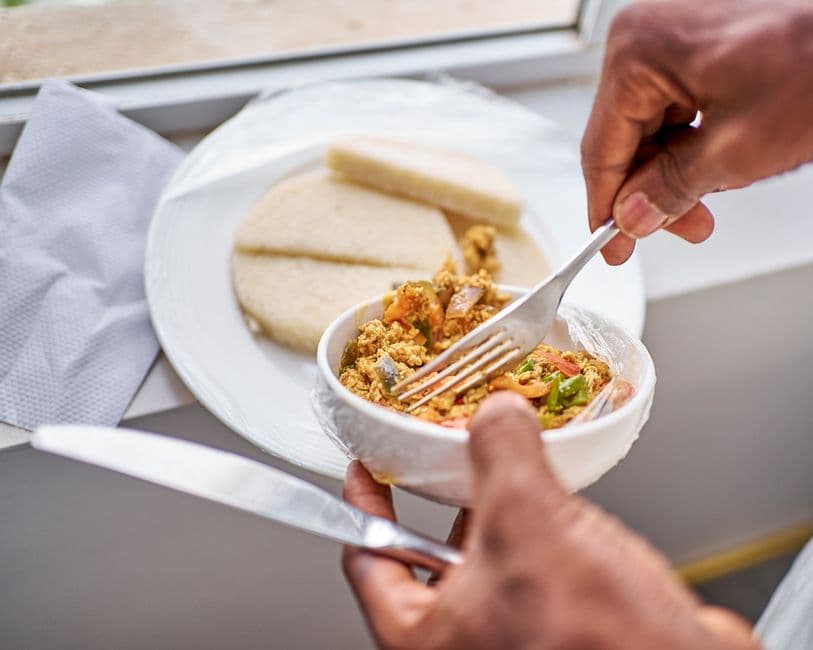
Foutou
Smooth, pounded yam or plantain fufu served alongside a rich Ivorian peanut sauce — a filling, communal meal at the heart of Ivorian daily cooking.
About This Recipe
Foutou is the Ivorian term for fufu — the ubiquitous pounded starchy staple of West and Central African cooking. In Côte d'Ivoire it is most often made from a combination of plantain and yam, pounded together until smooth and elastic, then shaped into balls and served with soups and stews. The most beloved accompaniment is a rich groundnut (peanut) sauce often enriched with smoked fish, tomatoes, and palm oil. In Ivorian households, the rhythmic sound of the pounding mortar is the signal that a family meal is being prepared — foutou is comfort food at its most fundamental.
Ingredients
Serves 4
- 600 gwhite yam, peeled and cubed
- 2 largeunripe green plantains, peeled and cut into chunks
- 1.5 cupsraw peanuts (or 3/4 cup smooth peanut butter)
- 3 mediumtomatoes, blended
- 1 largeonion, diced
- 3 clovesgarlic, minced
- 200 gsmoked fish, flaked and bones removed
- 3 tbsppalm oil
- 2 tbspground crayfish
- 1 cubeMaggi seasoning cube
- 2 cupswater
- 1 tspsalt
- 1/2 tspchilli flakes
Instructions
- 1
Boil yam and plantain
Place yam and plantain in a pot, cover with salted water, and boil for 20–25 minutes until both are completely tender when pierced with a knife.
- 2
Pound to foutou
Drain yam and plantain. Transfer in batches to a mortar and pound vigorously, gradually incorporating them together, until completely smooth and elastic with no lumps. Alternatively, use a stand mixer with a dough hook. Wet hands to shape into balls.
- 3
Make peanut paste
If using raw peanuts, dry-toast and blend with 1/2 cup water until very smooth. If using peanut butter, skip this step.
- 4
Build the peanut sauce
Heat palm oil in a pot over medium heat. Fry onion until golden, 5 minutes. Add garlic, cook 1 minute. Pour in blended tomatoes and cook down for 8 minutes. Add peanut paste, crayfish, Maggi, and chilli. Stir well.
- 5
Simmer and add fish
Pour in 2 cups water and stir. Simmer for 15 minutes until sauce thickens and oil floats to the surface. Stir in smoked fish and cook a further 5 minutes. Adjust seasoning.
- 6
Serve
Place foutou balls in bowls and ladle peanut sauce generously over or alongside.
Did you make this?
Rate it and help other cooks find the recipes that actually work.
One tap to sign in, and we'll save the rating you just picked.
Everything you need to plan your week — free
- Meal calendar
- Grocery list
- AI recipe ideas
Track what you eat
Snap your meal to log calories and macros, run fasting timers and track water in the free SnapCal app.
Pro Tips
- →
For the smoothest foutou, pound while still hot and keep wetting the pestle and your hands.
- →
Add a small cube of boiled plantain to pure yam foutou — the plantain adds elasticity.
- →
The peanut sauce thickens significantly as it cools; add water when reheating.
- →
Taste and adjust salt at the very end — flavors concentrate as liquids reduce, and a final pinch of flaky salt sharpens the whole dish.
Variations
- •
Make foutou entirely from plantain for a sweeter, more yielding texture.
- •
Serve with palm nut soup (sauce graine) instead of peanut sauce.
- •
Add chicken to the peanut sauce for a more substantial main.
- •
Vegetarian: swap the protein for roasted king oyster mushrooms, smoked tofu or cooked chickpeas — adjust seasoning slightly upward to compensate.
Storage
Foutou is best freshly pounded. Peanut sauce keeps refrigerated for 4 days or frozen for 2 months. Reheat sauce over low heat with a splash of water.
History & Origin
Fufu in its many regional variations is one of the oldest and most widespread foods in sub-Saharan Africa, made from whatever starchy crop is locally abundant. In Côte d'Ivoire the combination of yam and plantain reflects the country's rich agricultural diversity. Peanut sauce, introduced via trans-Saharan trade routes and refined over generations of West African cooking, has become one of the continent's great culinary contributions.
Frequently Asked Questions
How do I get smooth foutou without a mortar?
A stand mixer with a dough hook works well — boil until very soft, then mix on medium speed for 5–8 minutes. A ricer followed by hand-kneading also works.
Can I use cassava instead of yam?
Yes — cassava foutou is also traditional in parts of Côte d'Ivoire. It has a slightly stickier, more neutral taste than yam.
Can I make this ahead of time?
Yes — most of the components can be prepared up to a day in advance and refrigerated separately. Reheat gently and assemble just before serving so textures stay distinct.
What can I substitute if I don't have all the ingredients?
Stay close to the role each ingredient plays: swap aromatics for similar ones (shallot for onion, lime for lemon), and keep the fat-acid-salt balance intact. Spice blends can usually be approximated with what's in the cupboard.
Nutrition Facts
Per serving (450g / 15.9 oz) · 4 servings total
Time Summary
Have Questions?
Ask our AI cooking assistant anything about this recipe — substitutions, techniques, scaling.
Chat with AI Chef →Featured in Guides
This recipe is featured in the following curated guides:
More Ivorian Recipes
You Might Also Like
Similar dishes from other cuisines around the world.
Free Kitchen Tools
Calculators and converters that pair with this page — no signup needed.
Put This Into a Plan
Schedule it, shop for it, and track what you already have.
Read Next
Longer reads that go deeper on the ideas behind this dish.
Community
Join the conversation
Sign in to leave a comment and save your favourite recipes