
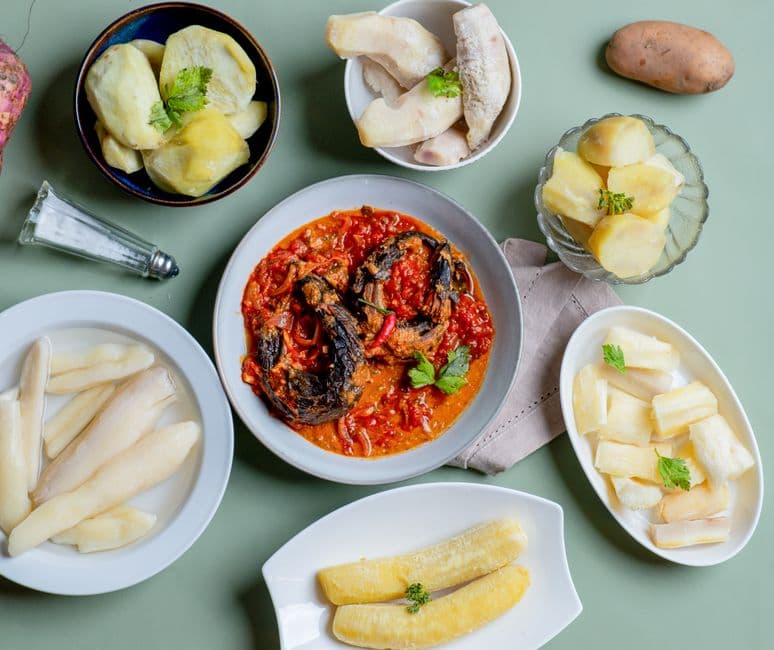
Garba
Abidjan's most iconic street food — attiéké with pieces of fried or grilled tuna, topped with fresh onion, tomato, chilli, and a squeeze of lemon. Fast, cheap, and utterly delicious.
About This Recipe
Garba is the working lunch of Abidjan — a dish so embedded in the city's daily life that temporary street stalls serving it are called 'garba spots' and they occupy every commercial neighbourhood. The dish is deceptively simple: steamed attiéké (fermented cassava couscous) piled with pieces of fried skipjack or yellowfin tuna, dressed with raw onion, tomato, green chilli, and lemon juice. It was originally associated with Hausa migrant workers from the north, who popularised it across the city, and has since become a dish that crosses all class and ethnic lines. Eating garba at a busy roadside stall, standing up with the city's noise around you, is an essential Abidjan experience.
Ingredients
Serves 2
- 300 gready-made attiéké
- 400 gfresh tuna steak, cut into 4–5 cm chunks
- 1 largeonion, half thinly sliced raw, half finely diced for garnish
- 2 mediumtomatoes, diced
- 2 wholegreen chillies, sliced
- 1 wholelemon, halved
- 1 tspsalt
- 1/2 tspwhite pepper
- 1 tsppaprika
- 1 cubeMaggi cube, crumbled
- 4 tbspvegetable oil (for frying)
- 2 tbspvegetable oil (for attiéké)
Instructions
- 1
Season the tuna
Toss tuna pieces with salt, white pepper, paprika, and crumbled Maggi. Let sit for 10 minutes.
- 2
Fry the tuna
Heat oil in a pan over high heat until very hot. Add tuna pieces in a single layer without crowding. Fry 3–4 minutes per side until well-browned and slightly crispy on the outside. Remove and drain on paper towels.
- 3
Steam the attiéké
Break attiéké into a colander. Steam over boiling water for 8 minutes until hot and fluffy. Transfer to a bowl, fluff with a fork, and toss with 2 tbsp vegetable oil and a pinch of salt.
- 4
Make the fresh garnish
Combine diced tomato, diced onion, and sliced chilli in a small bowl. Season with a pinch of salt and a squeeze of lemon. Toss together.
- 5
Assemble and serve
Pile attiéké onto a plate or into a bowl. Place fried tuna pieces on top. Spoon tomato-onion garnish over. Arrange raw onion slices alongside. Squeeze lemon generously over everything. Serve immediately.
Did you make this?
Rate it and help other cooks find the recipes that actually work.
One tap to sign in, and we'll save the rating you just picked.
Everything you need to plan your week — free
- Meal calendar
- Grocery list
- AI recipe ideas
Track what you eat
Snap your meal to log calories and macros, run fasting timers and track water in the free SnapCal app.
Pro Tips
- →
The oil must be very hot when you add the tuna — you want a sear, not a gentle cook.
- →
Don't overcook the tuna; it should be browned outside and just barely cooked in the centre.
- →
Eat garba immediately — the contrast between hot tuna and fresh garnish is the point.
- →
Taste and adjust salt at the very end — flavors concentrate as liquids reduce, and a final pinch of flaky salt sharpens the whole dish.
Variations
- •
Use mackerel or sardines instead of tuna for a stronger-flavoured, more economical garba.
- •
Grill the tuna instead of frying for a lighter version.
- •
Add sliced avocado and extra lemon for a richer, creamier garnish.
- •
Vegetarian: swap the protein for roasted king oyster mushrooms, smoked tofu or cooked chickpeas — adjust seasoning slightly upward to compensate.
Storage
Garba is a street food meant to be eaten immediately. Components can be stored separately in the fridge for 1 day; re-steam attiéké and re-fry tuna briefly before assembling.
History & Origin
Garba's origins in Abidjan are tied to the Hausa community from northern Côte d'Ivoire and neighbouring countries, who set up informal food stalls serving this dish to factory workers and market traders starting in the 1970s and 80s. It was initially seen as simple labourer's food, but its bold flavours and low cost made it irresistible across all social classes. Today garba is considered a cultural institution — there are even garba festivals in Abidjan.
Frequently Asked Questions
What type of tuna is used in authentic garba?
Skipjack tuna (listao) is most traditional and widely used. Yellowfin or albacore work equally well. Avoid canned tuna for this dish.
Can I use frozen attiéké?
Frozen attiéké is widely sold and works perfectly. Allow it to thaw at room temperature for 20–30 minutes before steaming.
Can I make this ahead of time?
Yes — most of the components can be prepared up to a day in advance and refrigerated separately. Reheat gently and assemble just before serving so textures stay distinct.
What can I substitute if I don't have all the ingredients?
Stay close to the role each ingredient plays: swap aromatics for similar ones (shallot for onion, lime for lemon), and keep the fat-acid-salt balance intact. Spice blends can usually be approximated with what's in the cupboard.
Nutrition Facts
Per serving (400g / 14.1 oz) · 2 servings total
Time Summary
Have Questions?
Ask our AI cooking assistant anything about this recipe — substitutions, techniques, scaling.
Chat with AI Chef →More Ivorian Recipes
You Might Also Like
Similar dishes from other cuisines around the world.
Free Kitchen Tools
Calculators and converters that pair with this page — no signup needed.
Put This Into a Plan
Schedule it, shop for it, and track what you already have.
Read Next
Longer reads that go deeper on the ideas behind this dish.
Community
Join the conversation
Sign in to leave a comment and save your favourite recipes