
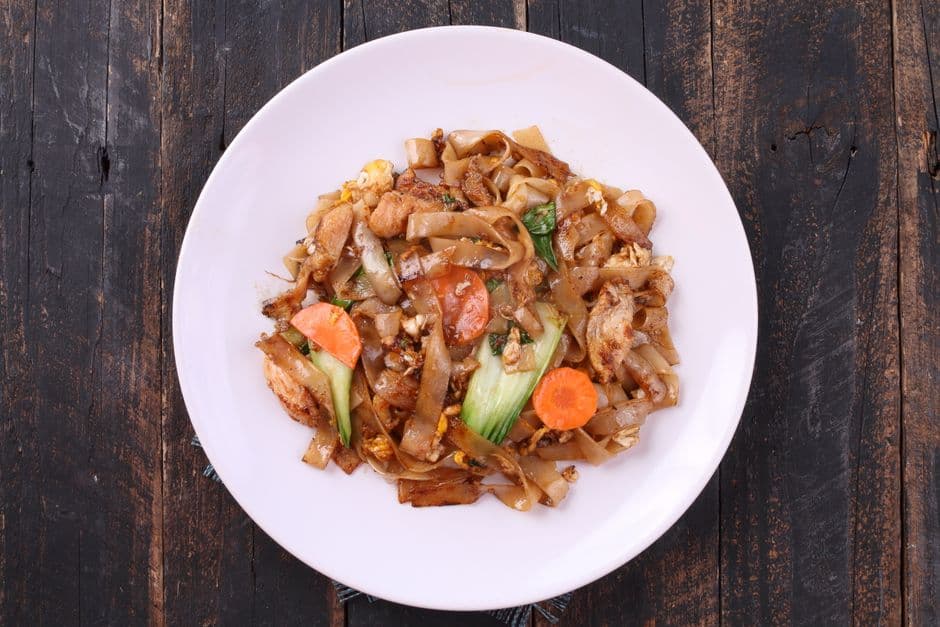
Pad See Ew
Wide rice noodles stir-fried with Chinese broccoli, egg and your choice of protein in a rich sweet-savoury soy sauce.
About This Recipe
Pad See Ew is one of Thailand's most beloved street foods, distinguished from Pad Thai by its wide sen yai noodles and deep, caramelised flavour from dark soy sauce. The dish is a Thai adaptation of Chinese chow fun noodles, introduced by Teochew Chinese immigrants. The key technique is achieving wok hei — that smoky, slightly charred quality — by cooking over the highest possible heat and letting the noodles sit undisturbed in the wok long enough to caramelise. It is a quick, satisfying weeknight meal that rewards good mise en place. Rooted in the everyday cooking of Thai kitchens, Pad See Ew balances technique and tradition: the fresh wide rice noodles (sen yai) is treated with care, drawing on time-honoured ratios that locals have refined across generations. The dish carries an unmistakable sensory signature — aromas that fill the kitchen as it cooks, layered textures that reveal themselves bite by bite, and a depth of flavour that comes from patient seasoning rather than shortcuts. Whether served as a weeknight dinner or as the centrepiece of a celebratory table, it reflects a regional pantry where local produce, seasoning habits and cooking vessels shape the final result. Home cooks who make this dish often note how forgiving it is once the core method is understood, and how a few small choices — the freshness of the fresh wide rice noodles (sen yai), the order of additions, the resting time at the end — separate a good version from a memorable one. This recipe walks through those choices so the dish arrives with the character it has on its home turf.
Ingredients
Serves 2
- 300 gfresh wide rice noodles (sen yai)(or dried, soaked per package)
- 200 gchicken breast or beef sirloin(thinly sliced)
- 2large eggs
- 150 gChinese broccoli (gai lan)(stems and leaves separated)
- 3 tbspdark soy sauce
- 1 tbsplight soy sauce
- 1 tbspoyster sauce
- 1 tspfish sauce
- 1 tspsugar
- 3 clovesgarlic(minced)
- 2 tbspvegetable oil
- 1 tspwhite pepper
Instructions
- 1
Marinate the protein
Toss sliced chicken or beef with 1 tbsp light soy sauce and a pinch of white pepper. Set aside for 10 minutes while you prepare everything else.
Freeze the meat for 20 minutes before slicing — it firms up and makes very thin slices much easier to cut.
- 2
Mix the sauce
Combine dark soy sauce, oyster sauce, fish sauce and sugar in a small bowl. Stir until sugar dissolves. Set aside.
- 3
Separate the noodles
If using fresh noodles, gently separate them by hand — they stick together in the packet. Microwave for 30 seconds first to loosen them if needed.
Fresh noodles produce better wok hei and texture. If using dried, cook until just underdone as they will finish cooking in the wok.
- 4
Cook the protein
Heat a wok over the highest flame until smoking. Add 1 tbsp oil and cook the meat in a single layer for 90 seconds without stirring. Toss and cook for another 30 seconds until just cooked. Remove to a plate.
- 5
Fry the noodles and broccoli
Add remaining oil to the wok. Add garlic and stir for 15 seconds. Add broccoli stems and stir-fry for 1 minute, then add the noodles. Pour the sauce over the noodles and spread them across the wok surface. Leave undisturbed for 45 seconds to caramelise.
Resist stirring here — this is how you develop the characteristic charred, slightly sticky coating on the noodles.
- 6
Add the egg and finish
Push the noodles to one side, crack in the eggs and scramble quickly. As the eggs are 80% set, fold them through the noodles. Add the broccoli leaves and the cooked protein. Toss everything together for 30–60 seconds.
- 7
Serve immediately
Divide between plates and serve immediately. Offer white sugar, fish sauce, dried chilli flakes and white vinegar on the side as traditional Thai condiments.
Did you make this?
Rate it and help other cooks find the recipes that actually work.
One tap to sign in, and we'll save the rating you just picked.
Everything you need to plan your week — free
- Meal calendar
- Grocery list
- AI recipe ideas
Track what you eat
Snap your meal to log calories and macros, run fasting timers and track water in the free SnapCal app.
Pro Tips
- →
The number one tip for Pad See Ew is maximum heat. A domestic gas burner is less powerful than a street wok burner, so cook in small batches rather than overcrowding the wok.
- →
Dark soy sauce is sweeter and thicker than regular soy — it is not interchangeable. Look for it in Asian grocery stores or online.
- →
Gai lan (Chinese broccoli) can be substituted with regular broccoli florets and stems, though gai lan has a more authentic slightly bitter flavour.
- →
Do not wash the wok between batches — the residue adds flavour.
- →
Source the freshest fresh wide rice noodles (sen yai) you can find — it is the flavour anchor of the dish.
Variations
- •
Tofu Pad See Ew: Replace meat with firm tofu, pressed and cubed. Pan-fry the tofu separately until golden before adding to the wok.
- •
Seafood version: Use tiger prawns and sliced squid. Add squid first as it needs more time, then prawns in the final minute.
- •
Vegetarian/vegan: Omit fish sauce and oyster sauce; replace with 1 tbsp extra dark soy sauce and 1 tsp rice vinegar. Use tofu as the protein.
- •
Vegetarian: replace the main protein with mushrooms, paneer, tofu or hearty beans for a meat-free version.
- •
Spicier: add fresh chilli, a chilli paste or a pinch of cayenne with the aromatics for a warmer profile.
Storage
Pad See Ew is best eaten immediately — noodles continue to absorb the sauce and become sticky on standing. Leftovers keep refrigerated for up to 2 days; reheat in a very hot wok with a splash of water to loosen.
History & Origin
Pad See Ew — meaning 'fried with soy sauce' — originated with the Teochew Chinese diaspora who settled in Thailand from the 19th century onward, adapting Chinese chow fun noodle dishes using local Thai ingredients and flavours. It became a cornerstone of Thai street food culture, sold from push-cart woks (rot khen) found on nearly every Bangkok corner. Unlike Pad Thai, which was promoted by the Thai government in the 1930s as a nationalist dish, Pad See Ew developed organically from immigrant kitchen traditions.
Frequently Asked Questions
Can I make Pad See Ew ahead of time?
Yes — most components hold well in the fridge for a day or two. Reheat gently with a splash of liquid to bring it back to life.
What can I substitute for fresh wide rice noodles (sen yai)?
If fresh wide rice noodles (sen yai) is hard to find, the closest substitutes share its texture and water content. Adjust seasoning slightly since substitutes often carry less character of their own.
Is this recipe authentic to Thai cooking?
It follows the most widely accepted home-cook template. Regional variants exist and we note the main ones in the variations section.
Why did my version turn out bland?
Usually under-seasoning or rushing the aromatic stage. Build flavour in layers, taste as you go, and finish with a touch of acid or salt to brighten the dish.
Nutrition Facts
Per serving (420g / 14.8 oz) · 2 servings total
Time Summary
Have Questions?
Ask our AI cooking assistant anything about this recipe — substitutions, techniques, scaling.
Chat with AI Chef →Featured in Guides
This recipe is featured in the following curated guides:
More Thai Recipes
You Might Also Like
Similar dishes from other cuisines around the world.
Browse by Ingredient
More recipes built around the same core ingredients.
Free Kitchen Tools
Calculators and converters that pair with this page — no signup needed.
Put This Into a Plan
Schedule it, shop for it, and track what you already have.
Read Next
Longer reads that go deeper on the ideas behind this dish.
Community
Join the conversation
Sign in to leave a comment and save your favourite recipes