
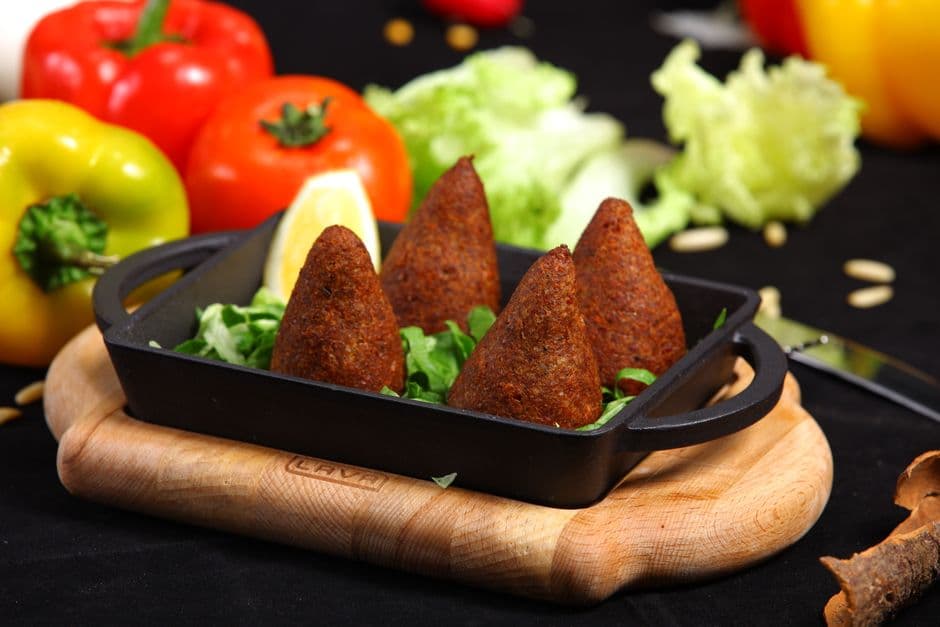
Syrian Kibbeh
Syria's beloved national dish — crispy bulgur-and-lamb shells stuffed with spiced minced meat, onion, and toasted pine nuts.
About This Recipe
Kibbeh is the heart of Syrian home cooking. Outer shells of fine bulgur wheat kneaded with raw lamb form a smooth, pliable dough that is stuffed with a fragrant filling of sautéed onion, coarsely ground lamb, warm spices, and toasted pine nuts. The torpedo-shaped parcels are deep-fried until mahogany-crisp on the outside while remaining succulent within. Every Syrian grandmother has her own spice ratio, and the dish appears at every celebration, from modest weeknight dinners to elaborate wedding feasts. Served with plain yogurt or a tangy cucumber-yogurt dip, kibbeh is comfort and ceremony wrapped in one.
Ingredients
Serves 6
- 2 cupsfine bulgur wheat (no. 1 grade)
- 500 glean lamb, ground twice
- 1 tspallspice
- 1 tspcinnamon
- ½ tspblack pepper
- ½ tspcumin
- 1½ tspsalt
- 300 gcoarsely ground lamb (filling)
- 2 mediumonions, finely diced
- 3 tbsppine nuts, toasted
- 2 tbspolive oil
- ½ tspseven-spice (baharat)
- ¼ tspcinnamon (filling)
- 1 tsppomegranate molasses
- oilfor deep-frying
Instructions
- 1
Soak the bulgur
Cover fine bulgur with cold water and soak 15 minutes. Drain through a fine-mesh sieve, pressing out every drop of moisture. Transfer to a large bowl.
- 2
Make the shell dough
Add ground lean lamb, allspice, cinnamon, cumin, pepper, and 1 tsp salt to the bulgur. Knead vigorously for 8–10 minutes until the mixture becomes smooth and cohesive — like a stiff dough. Refrigerate 30 minutes.
- 3
Cook the filling
Heat olive oil in a skillet over medium-high heat. Sauté onion until golden, 6 minutes. Add coarsely ground lamb and brown, breaking up clumps, 5 minutes. Season with baharat, cinnamon, remaining ½ tsp salt, and pomegranate molasses. Stir in pine nuts. Cool completely.
- 4
Shape the kibbeh
Wet hands thoroughly. Take a golf-ball-sized piece of dough (~50 g), roll into a ball, then press a thumb through the center, rotating to form a hollow oval shell 3–4 mm thick. Fill with 1 tbsp of filling, then pinch the opening shut, tapering both ends to a point. Repeat.
- 5
Fry to golden perfection
Heat oil to 175 °C (350 °F). Fry kibbeh in batches of 5–6 for 4–5 minutes, turning once, until deep mahogany brown. Drain on paper towels. Serve immediately with yogurt or cucumber-garlic dip.
Did you make this?
Rate it and help other cooks find the recipes that actually work.
One tap to sign in, and we'll save the rating you just picked.
Everything you need to plan your week — free
- Meal calendar
- Grocery list
- AI recipe ideas
Track what you eat
Snap your meal to log calories and macros, run fasting timers and track water in the free SnapCal app.
Pro Tips
- →
Keep your hands and the shell dough ice-cold — warm hands cause cracking.
- →
Fine (no. 1) bulgur is essential; coarse bulgur will not bind properly.
- →
Refrigerate shaped kibbeh 30 minutes before frying to help them hold their shape.
- →
Pomegranate molasses in the filling adds a subtle tang that balances the richness.
Variations
- •
Kibbeh bil-Sanieh: press half the dough into a tray, spread filling, top with remaining dough, score diamonds, bake at 200 °C.
- •
Kibbeh Labaniyeh: simmer raw kibbeh balls in a garlic-yogurt sauce.
- •
Vegan version: replace lamb in both dough and filling with a mix of mushrooms and walnuts.
- •
Vegetarian: swap the protein for roasted king oyster mushrooms, smoked tofu or cooked chickpeas — adjust seasoning slightly upward to compensate.
Storage
Fried kibbeh keep in the fridge up to 3 days; reheat in a 180 °C oven for 10 minutes. Uncooked shaped kibbeh freeze well for up to 2 months — fry from frozen adding 2 minutes.
History & Origin
The word 'kibbeh' derives from the Arabic verb 'to form into a ball'. Believed to have originated in the Fertile Crescent thousands of years ago, it spread across the Levant with each conquering and trading civilization. Syria, Lebanon, Iraq, and Turkey all claim versions as their own, but the Syrian rendition — particularly from Aleppo and Homs — is considered the benchmark for perfect texture and spice balance.
Frequently Asked Questions
Why does my kibbeh shell crack when I shape it?
The bulgur is too dry or the dough is too warm. Dip your hands in ice water frequently and refrigerate the dough between batches.
Can I bake kibbeh instead of frying?
Yes — brush with oil and bake at 200 °C for 25–30 minutes, turning halfway. They won't be as crispy but are still delicious.
What cut of lamb is best?
Leg of lamb for the shell (lean and finely textured) and shoulder for the filling (slightly fattier, better flavour when cooked).
Can I make this ahead of time?
Yes — most of the components can be prepared up to a day in advance and refrigerated separately. Reheat gently and assemble just before serving so textures stay distinct.
Nutrition Facts
Per serving (200g / 7.1 oz) · 6 servings total
Time Summary
Have Questions?
Ask our AI cooking assistant anything about this recipe — substitutions, techniques, scaling.
Chat with AI Chef →More Syrian Recipes
You Might Also Like
Similar dishes from other cuisines around the world.
Free Kitchen Tools
Calculators and converters that pair with this page — no signup needed.
Put This Into a Plan
Schedule it, shop for it, and track what you already have.
Read Next
Longer reads that go deeper on the ideas behind this dish.
Community
Join the conversation
Sign in to leave a comment and save your favourite recipes