
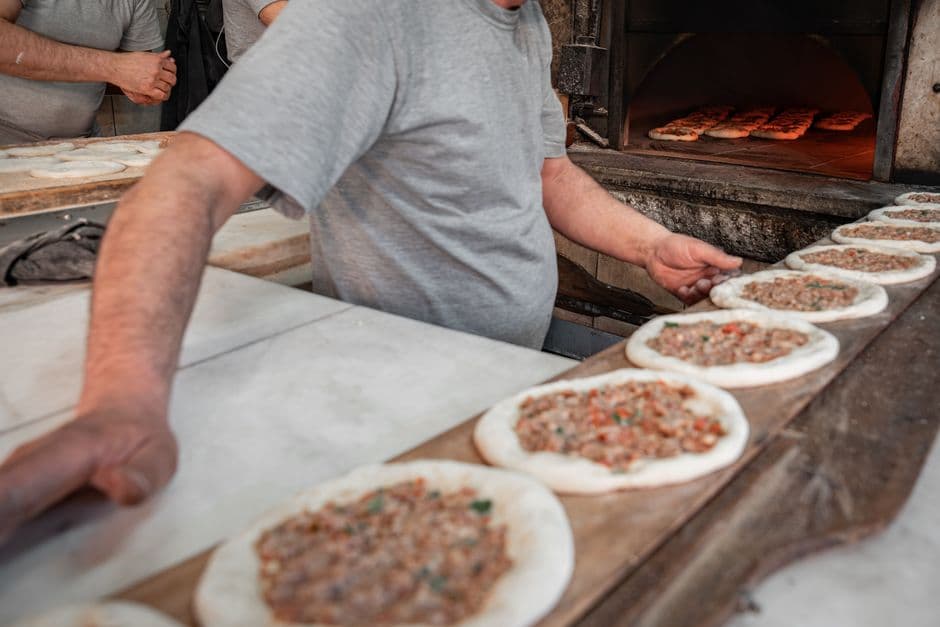
Ma'amoul
Delicately moulded Syrian semolina shortbread filled with rose water-scented dates or crushed walnuts — a festive celebration cookie.
About This Recipe
Ma'amoul are the quintessential celebration sweet of Syria and the wider Levant, prepared in huge batches before Eid, Easter, and every family gathering. The outer dough is a rich blend of fine semolina, plain flour, butter, and orange blossom water, allowed to rest until the semolina softens and the texture becomes silky. The filling — either medjool dates perfumed with rose water or ground walnuts sweetened with cinnamon — is encased in the dough and pressed into intricately carved wooden moulds (tabi) that imprint a beautiful pattern on each cookie. Once baked to pale gold and dusted with icing sugar, they are as beautiful as they are delicious.
Ingredients
Serves 30
- 2 cupsfine semolina
- 1 cupplain flour
- 180 gunsalted butter, melted and cooled
- ¼ cupicing sugar, plus more for dusting
- 2 tbsporange blossom water
- 1 tbsprose water
- 3–4 tbspwarm milk (to bind)
- 300 gmedjool dates, pitted
- 1 tbsprose water (for filling)
- 1 tspcinnamon
- ½ tspmahlab (optional, ground)
Instructions
- 1
Make the dough
Combine semolina, flour, and icing sugar in a large bowl. Pour in melted butter and rub it into the dry ingredients until the mixture resembles wet sand. Add orange blossom water, rose water, and enough warm milk (1 tablespoon at a time) to form a soft, pliable dough that does not stick. Cover and rest for 1 hour at room temperature.
- 2
Prepare the date filling
Process dates in a food processor until a smooth paste forms. Add rose water, cinnamon, and mahlab if using. Mix well. Roll teaspoon-sized portions into balls.
- 3
Shape the ma'amoul
Pinch off a walnut-sized piece of dough (~30 g). Press a thumb through the centre to form a cup. Place a date ball inside and close the dough around it, rolling to seal. Press into a floured ma'amoul mould and tap out firmly. Alternatively, roll into a smooth ball and use the back of a fork to create a crosshatch pattern.
- 4
Bake
Preheat oven to 180 °C. Arrange ma'amoul on a lined baking tray and bake 18–20 minutes until the bases are lightly golden — the tops should remain pale.
- 5
Dust and cool
Remove from oven and cool on the tray for 10 minutes (they firm up as they cool). Dust generously with icing sugar while still warm. Cool completely before storing.
Did you make this?
Rate it and help other cooks find the recipes that actually work.
One tap to sign in, and we'll save the rating you just picked.
Everything you need to plan your week — free
- Meal calendar
- Grocery list
- AI recipe ideas
Track what you eat
Snap your meal to log calories and macros, run fasting timers and track water in the free SnapCal app.
Pro Tips
- →
The 1-hour rest is crucial — it allows the semolina to absorb the butter fully.
- →
Do not overbake — ma'amoul should be pale on top with just a golden bottom.
- →
Invest in a wooden tabi mould for authentic patterns; they're inexpensive online.
- →
Walnut filling: mix 1½ cups ground walnuts, 3 tbsp sugar, 1 tsp cinnamon, 1 tbsp rose water.
Variations
- •
Pistachio filling: ground pistachios with a little rose water and sugar.
- •
Add 1 tsp anise seeds to the dough for a traditional Damascene flavour.
- •
Glaze with a thin sugar syrup for extra shine.
- •
Vegetarian: swap the protein for roasted king oyster mushrooms, smoked tofu or cooked chickpeas — adjust seasoning slightly upward to compensate.
Storage
Store in an airtight tin at room temperature up to 2 weeks. Flavour improves after day 2. Freeze undusted for up to 3 months.
History & Origin
Ma'amoul's history spans at least 2,000 years; clay moulds resembling tabi have been found in ancient Egyptian tombs. The cookie became intertwined with Abrahamic religious celebrations — Muslims prepare them for Eid al-Fitr and Eid al-Adha, Christians for Easter, and Jews for Purim, making it perhaps the most ecumenical sweet in the Middle East. Syrian ma'amoul is particularly prized for its high butter-to-semolina ratio, which gives an extraordinarily tender, almost crumbly texture.
Frequently Asked Questions
Why are my ma'amoul hard?
Either too much flour was added, or they were overbaked. The dough should be soft and buttery before shaping.
Can I use ghee instead of butter?
Yes — many Syrian recipes use ghee. It gives a slightly nuttier flavour and the cookies keep longer.
Can I make this ahead of time?
Yes — most of the components can be prepared up to a day in advance and refrigerated separately. Reheat gently and assemble just before serving so textures stay distinct.
What can I substitute if I don't have all the ingredients?
Stay close to the role each ingredient plays: swap aromatics for similar ones (shallot for onion, lime for lemon), and keep the fat-acid-salt balance intact. Spice blends can usually be approximated with what's in the cupboard.
Nutrition Facts
Per serving (45g / 1.6 oz) · 30 servings total
Time Summary
Have Questions?
Ask our AI cooking assistant anything about this recipe — substitutions, techniques, scaling.
Chat with AI Chef →Featured in Guides
This recipe is featured in the following curated guides:
More Syrian Recipes
You Might Also Like
Similar dishes from other cuisines around the world.
Free Kitchen Tools
Calculators and converters that pair with this page — no signup needed.
Put This Into a Plan
Schedule it, shop for it, and track what you already have.
Read Next
Longer reads that go deeper on the ideas behind this dish.
Community
Join the conversation
Sign in to leave a comment and save your favourite recipes