
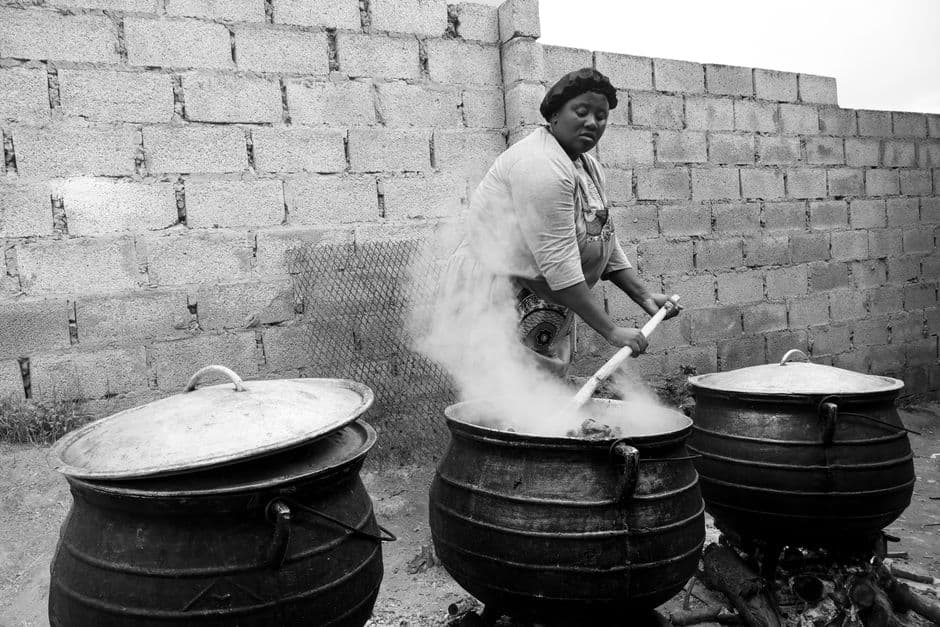
Потиекос
Намибийско-южноафриканское рагу на костре, приготовленное на медленном огне, из нежной баранины, корнеплодов и согревающих специй в чугунной кастрюле.
Об этом рецепте
Potjiekos («маленькая еда в горшочке» на языке африкаанс) — это кулинарная традиция, унаследованная от голландских поселенцев и всем сердцем принятая намибийцами как блюдо выходного дня и праздника. Чугунный горшок с тремя ножками ставится на тлеющие угли и остается почти полностью нетронутым — ингредиенты, наложенные слоями, готовятся на пару и тушатся вместе в течение нескольких часов, развивая богатые, глубоко переплетающиеся вкусы. В Намибии его обычно готовят из мяса дичи, баранины или баранины, а также сезонных овощей и сухофруктов, что отражает сухой климат страны и наследие пасторального земледелия.
Ингредиенты
Служит 6
- 1.2 кглопатка ягненка на кости, нарезанная кусками
- 2 ст. л.растительное масло
- 2большая луковица, крупно нарезанная
- 4 зубчикачеснок, измельченный
- 3морковь, нарезанная толстыми кружками
- 3картофель, разрезанный на четвертинки
- 2сладкий картофель, нарезанный кубиками
- 1 стакансухое красное вино
- 400 млговяжий бульон
- 2 ст. л.томатная паста
- 1 ч. л.молотый кориандр
- 1 ч. л.молотый тмин
- 1 ч. л.копченая паприка
- 2лавровый лист
- 100 гкурага
- Salt and pepper(to taste)
Инструкции
- 1
Обжарить мясо
Нагрейте масло в кастрюле или тяжелой жаровне на сильном огне. Обжарьте баранину порциями до глубокой карамелизации со всех сторон. Снимите и отложите в сторону.
- 2
Обжаренные ароматические вещества
В той же кастрюле обжарьте лук 5 минут, пока он не станет мягким. Добавьте чеснок, кориандр, тмин и паприку; варить 1 минуту до появления аромата.
- 3
Деглазируйте и наслаивайте
Добавьте томатную пасту и готовьте 2 минуты. Влейте вино и соскребите все подрумяненные кусочки. Верните баранину в кастрюлю. Залейте бульоном.
- 4
Слой овощей
Выложите поверх мяса слоями морковь, картофель и сладкий картофель. НЕ перемешивайте. Выложите лавровый лист и курагу. Плотно закройте крышкой.
- 5
Медленное приготовление
Готовьте на слабых углях (или в духовке, разогретой до 160°С) 2,5–3 часа, не поднимая крышку. Пар должен сделать всю работу.
- 6
Приправьте и подавайте
Аккуратно проверьте приправы, выбросьте лавровый лист и подавайте прямо из кастрюли со свежим хлебом или осифимой.
Вы готовили это блюдо?
Поставьте оценку и помогите другим найти рецепты, которые действительно работают.
Войдите в одно касание, и мы сохраним только что выбранную оценку.
Всё для планирования недели — бесплатно
- Календарь питания
- Список покупок
- Идеи рецептов с ИИ
Следите за питанием
Фотографируйте еду, чтобы записывать калории и макросы, запускайте таймеры голодания и отслеживайте воду в бесплатном приложении SnapCal.
Советы профессионалов
- →
Никогда не помешивайте похлебку: при поднятии крышки высвобождается драгоценный пар, который испортит блюдо.
- →
Мясо дичи, такое как сернобык или куду, может заменить баранину, придавая аутентичный намибийский вкус.
- →
Курага добавляет легкую сладость, которая уравновешивает насыщенный бараний жир.
- →
В самом конце попробуйте и отрегулируйте соль — вкусы концентрируются по мере уменьшения количества жидкости, а последняя щепотка чешуйчатой соли придает остроту всему блюду.
Вариации
- •
Куриное потджи: замените баранину кусочками курицы с костями и сократите время приготовления до 1,5 часов.
- •
Вегетарианское блюдо: используйте нут и различные корнеплоды с грибным бульоном.
- •
Острее: добавьте к ароматике мелко нарезанный свежий перец чили или чайную ложку измельченного перца Алеппо/Урфа для получения теплого, многослойного остроты вместо одного острого удара.
- •
Легче: уменьшите жирность на треть и добавьте в конце немного цитрусовых или немного уксуса, чтобы сохранить яркость, не теряя при этом насыщенности.
Хранение
Потьекос поправляется за одну ночь. Храните накрытым в холодильнике до 4 дней или заморозьте в течение 3 месяцев.
История и происхождение
Традиции приготовления потьекос были привезены в южную Африку голландскими воортреккерами в 17 веке. Чугунный горшок на трех ножках стал незаменимым для туристов, путешествующих на дальние расстояния, и теперь является национальным кулинарным символом как в Намибии, так и в Южной Африке, где соревнования по потджи проводятся круглый год.
Часто задаваемые вопросы
Могу ли я приготовить потьекос на обычной плите?
Да — используйте тяжелую голландскую духовку на минимально возможном уровне нагрева, и она даст очень похожие результаты.
Почему мне нельзя шевелиться?
Перемешивание нарушает процесс послойного приготовления на пару и может привести к подгоранию нижнего слоя. Влага естественным образом циркулирует внутри герметичного горшка.
Могу ли я сделать это заранее?
Да, большинство компонентов можно приготовить заранее и хранить в холодильнике отдельно. Аккуратно разогрейте и соберите непосредственно перед подачей на стол, чтобы текстура оставалась четкой.
Чем можно заменить, если у меня нет всех ингредиентов?
Будьте внимательны к роли каждого ингредиента: замените ароматические вещества на аналогичные (шалот на лук, лайм на лимон) и сохраните жирно-кислотно-солевой баланс. Смеси специй обычно можно сравнить с тем, что есть в шкафу.
Факты о питании
За порцию (450g) · 6 общее количество порций
Сводка времени
Есть вопросы?
Спросите нашего помощника по кулинарии с искусственным интеллектом что-нибудь об этом рецепте — о заменах, методах, масштабировании.
Чат с AI Chef →Избранное в руководствах
Этот рецепт представлен в следующих руководствах:
Больше рецептов Namibian
Вам также может понравиться
Похожие блюда из кухонь других стран.
Бесплатные кухонные инструменты
Калькуляторы и конвертеры к этой странице — без регистрации.
Превратить в план
Поставьте в календарь, соберите список покупок и следите за запасами.
Календарь планирования питания
Поставьте этот рецепт на нужный день и спланируйте неделю вокруг него.
Приложение для списка покупок
Превратите этот список ингредиентов в список покупок, сгруппированный по отделам.
Импорт рецептов
Сохраните этот рецепт — и любую ссылку на рецепт — в одной упорядоченной библиотеке.
Читать далее
Развёрнутые материалы об идеях, стоящих за этим блюдом.
Сообщество
Присоединяйтесь к разговору
Войдите, чтобы оставить комментарий и сохранить любимые рецепты.